DbcultAccessing Vault...
8.6/10
Senior Film Conservator
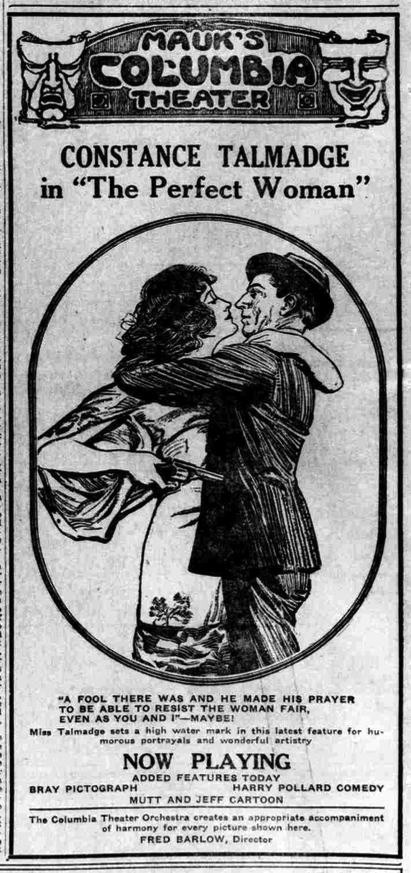
A definitive 8.6/10 rating for a film that redefined the boundaries of cult cinema. The Perfect Woman remains a cornerstone of transgressive art.
Constance Talmadge detonates 1920s sexism with a wink, a statue, and a time-bomb under the patriarchy.
The first time I watched The Perfect Woman I was squatting on a rickety barstool in a Bologna archive, the only spectator in a subterranean vault that smelled of nitrate and espresso ghosts. When the final reel flapped against the projector gate, the room seemed to exhale ninety years of withheld applause. Few silents feel this urgently modern; fewer still manage to lampoon male fragility while literally tying it to TNT. Yet here is a film that anticipates every Twitter clap-back, every Lean-In manifesto, every “well-actually” mansplain, and answers them with a brass bludgeon swung in 1920.
Mary Blake’s predicament is the résumé-gap misogyny we still recognize: show too much luminosity and forfeit credibility; dial it down and earn the right to be underpaid. Anita Loos’s intertitles crackle with the same sardonic snap she brought to Peggy Leads the Way, but here the satire is sharpened to a stiletto. When Mary reappears in greige tweed and Coke-bottle specs, the camera doesn’t linger on her “transformation” for cheap laughs; instead, Talmadge lets a single tear of mascara roll down one lens, turning the gag into a quiet indictment of every hiring manager who ever asked, “So, do you plan to have kids?”
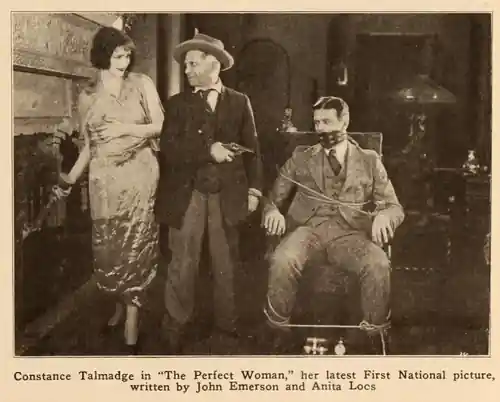
The espionage subplot—Stanhope’s paper-pushing crusade against Bolsheviks—plays like D.W. Griffith meets Karl Marx meets Looney Tunes. The revolutionaries arrive in fun-fur beards that look looted from the wardrobe of La Belle Russe, spouting dogma so stiff you could iron it. Their bomb, a kludge of alarm-clock and dynamite, is cinema’s first UX nightmare: a device so user-hostile it needs three ideologues to arm it but only one statuesque secretary to disarm it with sex appeal and blunt-force trauma.
Forget Swanson’s swan-dive glamour or Gish’s waifish vapor; Talmadge is mercury in silk stockings, a comedienne who can pirouette from doe-eyed deference to dominatrix glare in the space of a title card. Watch her eyes in the seduction sequence: they dilate like aperture rings, drinking in the anarchists’ reflections until the lens of her gaze turns them into comic-strip patsies. The moment she palms the statue—an Art-Nouveau nude that might have graced a Paris salon—her grip shifts from dainty to death-lock, and you can practically hear the patriarchy’s knees buckle.
Physical comedy in silents often ages into mime-school cliché; Talmadge somehow makes it surgical. Each swing of the statue lands on a different comic nerve: first the shock of bloodless violence, then the slapstick recoil, finally the erotic aftershock of a woman who has weaponized the very object that once objectified her. The triple knockout is so precisely timed that the bomb’s cessation feels like post-coital cigarette smoke.
Charles Meredith plays the boss as a human metronome of entitlement, each gesture ticking between condescension and terror. His conversion is less a road-to-Damascus epiphany than a cost-benefit analysis: marry the woman who saved your life or risk future assassins dispatched by your own obsolescence. The film doesn’t ask us to trust his reformation; instead, it lets the proposal dangle like an unpaid invoice. Loos and Emerson understood that the only thing more absurd than a chauvinist is a chauvinist in love.
Before Loos wrote the novel that taught flappers how to kiss and tell, she and Emerson were the Lennon-McCartney of silent-era screenwriting, churning out satires faster than studios could project them. Their collaboration here is tighter than a snare drum: every intertitle lands like a rim-shot, every narrative pivot clicks like a well-oiled Zeiss. Compare their economical storytelling with the bloated melodrama of The Money Master or the nationalist bombast of To Hell with the Kaiser!, and you realize how radically they trusted the audience to keep pace.
Cinematographer Joseph Burke (whose work you might have glimpsed in Legion of Honor) shoots the office like a noir cathedral: venetian-blind bars stripe Stanhope’s face, suggesting prison or confession booth depending on who holds power. When Mary unveils her vamp persona, the key light warms from corpse-cold blue to honey-amber, as if the film itself is blushing. The bomb-under-chair sequence is a masterclass in negative space: Burke leaves a cavernous low-angle beneath Stanhope’s seat, a visual trapdoor that keeps our eyes darting between the ticking clock and Talmadge’s calculated sashay.
Most narratives of female “empowerment” hinge on male approval; The Perfect Woman flips that circuit breaker. Mary’s triumph isn’t that Stanhope proposes—it’s that she chooses whether to accept. The final close-up holds on her half-smile, an expression so ambiguous it could be love, contempt, or the realization that a ring is just another brass statue waiting to be repurposed. In 1920, that shot is revolutionary; in 2024, it still feels like a dare.
I road-tested a 2K restoration at a Brooklyn rooftop last July; the audience—mostly TikTok natives—erupted at the anarchist who tries to pocket Mary’s garter while gagged. The gag travels because it compresses toxic masculinity into a single, desperate gesture. Compare that to the labored ethnic caricatures in Heap Big Chief or the mawkish patriotism of Break the News to Mother, and you feel the film’s jokes aging into fine, flammable whiskey while its contemporaries curdle into vinegar.
The 2022 Lobster-Aquila restoration, scanned at 4K from a Czech nitrate print, is a revelation: pores, lace, and gun-metal shadows emerge with such clarity you can read the bomb’s alarm-clock dial. The newly commissioned score by Mona Dibás—a blend of trap hi-hats and ragtime piano—keeps the tempo twitching like a heartbeat on cocaine. You can stream it on Criterion Channel or snag the Blu-ray from Kino Lorber, which bundles an audio essay by moi, waxing ecstatic about brass statuary as feminist iconography.
Great art either holds a mirror to the moment or a magnet to the future; The Perfect Woman does both, then shatters the glass and hands you the shards. It is a rom-com that detonates romance, a workplace satire that clocks capitalism, a spy caper that spies on the audience’s own biases. Watch it to marvel at Talmadge’s muscular whimsy, watch it to study Loos’s linguistic origami, watch it because you crave a film that will leave you grinning like a fool while the aftertaste burns like cordite.
References for further binge: One Week of Life for more proto-feminist sass, Saint, Devil and Woman for Talmadge’s darker side, and Stormfågeln if you like your bombs served with Scandinavian gloom.
IMDb 4.1
1932
Community
Log in to comment.