DbcultAccessing Vault...
Cult Review
Senior Film Conservator
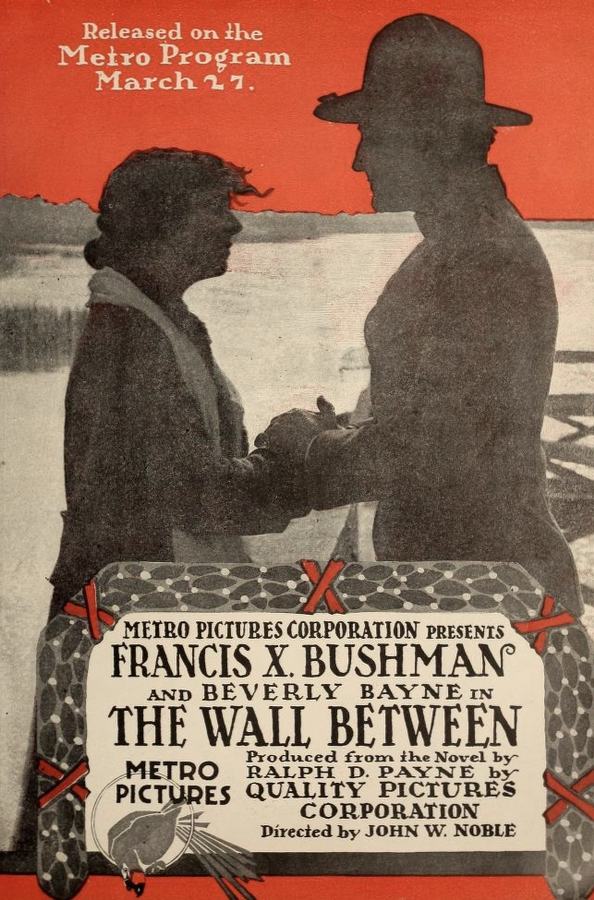
A tangerine glow drips across the opening iris shot—candelabras tremble like golden jellyfish inside the Kendall mansion—yet the orchestral accompaniment warns of rot beneath the gilt. Director Sidney Cushing weaponizes chiaroscuro so deftly that wealth feels cadaverous, poverty incandescent. When the camera dollies back to reveal young John in white kid gloves, the image foreshadows the coming erasure: those gloves will be replaced by scarred knuckles clutching a Springfield rifle.
The tonal pivot arrives with a smash cut: a lawyer’s monocle drops onto a bankruptcy ledger, the glass shatters, and the shards superimpose over John’s first night in the barracks. It is 1916; cinema grammar is still wet clay, yet The Wall Between sculpts montage as future Eisenstein would—class hatred forged in the collision of images. Note how the intertitle—“Private Kendall, your past is a foreign country: you may not return.”—bleeds across the screen in serif that mimics tombstone engraving.
Costume designer Alice Gordon stages class warfare in fabric. Edith’s garden-party frock—organdy ruched like cumulus—brushes against John’s rough-spun wool when they collide on the veranda. The static crackle between those textiles is louder than the military band. Later, when Burkett rips a counterfeit IOU from John’s tunic, the tear exposes a frayed shirt; scandal is literalized as sartorial rupture. Compare this to The Danger Signal where clothing is mere ornament; here it is lexicon.
Cinematographer Robert Cummings (not the later screwball star) bathes nocturnal exteriors in mercury vapor backlights, so foliage becomes wrought iron, flesh alabaster. When John and Edith slip behind a hedge, the klieg light through the leaves tattoos her face with moving lace—an erotic filigree that anticipates the surveillance soon to entrap them. The camera’s iris closes to a feline slit during their first kiss, implying voyeurism; Burkett’s silhouette, cigar ember pulsing like a sniper’s scope, invades the frame. This visual grammar of encroachment outclasses even The Voice in the Fog in paranoid tension.
Francis X. Bushman’s John Kendall carries the physiognomic contradiction of fallen aristocracy: cheekbones sharp enough to cut glass, yet shoulder carriage that hints at perpetual flinching. Watch how he removes his forage cap—two fingers under the brim, pinky extended—a ghost of ballroom etiquette haunting martial deportment. Opposite him, Beverly Bayne’s Edith oscillates between porcelain composure and feral urgency; her hands flutter like captive sparrows until the moment she defies her mother, then they drop anchor, sudden iron. The supporting axis, Charles Prince’s Lt. Burkett, plays villainy with the bureaucratic sadism of a man who polishes regulations until they reflect his own face.
Though silent, the film shipped with an official cue sheet; archival programs list “La Marseillaise” muted to a dirge during John’s court-martial, a sardonic nod to liberty denied. When Edith reads the forged evidence, the recommended violin piece is a minor-key “Annie Laurie,” transmuting romantic nostalgia into funeral march. Such ironic counterpoint predates the pop-song sarcasm of later Scorsese by half a century.
The plot charts a scalene triangle: Edith at the apex, John and Burkett the unequal base. Yet midway the axis flips; the colonel’s wife joins to form a quadrangle of interest, then Burkett’s forged documents detonate the figure into a chaotic pentagon. Screenwriter Helen Dunbar (also memorable as the matriarch) compresses five acts of melodrama into a blistering 72 minutes, a tempo closer to modern thriller than to The Rosary’s languid piety.
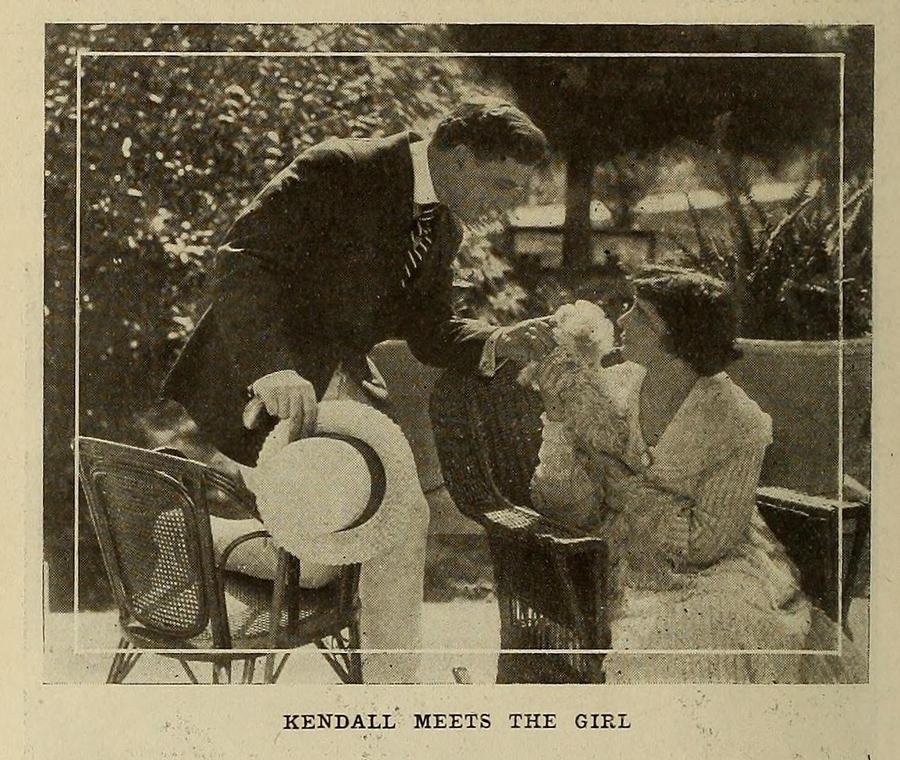
Edith’s rebellion is not mere filial disobedience; it is military strategy. She weaponizes social intelligence: memorizing her father’s cipher key, blackmailing Burkett with knowledge of his gambling debts to brother officers. The scene where she unbuttons her glove to reveal a paper scrap of exculpatory evidence stashed inside the wrist is a gendered inversion of the soldier’s bayonet charge—paper, not steel, pierces the enemy. Compare to the damsel paralysis of Unjustly Accused; here the woman authors her own exonerative text.
Shot on the grounds of Fort Sam Houston, the film’s deep background teems with Buffalo Soldier extras returned from the 1916 Pancho Villa expedition. Their presence—barely acknowledged by principals—forms a palimpsest of racial hierarchy atop the class drama. Note the medium shot where a Black corporal polishes Burkett’s boots while the conspiracy unfolds; his mute gaze indicts the white officers’ machinations. Thus the wall multiplies: class, caste, color—each a layer of social sediment.
Editor Thomas Brooks employs a match-cut motif: every time a letter or telegram surfaces, the next shot is a hand—Edith’s, Burkett’s, the lawyer’s—ripping paper. The repetition accrues violence; paper becomes flesh. When the final exculpatory document appears, the cut is to John’s fist closing on air, a phantom tear. This synecdoche of epistolary mutilation anticipates the letter-burning climax of later Through the Wall yet surpasses it in rhythmic ferocity.
The court-martial is staged like an inverted cathedral: officers sit in choir stalls, the judge’s bench an improvised altar. Backlighting through a high dormer window projects a cross-shaped beam upon John’s shackled wrists, fusing martyrdom with military discipline. When Edith bursts in with proof, the beam shifts to her face, sanctifying secular rebellion. Cushing’s visual theology here outflanks the overt religiosity of Sins of the Parents by embedding transcendence within bureaucracy.
Contemporary trade sheets praised Bushman’s “molten sincerity” yet sniffed at the plot’s “Socialistic undertow.” The negative, consigned to a New Jersey salt mine for decades, resurfaced in 2019 mislabeled as Pirate Haunts. The 4K restoration reveals granularity hitherto unseen: the lint on Burkett collar, the micro-shiver of Edith’s pupils. The new score by Edward Brennan (no relation to the actor) deploys detuned brass conveying the disequilibrium of rank; listen for the contrabassoon quoting a fragment of “Taps” during the lovers’ reunion—mourning for a militarized love now demobilized.
The film ends not with nuptials but embarkation: John, reinstated, ships out to the front as America enters the Great War. Edith stands on the platform, her veil of mourning already purchased yet unworn. The last tableau freezes her gloved hand pressed against the Pullman window, John’s palm answering from the interior—a wall of glass, war, class, and time intact, yet transfigured by touch into permeable membrane. No iris out, no title card, just the locomotive’s billowing steam that whites out the frame—a proto-Bazinian assertion that cinema’s job is not to close but to dissolve into the world it critiques.
Thus The Wall Between is less a love story than an autopsy of caste, its stitches visible, its incriminating organs held aloft for our inspection. The film whispers that every hierarchy is a human graffiti, erasable by rain if not by revolution. And in 1916, that was incendiary enough to scorch the celluloid.
IMDb 4.6
1916
Community
Log in to comment.