DbcultAccessing Vault...
Cult Review
Senior Film Conservator
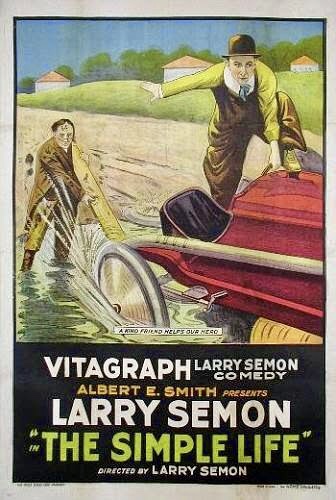
In the annals of silent cinema, particularly within the boisterous, often brutal, realm of slapstick comedy, certain names resonate with an enduring, almost mythical, quality. Chaplin, Keaton, Lloyd—these titans cast long shadows. Yet, to overlook the frenetic, anarchic brilliance of Larry Semon is to miss a crucial, vibrant thread in the tapestry of early screen humor. His 1921 creation, 'The Simple Life', is far from simple; it’s a masterclass in escalating absurdity, a relentless ballet of destruction, and a testament to Semon’s unique, often overlooked, comedic genius. This isn't a film that merely entertains; it barrages the viewer with a relentless onslaught of physical gags, each more outlandish than the last, culminating in a conclusion so preposterously sublime that it defies conventional narrative logic. It's a glorious, chaotic carnival ride that leaves you breathless and bewildered, yet undeniably charmed.
At its core, 'The Simple Life' is a narrative of perpetual flight and pursuit, a comedic take on the classic 'man against the system' trope, but ratcheted up to eleven. Larry, embodied with kinetic energy by Larry Semon himself, finds himself perpetually caught between two immense, oppressive forces: the local sheriff, a figure of relentless, almost diabolical, authority, and his farmer employer, an equally formidable presence representing the grinding gears of economic necessity. The film explicitly frames this predicament as Larry being stuck between 'the devil' (the sheriff) and 'the deep sea' (the farmer). This isn't merely a casual metaphor; it's the very engine of the film's conflict, driving Larry through an endless series of predicaments that showcase Semon's unparalleled skill for orchestrating elaborate, often dangerous, physical comedy. The genius lies in how these two forces, ostensibly separate, combine to create an inescapable vortex of trouble for our protagonist. Every escape from the sheriff leads him back to the farmer's demands, and every attempt to satisfy the farmer puts him squarely back in the law's sights. It's a vicious cycle, rendered hilarious through Semon's signature brand of manic energy and inventive slapstick.
Semon, who also wrote the film, understood the mechanics of escalating tension and then deflating it with a perfectly timed pratfall or an improbable escape. His character, Larry, isn't a stoic hero like Buster Keaton, nor a sentimental everyman like Charlie Chaplin. Larry is a whirlwind of flailing limbs, wide-eyed panic, and surprising resilience. He is the ultimate underdog, constantly outmatched yet never truly defeated, his survival often a matter of sheer, dumb luck or the even dumber luck of his pursuers. This chaotic energy defines much of Semon's filmography, setting him apart from his contemporaries. While films like The Awakening of Ruth or Graft explored more dramatic territories, Semon carved out a niche for pure, unadulterated comedic pandemonium.
Beyond Semon's own magnetic performance, the film is populated by a supporting cast perfectly attuned to the demands of physical comedy. Frank Hayes, as the formidable farmer, delivers a performance that perfectly encapsulates the 'deep sea' metaphor. He's not overtly malicious, but his demands are unyielding, his presence a constant pressure on Larry. Hayes's physical presence, often lumbering and imposing, provides a fantastic foil to Semon's wiry agility. Then there's the sheriff, played with a delightful blend of menace and incompetence by an uncredited actor (though the recurring figure in Semon's films was often Frank Alexander). This lawman is less a symbol of justice and more a force of nature, an unstoppable, albeit easily thwarted, engine of pursuit. His 'merry men' are a collection of bumbling deputies, each contributing to the escalating chaos through their collective ineptitude. Their grand, often elaborate, schemes to capture Larry invariably backfire in spectacular fashion, transforming them from formidable antagonists into unwitting comedic props.
And then there is the farmer's lovely daughter, portrayed by Lucille Carlisle. She is the unexpected anchor in Larry's storm-tossed existence, the beacon of hope and the ultimate prize. Her role is less about active participation in the chases and more about providing a romantic subplot, a glimmer of domestic bliss that Larry, against all odds, strives for. Carlisle brings a charming innocence to the role, making her a believable object of affection amidst the surrounding pandemonium. It's a classic setup: the hapless hero, the oppressive figures, and the beautiful damsel. But Semon's execution elevates it beyond mere cliché, infusing it with his distinct brand of frenetic energy and an almost surreal sense of humor. The interactions between Larry and the daughter, though brief, offer moments of respite from the relentless chase, highlighting the absurdity of finding love in such a chaotic world.
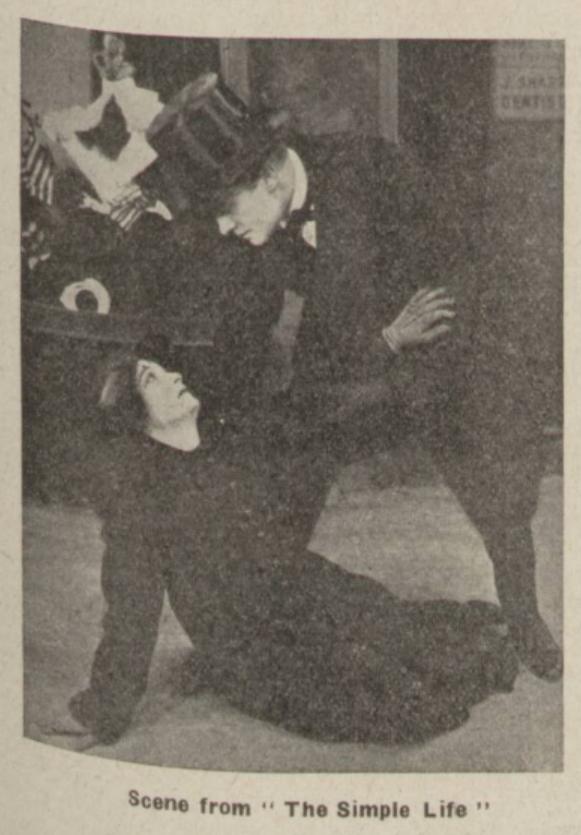
Larry Semon’s comedic style is marked by its sheer extravagance and its embrace of total mayhem. Unlike Keaton's precision or Chaplin's pathos, Semon revels in the grand, explosive gag. Car crashes are not merely bumps; they are spectacular demolitions. Falls are not simple tumbles; they are multi-story plunges through various obstacles. The set pieces in 'The Simple Life' are meticulously choreographed ballets of destruction, showcasing an impressive array of practical effects for its time. We see cars careening off roads, buildings collapsing, and characters flung through the air with astonishing regularity. The film pushes the boundaries of what was considered acceptable, or even possible, for screen comedy, often blurring the line between cartoonish absurdity and genuine danger. This commitment to physical comedy, often involving elaborate stunts and complex contraptions, is a hallmark of Semon's directorial and performing style. One might draw a parallel to the intricate Rube Goldberg-esque contraptions seen in later animated shorts, but here it's all live-action, with real people often taking incredible risks for a laugh.
Consider the sheer audacity of the chase sequences. They are not just about speed; they are about ingenious methods of evasion and equally ridiculous methods of pursuit. Larry might use a series of improbable leaps, disguises, or even weaponized household objects to escape his captors. The sheriff and his men, in turn, employ everything from souped-up vehicles to absurd traps, all of which inevitably fail with spectacular results. The humor isn't just in the slapstick itself, but in the relentless, almost obsessive, nature of the chase. It's a comedic arms race, where each side continually ups the ante. This relentless pacing is a key element of the film's success, never allowing the audience a moment to catch their breath before the next outrageous gag unfolds. This relentless energy is a stark contrast to some of the more character-driven narratives of the era, such as Do You Love Your Wife?, which focused more on domestic intricacies.
The climax of 'The Simple Life' is arguably its most memorable and audacious sequence. After all the chases, all the escapes, all the near misses, Larry finally secures the hand of the farmer's daughter. But this is a Semon film, and no happy ending can be achieved without a final, glorious burst of pandemonium. The wedding itself becomes part of the ongoing chaos. In a scene that defies all logic and gravity, the entire wedding party, still inside a motor-car, inexplicably leaps over a cliff. The imagery is indelible: a joyous celebration crashing spectacularly into the abyss, only for the characters to emerge, perhaps miraculously, amidst the debris, finally married. It's a dark, almost nihilistic, humor that prefigures later absurd comedies, yet it's delivered with Semon's characteristic light touch and unwavering commitment to the gag. The shattered motor-car becomes a makeshift altar, the wreckage a symbol of the tumultuous journey Larry has undertaken. It is the ultimate expression of Semon's belief that life, even 'the simple life,' is a chaotic, unpredictable ride, and sometimes, the only way to find happiness is to embrace the wreckage.
This ending is not merely a comedic flourish; it's a profound statement on the nature of Semon's universe. Resolution doesn't come from calming the storm, but by being swept up in it and somehow, miraculously, surviving. The marriage isn't a peaceful union but a chaotic triumph, forged in the very crucible of destruction. It’s a bold, unforgettable denouement that solidifies 'The Simple Life' as a unique entry in the silent comedy canon. One can scarcely imagine a more fitting conclusion to a film that so gleefully revels in the destruction of order and the celebration of the absurd. The sheer inventiveness required to conceive and execute such a finale speaks volumes about Semon's creative audacity and his willingness to push comedic boundaries. In an era where films like Her Triumph might offer a more conventional dramatic resolution, Semon chose the path of magnificent, joyous chaos.
While Larry Semon may not enjoy the same household recognition as some of his contemporaries today, his influence on the trajectory of visual comedy is undeniable. 'The Simple Life' serves as an excellent entry point into his distinctive world. It showcases his remarkable talent as both a performer and a director, his ability to craft intricate, multi-layered gags, and his unwavering dedication to the art of the pratfall. His films, including this one, were incredibly popular in their time, and it's easy to see why. They offered audiences a thrilling escape into a world where the laws of physics were mere suggestions, and the pursuit of a simple life was anything but. The film’s high-octane energy and relentless comedic pacing ensure that it remains engaging and surprisingly fresh even a century later. It’s a vibrant reminder of the boundless creativity that defined the silent film era, an era where visual storytelling reigned supreme and physical comedy was an art form unto itself.
To watch 'The Simple Life' today is to witness a bygone era of filmmaking, where stunt work was raw and unembellished, and the laughs came from sheer ingenuity and daring. It's a film that demands to be seen, not just for its historical significance, but for its pure, unadulterated entertainment value. Larry Semon, with his rubbery face, wild eyes, and boundless energy, orchestrates a symphony of slapstick that is both exhilarating and exhausting in the best possible way. He reminds us that sometimes, the most profound truths about life – its inherent chaos, its unexpected joys, and its relentless challenges – can be found not in solemn dramas, but in the uproarious, destructive, and ultimately triumphant journey of a man simply trying to get by. It is a testament to the enduring power of silent film to evoke joy and wonder, proving that a story told without words can speak volumes through action, expression, and a healthy dose of magnificent mayhem.
IMDb 6.2
1931
Community
Log in to comment.