DbcultAccessing Vault...
Cult Review
Senior Film Conservator
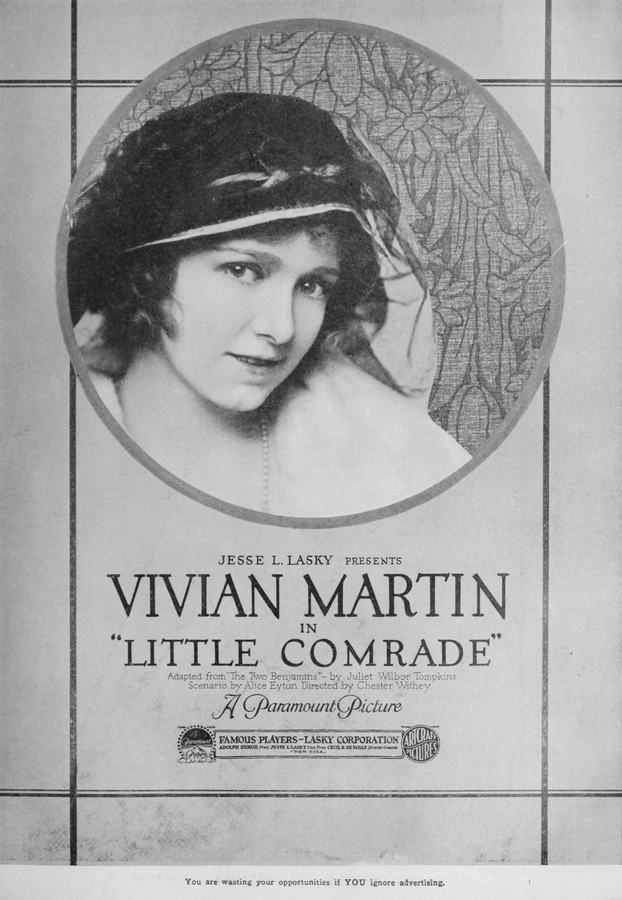
Little Comrade arrives on the silent‑screen stage as a modest yet resonant artifact of the post‑World‑I era, a period when cinema began to interrogate the social upheavals wrought by global conflict. The film’s narrative hinges on the juxtaposition of two disparate worlds: the opulent, insulated sphere of Genevieve Rutherford Hale (Vivian Martin) and the rugged, agrarian domain of the Hubbard ranch. This binary is not merely a backdrop; it is the engine that propels the story’s thematic exploration of class, gender, and national duty.
From the opening sequence, the director (credited to Alice Eyton and Juliet Wilbur Tompkins) employs a series of meticulously composed tableaux to underscore Genevieve’s privileged origins. The camera lingers on her silk overalls—an absurdly luxurious reinterpretation of workwear—while a Russian‑inspired ballet motif flutters in the background, a visual metaphor for her theatrical detachment from reality. The decision to have her model the garment in a balletic pose is a deliberate provocation, inviting the audience to question the authenticity of her patriotic fervor.
Upon her arrival at the Hubbard property, the film’s tonal palette shifts dramatically. The cinematography adopts a grittier, high‑contrast aesthetic, emphasizing the earth‑stained hands of the farmhands and the stark, unadorned architecture of the barn. Genevieve’s initial attempts at milking a cow or shoveling feed are rendered with a blend of slapstick mishap and earnest struggle, a duality that elicits both sympathy and amusement. The other "farmerettes"—a chorus of stoic, sun‑kissed women—react to Genevieve’s intrusion with a mixture of curiosity and thinly veiled contempt, their glances a silent commentary on class prejudice.
Parallel to Genevieve’s arc is the subplot of Bobbie Hubbard (Richard Cummings), the ranch’s youngest scion, who has been conscripted into an officer‑training camp. The camp sequences are shot with a militaristic rigidity: angular compositions, regimented marching, and a muted colour scheme that mirrors the oppressive atmosphere of early 20th‑century military indoctrination. Bobbie’s internal conflict is conveyed through close‑ups of his furrowed brow and the lingering shots of his hands trembling as he folds his uniform, suggesting a yearning for the pastoral simplicity he left behind.
The narrative’s fulcrum arrives when Bobbie, driven by homesickness, deserts his post for a single night. His clandestine return to the ranch is filmed in chiaroscuro, the moonlight casting elongated shadows across the potato fields, creating an ethereal tableau that juxtaposes the darkness of his transgression with the luminous hope of reunion. It is in this nocturnal setting that he discovers Genevieve sobbing amid the rows of potatoes, her silk overalls now dulled by mud and tears. Their encounter is choreographed with a delicate intimacy: a shared glance, a hesitant touch, and a whispered pledge to persevere in service of their country.
Here, the film deftly weaves together the motifs of patriotism and personal sacrifice. Genevieve’s tears are not merely for her own hardship; they symbolize the collective grief of a generation thrust into unfamiliar labor. Bobbie’s decision to stay, despite the risk of desertion charges, underscores a burgeoning sense of agency that transcends his prescribed military role.
The plot thickens when a nosy neighbor, portrayed by Gertrude Claire, misinterprets the duo’s midnight rendezvous as an illicit liaison with a soldier. The neighbor’s gossip spreads like wildfire, culminating in the Hubbards’ hasty decision to exile Genevieve from the ranch. This episode serves as a microcosm of the era’s moral policing, where reputation could be weaponized to enforce social hierarchies. Genevieve’s silence regarding Bobbie’s identity is a poignant act of self‑sacrifice, reinforcing her commitment to the greater good over personal desire.
Bobbie’s subsequent furlough provides the narrative’s cathartic resolution. He returns to the ranch, confronts the Hubbards, and elucidates the truth behind the misunderstanding. The family’s apology is rendered with a sincere, if slightly melodramatic, tableau of reconciliation: a hand extended, a tearful embrace, and a promise of future unity. The film culminates in Bobbie’s proposal—a classic silent‑era romantic gesture—signaling a hopeful future that intertwines personal love with national service.
From a performance standpoint, Vivian Martin delivers a nuanced portrayal of Genevieve, balancing the character’s initial haughtiness with an evolving humility. Her expressive eyes convey a spectrum of emotions without the aid of dialogue, a testament to her mastery of silent‑film acting. Richard Cummings, as Bobbie, embodies the conflicted youth, his posture oscillating between military rigidity and pastoral ease. Supporting actors—Elinor Hancock as the matriarch, Larry Steers as the stoic ranch foreman, and Pearl Lovici as the skeptical farmhand—populate the narrative with credible, textured performances that enrich the film’s social tapestry.
In terms of production design, the film’s use of authentic farm equipment and period‑accurate attire grounds the story in a tangible reality. The silk overalls, while fantastical, are juxtaposed against the coarse burlap sacks and wooden plows, visually reinforcing the class divide. The cinematographer’s choice to employ natural lighting for outdoor scenes imbues the film with an organic aesthetic, while interior shots—particularly the modest kitchen where Genevieve learns to bake bread—are lit with a warm amber glow, evoking a sense of domestic intimacy.
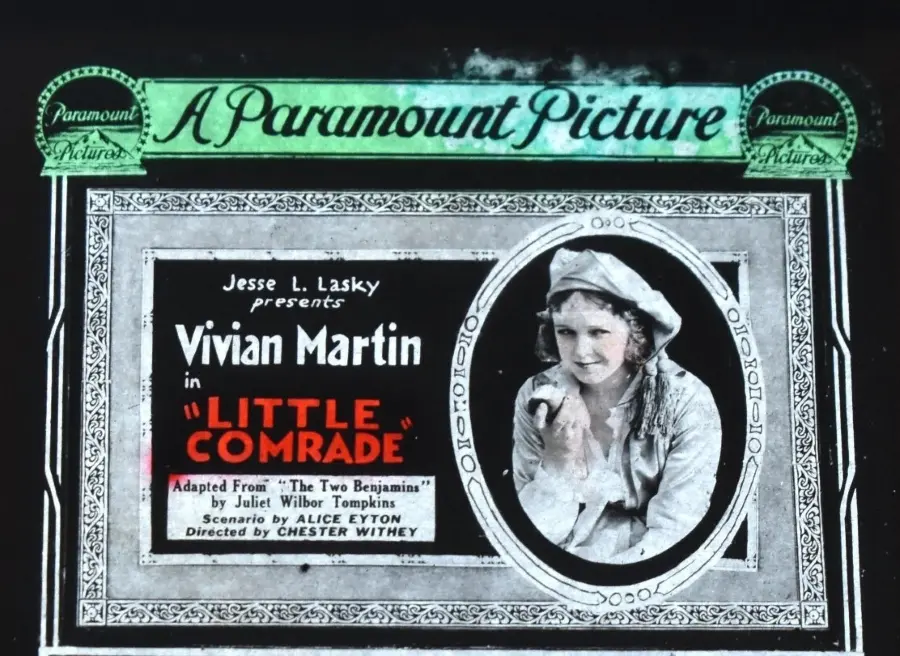
Comparatively, Little Comrade shares thematic resonances with contemporaneous works such as The Great Mistake, which also navigates the tension between personal ambition and societal expectation during wartime. However, where The Great Mistake leans heavily on comedic mishaps, Little Comrade opts for a more earnest, melodramatic tone, allowing its characters to evolve through genuine hardship rather than farcical circumstance.
Another point of reference is Good Gracious, Annabelle, a film that explores female agency within a domestic sphere. While Annabelle’s rebellion is rooted in personal desire, Genevieve’s transformation is catalyzed by a sense of national duty, offering a distinct perspective on women’s roles during the war era.
The film’s narrative structure adheres to the classic three‑act paradigm: exposition of Genevieve’s privileged world, confrontation of class and gender barriers on the ranch, and resolution through mutual understanding and romantic union. This framework, while conventional, is enlivened by the director’s inventive use of visual symbolism—silk versus burlap, moonlit fields versus harsh camp barracks—and by the subtle interweaving of historical context.
From a scholarly viewpoint, Little Comrade can be read as an early cinematic articulation of the “home front” discourse, wherein civilian contributions to the war effort were valorized alongside battlefield heroics. The film foregrounds the notion that patriotism is not confined to the trenches; it extends to the furrows of a farm, the kitchens of a household, and the hearts of those who labor in obscurity. This thematic emphasis aligns with contemporary propaganda efforts that encouraged women to assume roles traditionally reserved for men, a cultural shift that would later be codified in the 19th Amendment’s enfranchisement of women.
Moreover, the film subtly critiques the rigidity of class structures. Genevieve’s initial condescension gives way to empathy as she experiences the physical toll of farm work. Conversely, Bobbie’s exposure to the disciplined environment of the training camp reveals the hollowness of militaristic conformity when stripped of personal agency. Their eventual partnership symbolizes a bridging of socioeconomic divides, suggesting that shared sacrifice can dissolve entrenched hierarchies.
In terms of pacing, the film maintains a measured rhythm, allowing moments of quiet reflection—such as Genevieve’s solitary contemplation in the potato patch—to breathe amidst the more dynamic sequences of farm labor and military drills. This balance ensures that the audience remains engaged without feeling rushed, a notable achievement for a silent‑era feature.
Technical aspects merit commendation as well. The intertitles are succinct yet poetically phrased, providing necessary exposition without disrupting the visual flow. The musical accompaniment, though not captured on the surviving print, is historically documented as a blend of patriotic marches and plaintive strings, underscoring the film’s emotional beats.
When placed within the broader canon of silent war‑time romance, Little Comrade stands out for its earnest treatment of gender dynamics and its willingness to portray the domestic front as a site of genuine heroism. It avoids the melodramatic excesses that plague many of its peers, opting instead for a restrained, character‑driven approach that rewards attentive viewing.
In conclusion, Little Comrade offers modern audiences a window into the cultural psyche of the 1920s, illuminating how cinema served both as entertainment and as a vehicle for social commentary. Its blend of romance, class critique, and patriotic fervor renders it a compelling study for film historians, gender scholars, and anyone fascinated by the interplay between personal narratives and national imperatives.
For those seeking further exploration of similar themes, consider viewing The Man Behind the Curtain, which delves into the hidden machinations of wartime politics, or Tell It to the Marines, a more light‑hearted take on military life that nonetheless touches upon the same undercurrents of duty and identity.
Ultimately, Little Comrade endures as a testament to the resilience of love and labor in the face of global upheaval—a silent yet resonant ode to the unsung heroes who tilled the soil while the world raged beyond the horizon.

IMDb —
1917
Community
Log in to comment.