DbcultAccessing Vault...
Cult Review
Senior Film Conservator
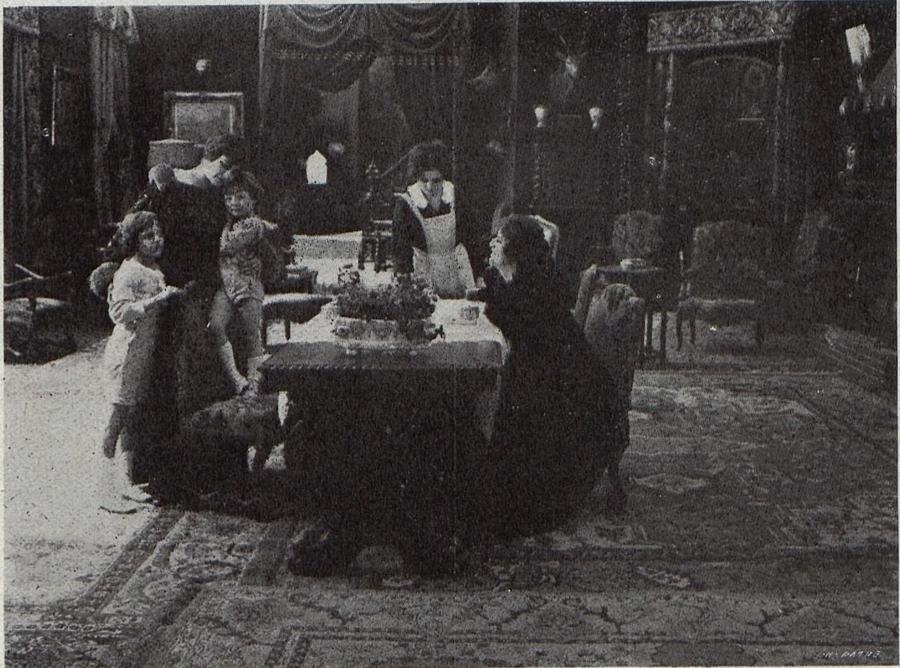
L'énigme, Paul Hervieu’s 1930 masterstroke of French cinematic enigma, is a film that demands to be dissected like a rare specimen, its layers of narrative and thematic complexity revealing new depths with each viewing. This is not merely a mystery film in the conventional sense; it is a psychological excavation of the human condition, rendered in the stark chiaroscuro of early sound cinema. The film’s title, which translates to 'The Enigma,' is both a provocation and a promise—an assurance that the audience will be confronted with questions that resist easy resolution.
At its core, L'énigme orbits the enigmatic Clara Vaurien (Germaine Dermoz), a character whose very name—Vaurien, a term for a mischievous, cunning trickster—hints at the duality that defines her. Dermoz’s performance is a masterclass in restraint, her subtle micro-expressions and deliberate pauses conveying volumes about a woman who has been shaped by a past riddled with secrets. Her interactions with Dr. Lemoine (Henry Krauss), a physician whose rationalist fervor masks a deep-seated vulnerability, form the emotional spine of the film. Krauss, known for his commanding presence in works like The Soul of Satan, here tempers his intensity with a fragile humanity that makes his character’s descent into obsession all the more tragic.
The film’s narrative structure is a labyrinth. Hervieu, who also penned the screenplay, employs a non-linear progression that mirrors the disordered psyche of his characters. The story begins with a series of cryptic letters that arrive at the Vaurien estate, each bearing a phrase from a forgotten poem. These letters, their origins and purpose shrouded in mystery, set in motion a chain of events that exposes the rot festering beneath the veneer of respectability in the provincial French town. The film’s pacing is deliberate, almost glacial, allowing the audience to feel the weight of each moment as the characters do. This deliberate pacing, while potentially alienating to modern viewers accustomed to rapid cuts and exposition, is integral to the film’s unsettling atmosphere.
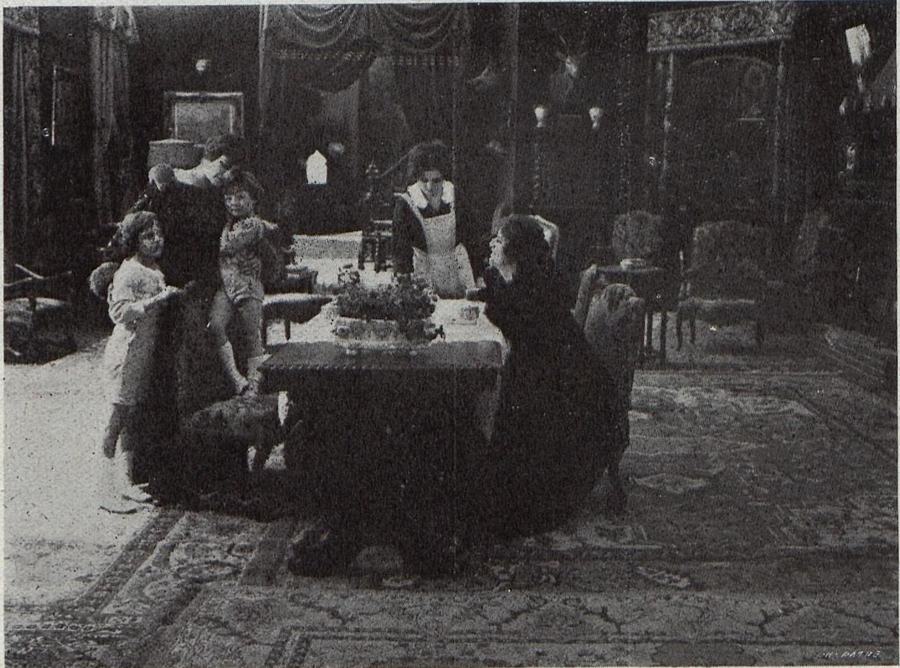
The cinematography, a collaboration between Hervieu and the uncredited cameraman, is a character in its own right. The film’s decaying manor house, with its creaking floorboards and shadow-pocked corridors, becomes a metaphor for the characters’ internal decay. Long takes linger on empty rooms and half-open doors, creating a sense of encroaching isolation. The use of sound is equally innovative; the film’s dialogue is sparse, punctuated by the creak of a chair or the distant toll of a church bell, each sound amplifying the tension. This aural minimalism is a stark contrast to the auditory bombast of later Hollywood thrillers, yet it proves far more effective in building suspense.
One of the film’s most striking aspects is its treatment of time. Hervieu employs flashbacks with a fluidity that feels ahead of its time, weaving past and present into a seamless mosaic. These sequences, often triggered by Clara’s encounters with objects or people from her past, are rendered in a dreamlike style that blurs the line between memory and reality. This technique is reminiscent of the later works of She, though Hervieu’s approach is more introspective, focusing on the psychological rather than the fantastical. The film’s unresolved ending—where Clara walks into the fog-shrouded woods, her fate left ambiguous—has sparked decades of debate among scholars and cinephiles. Is she fleeing? Sacrificing herself? Or is her disappearance a metaphor for the erasure of women’s voices in a patriarchal society? Hervieu, in his quiet genius, offers no answers, leaving the audience to grapple with the enigma.
The supporting cast is equally compelling. Henry Mayer, as the town’s reclusive librarian, delivers a performance that is both haunting and understated, his character a repository of half-truths and hidden knowledge. Camille Bert, as Clara’s childhood friend turned estranged lover, brings a simmering intensity to their scenes, his dialogue brimming with unspoken conflict. The chemistry between these actors is palpable, their interactions charged with a tension that feels visceral and immediate. This is particularly evident in a pivotal scene where Clara and her friend confront each other in the library, their argument escalating into a cathartic release of repressed emotions. The scene, shot in a single take, is a testament to the actors’ skill and Hervieu’s mastery of mise-en-scène.
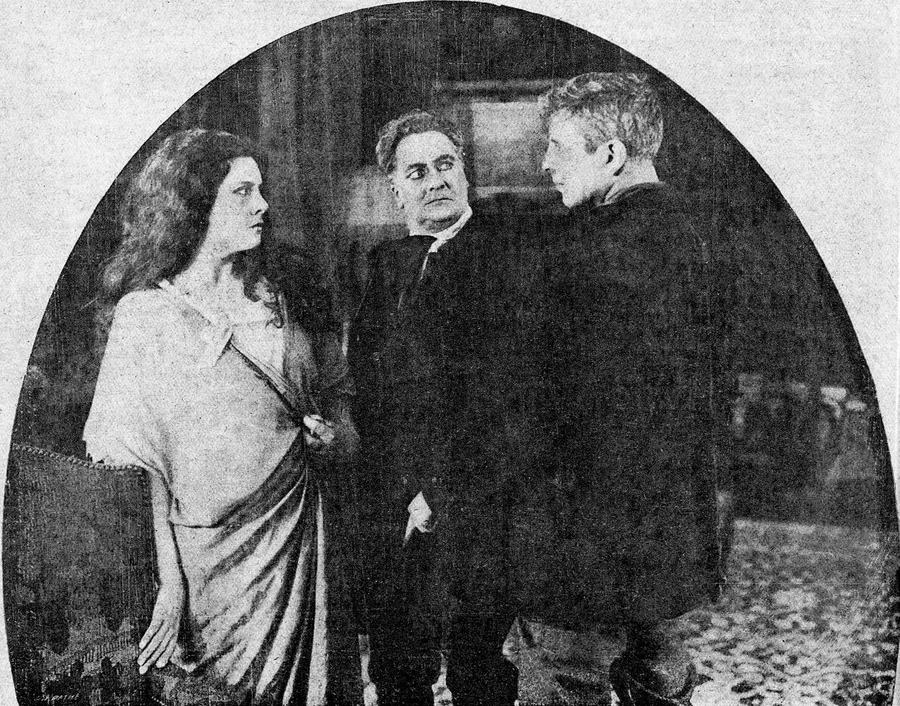
Thematically, L'énigme is a film of profound depth. It explores the corrosive effects of secrecy, the fragility of identity, and the ways in which the past inextricably shapes the present. The film’s French provincial setting is not merely a backdrop but a character in its own right, with its narrow cobblestone streets and imposing church serving as constant reminders of the community’s moral hypocrisies. This setting is reminiscent of the small-town dynamics in The Enemy Within, though Hervieu’s portrayal is far more nuanced, avoiding the didacticism of that earlier work. Instead, L'énigme presents a world where morality is gray, and every character is complicit in some way, however minor, in the perpetuation of the town’s secrets.
The film’s greatest strength, however, lies in its ambiguity. Hervieu refuses to offer pat resolutions or moral judgments, instead inviting the viewer to engage in the enigma on their own terms. This open-endedness is both a challenge and a reward. Unlike the more straightforward narratives of The Battle Cry of Peace, which prioritizes social commentary over character depth, L'énigme is a film that thrives in the spaces between the lines. Its power lies in what is left unsaid, in the glances exchanged and the silences that speak volumes.
In terms of influence, L'énigme has left an indelible mark on the cinematic canon. Its exploration of psychological unraveling and its use of setting as a narrative device can be seen in the works of later directors such as Ingmar Bergman and Michael Haneke. The film’s emphasis on the interior lives of its characters, rather than external action, prefigures the nouvelle vague’s focus on subjective experience. This is not to diminish its place in the history of French cinema, however. L'énigme stands as a singular achievement, a film that defies easy categorization and demands to be experienced rather than merely analyzed.
For modern audiences, L'énigme offers a rare opportunity to witness the evolution of cinematic language. Its use of sound, for instance, is both innovative and subtle, with whispers and echoes playing as crucial a role as spoken dialogue. The film’s pacing, while deliberate, allows for a level of immersion that is increasingly rare in our fast-paced digital age. Watching L'énigme is akin to reading a slow-burn novel, where the buildup of tension is as important as the climax itself.
In conclusion, L'énigme is a film that transcends its era, offering a timeless meditation on the nature of truth, memory, and identity. Its legacy is not just in its immediate influence but in its enduring ability to provoke thought and discussion. For those willing to embrace its enigmatic nature, the film is a rewarding and unforgettable experience. As Clara walks into the mist, the viewer is left not with answers, but with the profound sense that the enigma is, in the end, the point.
IMDb —
1918
Community
Log in to comment.