DbcultAccessing Vault...
Cult Review
Senior Film Conservator
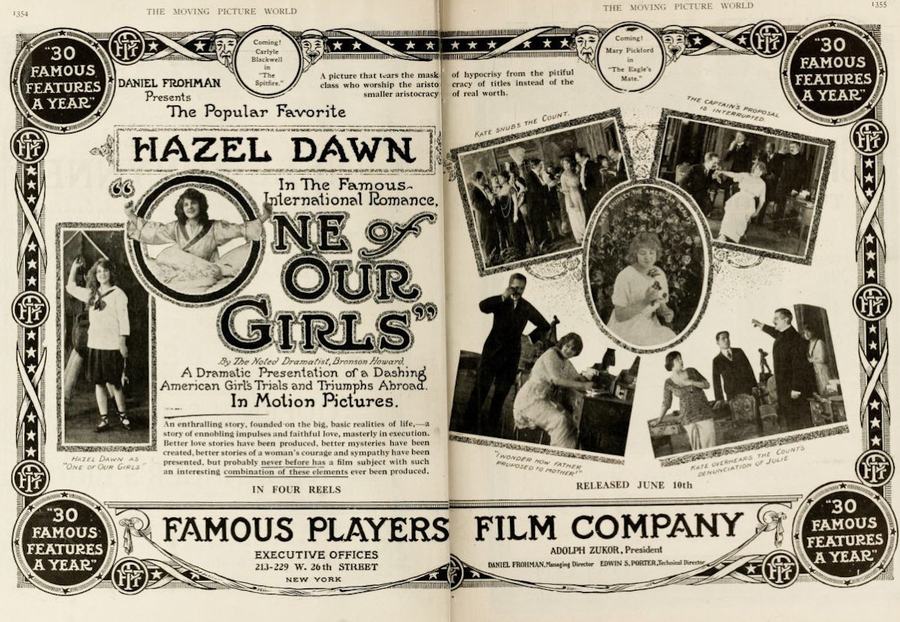
Strip away the intertitles and what remains is a fever dream painted in monochrome: tapers guttering against damp stone, a silk slipper abandoned on spiral stairs, the metallic hiss of a well bucket dredging more than water. Director Ralph Ince—never shy about mixing melodrama with moral archaeology—turns Eve Unsell’s adaptation of Bronson Howard’s stage hit into a chiaroscuro opera of female agency colliding with aristocratic rot.
From its first iris-in on Rolinda Bainbridge’s Kate Shipley—eyes bright as newly minted dimes—you sense the film’s governing paradox: a society that auctions its daughters under the guise of safeguarding them. Bainbridge, a Floridian beauty more associated with light comedies, weaponizes stillness here; watch her listening to Julie’s marital laments, the camera holding on a face that registers half a dozen micro-emotions before settling into flinty resolve.
Cinematographer Lucien Andriot treats the Foublanques estate as a breathing character: corridors smothered in tapestries so dense they swallow footfalls, banisters coiled like serpents, a garden well whose mouth gapes with mythic appetite. The murder set-piece—shot day-for-night via cobalt filter—owes as much to Fantomas’ urban Grand-Guignol as to the later gothic cathedrals of Shadows of the Moulin Rouge. Ince lingers on a single wet cobblestone, a splash of moonlit mercury, to imply violence without censor-baiting gore.
At its core, One of Our Girls is a proto-feminist referendum on property law dressed up as penny-thriller. Kate’s fortune is hers by birthright, yet the narrative continually tests whether capital can shield a woman from slander. The moment she chooses cousin-over-fiancé reputation, she weaponizes the very chastity myth used to police her. Compare this to A Lady of Quality where the heroine rewrites patriarchal rules inside Restoration England; Kate’s battlefield is the human heart, her armor is self-sacrifice.
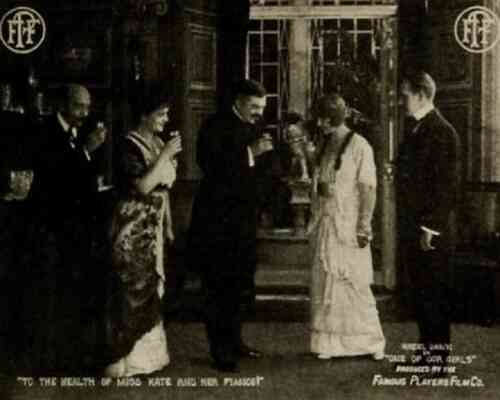
“Honor is the cloak men hang on hooks they themselves hammer into your spine.”—Kate Shipley’s unspoken intertitle
David Powell’s Captain Gregory could have lapsed into postcard heroism, but Powell—fresh from stock-company Shakespeare—underplays valor, letting micro-tics (thumb brushing saber hilt, eyes narrowing at moral hypocrisy) sketch a man whose bravery is rooted in empathy. Opposite him, Camille Dalberg’s Comte de Crébillon channels a boulevardier’s charm so cloying it ferments into menace; watch the way he fingers a rose to shreds while interrogating Kate, each petal a stand-in for female virtue.
And then there is Hazel Dawn as Julie, the “girl” of the title, though the film slyly insists Kate is equally ours. Dawn’s pallor is no cosmetic choice—she reportedly fasted before key scenes, her collarbodies casting shadows deep enough to drink. The result: a living Pre-Raphaelite painting, all wan spirituality and caged panic.
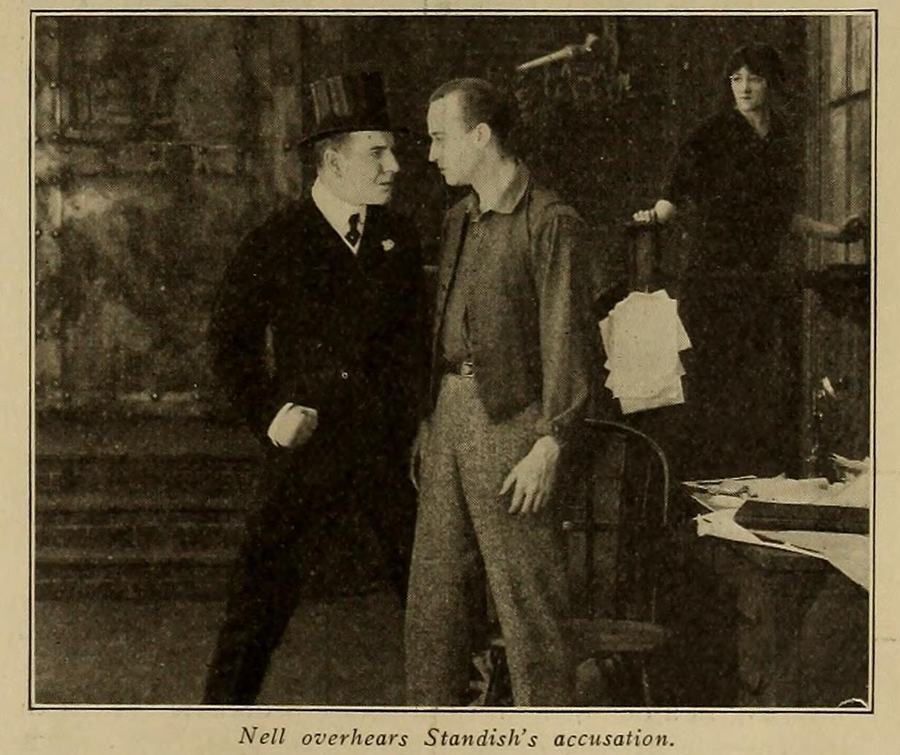
Yes, it’s 1914, so “sound” resides in orchestra pits. Yet Ince orchestrates visual volume: the percussive slam of a drawbridge, the metallic rasp of Kate’s engagement ring sliding across parquet, the hush of skirts like surf on gravel. Contemporary exhibitors were encouraged to drop a cymbal at the moment the corpse surfaces in the well; surviving cue sheets show a fermata marked “maestoso horrore,” proof that filmmakers already understood silence as the loudest special effect.
Modern viewers may spot DNA strands later woven into Hitchcock’s Rebecca or even the spiral guilt of Schuldig. But Ince’s storytelling rhythm is vaudeville-quick: a red-herring suicide note, a midnight elopement aborted by a thunderclown storm, a courtroom confession timed to the hoof-beats of a cavalry charge. Each act ends on what screenwriting guru Lajos Egri would call a premise reversal—the Comte’s power deflated, Kate’s virtue inverted from suspect to saint.
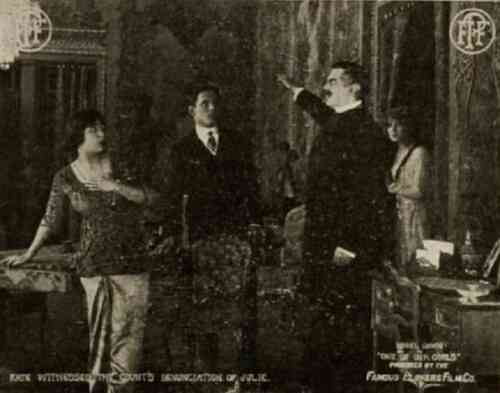
Where The Leap of Despair hurls its heroine off literal cliffs, One of Our Girls prefers emotional precipices. And while La Dame aux Camélias romanticizes consumptive courtesans, this film refuses to die of beauty; its women fight, lie, love, and ultimately re-author their futures.
Though monochromatic, the tinting strategy speaks volumes: amber for Kate and Gregory’s flirtations by the Loire, viridian for the Comte’s nocturnal prowls, rose for Julie’s wedding—a ironic baptism. Restoration prints at La Cinémathèque reveal hand-painted crimson flecks on the well-scene negative, subliminally warning of bloodbath beneath placid water.
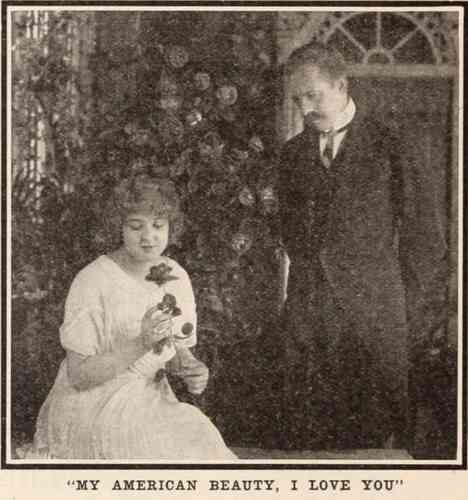
Folklore teaches that coins dropped into wells purchase wishes; Bronson Howard’s original play turns that motif inside out: bodies replace coins, and the only wish granted is the exposure of sin. Ince literalizes this by shooting the well from a top-down angle, the curved brickwork forming a memento mori halo. It’s a visual quote later echoed in Les Misérables, Part 2: Fantine when Fantine’s demise is framed through a well-like sewer culvert.
Released June 1914, the film rode a wave of Trans-Atlantic-envy—American audiences relished seeing Yankee virtue outfox European decadence. Variety called it “a veritable tonic for patriotic maidens,” while The Moving Picture World praised its “delicate equipoise between thrill and delicacy.” Yet prints vanished into WWI paper-drives, and only a 1978 Desmet transfer at Eye Filmmuseum kept it from total oblivion. Today, circulated via DCP, it earns gasps at festivals—proof that narrative sinew outlasts cultural amnesia.
Read against the geopolitical backdrop—months before Sarajevo—the Comte’s crumbling nobility mirrors Europe’s waning imperial nerve, while Kate’s New-World pragmatism forecasts America’s impending financial ascendance. The film’s marriage plot thus smuggles in a thesis about capital’s transfer westward, sealed with a kiss and a military pension.
A 2K restoration premiered at Le Giornate del Cinema Muto 2019, accompanied by Donald Sosin’s brisk piano score. As of 2024, it streams on Classix and occasional FilmStruck-heritage pop-ups; physical media remains elusive, though boutique label Kino lists it as “under consideration.”
If you crave velvet-gloved ferocity, gender politics sharpened to a stiletto, and cinematography that teaches shadows to speak, One of Our Girls demands your eyeballs. It’s neither quaint relic nor campy hoot but a surgical dissection of how societies punish women for the very sins men mint. Watch it once for plot pyrotechnics, rewind for visual whispers, screen a third time to notice how often doors—locked, half-open, ominously ajar—govern every scene, reminding us that freedom, especially for “our girls,” is always on the threshold.
IMDb —
1923
Community
Log in to comment.