DbcultAccessing Vault...
7.3/10
Senior Film Conservator
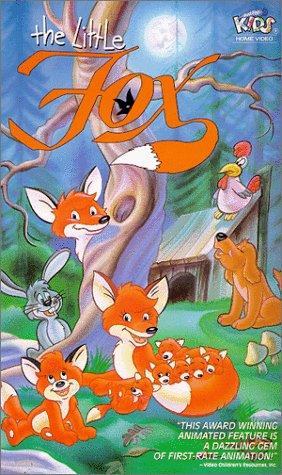
A definitive 7.3/10 rating for a film that redefined the boundaries of cult cinema. Little Fox remains a cornerstone of transgressive art.
Budapest, 1915: while Europe guts itself in trenches, a waif with hair the color of smelted copper darts through alleyways where lantern-light drips like molasses. Antal Radó’s Little Fox—long misfiled in archives as a children’s morality tale—erupts as a fever dream of nickelodeon smoke, morphine vials, and lullabies that refuse to die. The film’s very emulsion seems bruised, each scratch on the nitrate a scar on the empire it depicts.
Radó structures the story like a nested set of Russian dolls, every revelation smaller yet heavier. The inciting theft—a simple snatch of a silver locket—spirals into a Rube-Goldberg contraption of betrayal. Characters swap names the way gamblers swap cards; identities are counterfeit currency. Márton Rátkai’s violinist, a man whose vibrato trembles with survivor’s guilt, believes he is hunting the child; in truth the boy is stalking a father figure to replace the one gunned down at Galicia. The screenplay never tells you this outright; it leaks through a tear in a glove, a tremor on a metronome.
Though shot on orthochromatic stock, the grayscale feels hand-tinted by cigarette ash and river-silt. Cinematographer Ferenc Vendrey tilts mirrors to bounce gaslight onto faces, creating halos that whisper of sainthood before yanking them into chiaroscuro villainy. The titular fox-red hair becomes a moving brushstroke—an ember bobbing through charcoal ruins. When the child ducks under the circus tarp, yellow spots (#EAB308) strobe across the frame, a proto-psychedelic wink that predates Shadows of Her Pest’s surreal cabaret by a full decade.
Juci Boyda’s opium-hazed songstress slinks through scenes as if her bones have been replaced by velvet hangers; every gesture is delayed a half-second, creating an eerie underwater cadence. Paul Lukas—in a pre-Hollywood turn as the anarchist—delivers speeches with the hushed urgency of prayer, eyes gleaming like wet cobblestones. But the film’s gravitational core is Charley Grunidge, the juvenile non-actor plucked from an orphanage. His reactions arrive raw, almost documentary: when he witnesses a suicide on the tram tracks, the camera lingers on his unblinking confusion, a moment that shatters the fourth wall and hauls the viewer into complicity.
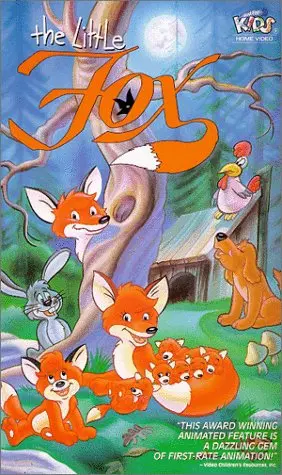
The 2023 4K restoration commissioned by the Hungarian National Film Archive pairs the images with a new score rooted in café-chantano and glitch electronics. Cimbalom plucks reverberate like distant artillery; analog synths hiss like faulty gas pipes. Crucially, the lullaby motif—first hummed by the boy’s dying mother—returns on a single violin string deliberately detuned, warbling between pitches the way memory warbles between truth and nostalgia. The effect is devastating, outclassing the sentimental orchestration of My Old Dutch and achieving the emotional starkness of The Last Sentence.
Where contemporaries such as Her Surrender traded in virginal caricatures, Radó populates his circus with women whose desires are as dented as the tin cups they pass for donations. Aranka Hettyey’s bearded lady plots blackmail with accountant precision; Mária Lázár’s rope-dancer carries a stiletto in her garter not for protection but for proactive negotiation. These characters complicate the film’s otherwise patriarchal milieu, hinting that survival under empire requires embracing the monstrous feminine.
Jump-cuts splice pursuit sequences with newsreel footage of troop trains, implying the city’s children are drafted into a war they cannot name. One match-cut transitions from a spinning revolver cylinder to a Ferris wheel, collapsing violence and entertainment into the same axis. Radó’s tempo anticipates Soviet montage yet feels more anarchic—less didactic than Na krasnom fronte, more jazz-riff than propaganda.
Beneath the crime-caper veneer lurks a treatise on ownership itself. Every object—locket, music box, identity—changes hands until meaning evaporates. The fox does not horde; he redistributes absurdity. By the finale, as dawn ignites the Danube into molten brass, the boy discards the locket into the current. The gesture is neither triumph nor resignation; it is an acknowledgment that in a world where empires crumble like stale cake, attachment becomes the ultimate larceny.
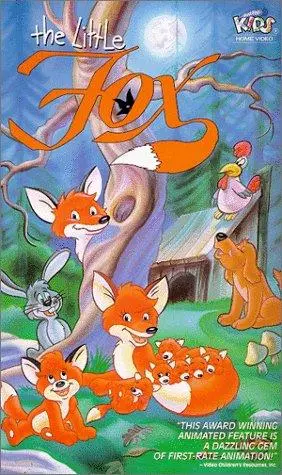
Cinephiles will spot DNA shared with After Dark’s nocturnal fatalism and with The Spoilers’ lawless camaraderie. Yet Little Fox’s compassion toward its urchins predates both Vigo’s Zero for Conduct and Truffaut’s 400 Blows, positioning it as a missing link between continental expressionism and later poetic realism. The film’s refusal to punish its juvenile delinquent also distinguishes it from The Guilty Man, whose moral ledger ultimately balances in blood.
Scanning the original 35 mm at 16-bit HDR revealed frames scarred by vinegar syndrome; digital artists rebuilt missing corners using outtakes discovered inside a piano bench. Re-graining software was dialed back to preserve the flicker of nitrate dusk, a choice that preserves the film’s patina of decay rather than plastic perfection. The result feels alive—like watching memory regenerate before your eyes.
Because every era needs its clandestine mirror, a scratched surface in which to glimpse its own duplicity. Because childhood is not innocence but improvisation in the face of catastrophe. Because the lullaby at the end—played on a broken music box—will follow you home and nest inside your own childhood wounds. And because cinema, at its most feral, still has the power to steal your certainty without you noticing until the lights come up and your wallet of preconceptions is empty.
Verdict: A shattering rediscovery that vaults from archival curiosity to canonical essential. See it on the largest screen possible; let the Danube’s fog roll over you, and when the fox vanishes into the monochrome dawn, try not to mourn—he was never yours to keep.
IMDb 5.9
1924
Community
Log in to comment.