DbcultAccessing Vault...
6.4/10
Senior Film Conservator
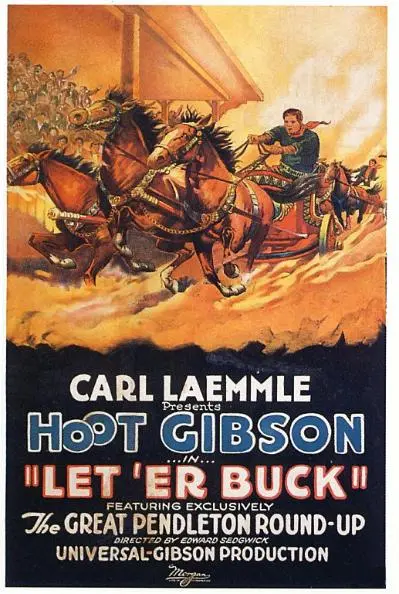
A definitive 6.4/10 rating for a film that redefined the boundaries of cult cinema. Let 'er Buck remains a cornerstone of transgressive art.
Is Let 'er Buck worth your time in the modern era? Short answer: Yes, but only if you have a stomach for the unvarnished, dusty reality of 1920s stunt work. This film is a mandatory watch for Western historians and Hoot Gibson completists, but it will likely frustrate those who require a fast-paced, dialogue-heavy narrative to stay engaged.
This film works because it captures the authentic, dangerous energy of the Pendleton Round-Up with a documentary-like precision that modern CGI cannot replicate. This film fails because the central misunderstanding—a staple of silent melodrama—is stretched to its absolute breaking point, making the protagonist look more like a fool than a victim of circumstance. You should watch it if you want to see one of the era’s greatest horsemen, Hoot Gibson, performing at the peak of his physical powers without the safety nets of contemporary filmmaking.
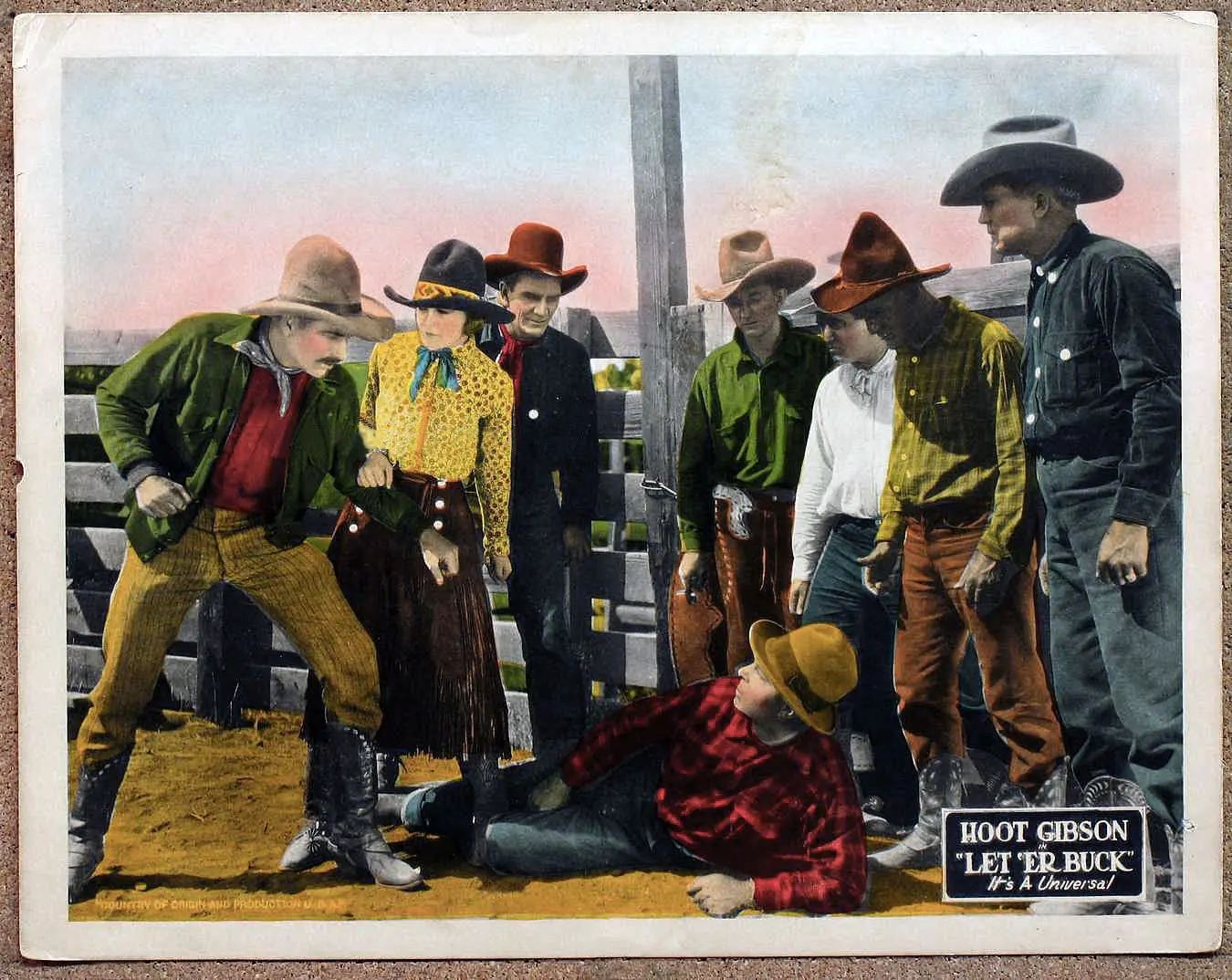
Hoot Gibson was never the brooding, stoic type like William S. Hart. He was the everyman cowboy—approachable, slightly mischievous, and incredibly athletic. In Let 'er Buck, Gibson plays Bob Howard with a lightness that contrasts sharply with the film's darker inciting incident. When Bob is forced to shoot his fiancé's cousin, Gibson doesn't lean into the tragedy with the over-the-top hand-wringing common in films like The Third Degree. Instead, he portrays a man simply trying to survive a bad hand.
There is a specific moment early in the film where Bob is flirting with Mabel (Marian Nixon). The chemistry is genuine, unforced, and remarkably modern. Gibson’s ability to communicate affection through a simple tip of the hat or a wry smile makes the subsequent tragedy feel more personal. He isn't just a character; he’s a guy you’d want to share a campfire with. This relatability is what kept audiences coming back to his films throughout the 1920s.
However, the film’s reliance on Gibson’s charm occasionally masks the thinness of the script. The writers, Edward Sedgwick and Raymond L. Schrock, seem content to let Hoot be Hoot, which works for the first two acts but leaves the finale feeling a bit hollow. It’s a performance that carries the movie, but it can’t quite fix the narrative potholes that appear once the dust settles in Oregon.
If you strip away the romance and the legal drama, Let 'er Buck is essentially a love letter to the Pendleton Round-Up. The cinematography during the rodeo sequences is nothing short of visceral. Unlike the staged, controlled environments of many silent films, the footage here feels wild. You can almost taste the grit in the air as the broncos buck and the steers thrash. It’s a far cry from the more theatrical presentations found in movies like Big Dan.
One standout scene involves a relay race that is filmed with a moving camera—a rarity for the time. The sense of speed is immense. You see the horses' muscles straining and the riders' desperate transitions. It’s here that the film transitions from a standard Western into something resembling a sports documentary. The director, Edward Sedgwick, clearly understood that the audience wasn't just there for the plot; they were there for the spectacle of the West.
The integration of real-world rodeo footage with the fictional narrative is mostly successful, though the seams occasionally show. There are moments where the lighting changes abruptly between the location shots and the studio pick-ups. Yet, the sheer audacity of the stunts makes these technical flaws easy to ignore. It’s a reminder that in 1925, being a movie star often required being a legitimate athlete.
To put it bluntly: Yes, but with caveats. If you are looking for a complex exploration of the human condition or a subversion of Western tropes, you won't find it here. Let 'er Buck is a product of its time—a straightforward action-melodrama designed to thrill a Saturday matinee crowd. It is, however, an invaluable piece of cinematic history.
The film excels as a time capsule. It shows us a version of the American West that was already disappearing in 1925. The Pendleton Round-Up was a celebration of a lifestyle that was being modernized out of existence. Seeing it captured on film, with the legendary Hoot Gibson at the center, provides a visceral connection to the past that no textbook can offer. It works. But it’s flawed.
The central plot engine—Bob Howard fleeing because he thinks he’s a killer—is a bit of a groaner. In many ways, it feels as dated as the plot of Stop That Wedding. The audience knows the cousin isn't dead, and watching Bob wallow in guilt for forty minutes can be taxing. The film asks us to believe that a seasoned cowboy wouldn't stick around to check a pulse or face the music, which feels like a slight betrayal of the character's supposed toughness.
However, the second half of the film compensates for this narrative weakness by ramping up the tension. Once Bob is in Oregon, the stakes shift from legal survival to professional pride. The way the film weaves the rivalry between the two ranches into the rodeo competition is clever. It gives the final stunts a narrative weight that would have been missing if the rodeo were just an exhibition. The coincidence of his fiancé's ranch entering the same competition is a bit much, but that’s the silent era for you.
The pacing is generally brisk, though there is a noticeable lag in the middle act as Bob settles into his new life in Oregon. These scenes lack the punch of the opening and the adrenaline of the finale. The inclusion of secondary characters like the ranch owner provides some much-needed world-building, but they often feel like placeholders until the next horse appears on screen.
Pros:
Cons:
Let 'er Buck is a rough-and-tumble relic that deserves more respect than it usually gets. It isn't a masterpiece of storytelling, but it is a masterpiece of action. At a time when many Westerns were becoming formulaic, this film leaned into the reality of the rodeo to find its soul. It lacks the polish of Two Moons, but it makes up for it with sheer grit.
The final verdict? It’s a 7/10. You come for the story, but you stay for the stunts. Hoot Gibson proves why he was a titan of the genre, and the Pendleton Round-Up proves that reality is often more exciting than fiction. If you can look past the creaky plot mechanics, you’ll find a film that still has plenty of kick left in it. Just don't expect it to play by the rules of modern logic.
IMDb 5.1
1936
Community
Log in to comment.