DbcultAccessing Vault...
Cult Review
Senior Film Conservator
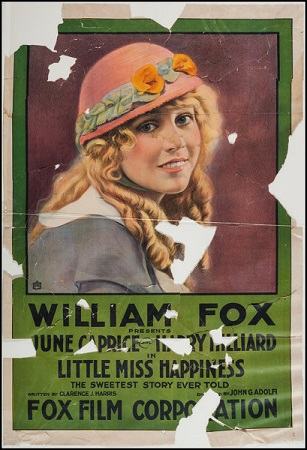
In the annals of early cinema, where narratives often relied on broad gestures and melodramatic arcs to convey profound human emotion, Little Miss Happiness emerges as a surprisingly nuanced and deeply affecting exploration of sacrifice, societal judgment, and the intricate tapestry of familial love. This silent era gem, penned by Clarence J. Harris, transcends its seemingly simple premise to deliver a powerful commentary on the constraints placed upon women in the early 20th century, particularly concerning motherhood and social acceptance. Its narrative, while rooted in the conventions of its time, resonates with a timeless quality, inviting contemporary audiences to ponder the enduring questions of moral rectitude versus compassionate action.
The film introduces us to Sadie Barker, a woman whose urban disillusionment drives her back to the ostensibly simpler life of her birth village. However, Sadie’s return is fraught with a secret that threatens to unravel her carefully constructed facade: a baby, a consequence of a marriage she has abandoned, and a child she fears cannot be openly acknowledged in her father's home. The societal pressures of the era, particularly the stigma associated with a woman raising a child without a visible, present father, are palpable, even in the film's unspoken visual language. This initial predicament sets the stage for a series of choices that ripple through the lives of several individuals, demonstrating the profound impact of secrets and the unexpected wellsprings of human kindness.
Sadie's desperate plea finds an unlikely savior in Lucy White, a character whose inherent goodness becomes the moral compass of the film. Lucy’s immediate, unquestioning agreement to care for the infant, and her subsequent decision to claim the child as her own, is an act of extraordinary selflessness. This pivotal moment not only propels the narrative forward but also intensifies the thematic exploration of sacrifice. Lucy, already a marginalized figure within the community due to her perceived social standing, willingly embraces further ostracization, all to protect Sadie and her child. This narrative thread, where a woman takes on the burden of another's secret, echoes the dramatic tension found in films like Judy Forgot, where mistaken identities and hidden truths drive much of the emotional conflict, albeit with a far more profound and self-sacrificing core in Little Miss Happiness.
The moral landscape of the village, vividly (if silently) portrayed, is one of strictures and judgment. Lucy’s fabricated story, intended to shield Sadie, inadvertently casts her into the role of a societal pariah, a single mother out of wedlock – a deeply scandalous position in that era. The film excels at conveying the weight of community condemnation through visual cues and the reactions of the supporting cast, making Lucy’s plight feel genuinely precarious. This societal pressure forms a significant antagonist, a pervasive force more potent than any single villain. It forces characters into impossible choices, highlighting the hypocrisy and rigidity of social norms.
Amidst this crucible of judgment, a beacon of unwavering devotion emerges in Dave Allen. His character arc is perhaps the most compelling testament to the power of genuine affection and moral courage. Despite the community’s scorn and the scandalous rumors surrounding Lucy, Dave chooses to stand by her. This decision is not born of ignorance, for Lucy, in her determination to protect Sadie’s secret, even conceals the truth from him. Dave's choice is a conscious act of defiance against societal expectations, a profound affirmation of his love and belief in Lucy's inherent goodness, irrespective of what appearances suggest. His willingness to risk his own reputation and future for her sake elevates the film beyond a simple melodrama to a powerful statement on the nature of unconditional love.
The dramatic tension builds as Lucy grapples with her secret, the weight of the community's judgment, and her burgeoning love for Dave. The silent film medium, with its reliance on facial expressions and body language, is particularly effective here. One can almost feel the internal turmoil, the silent pleas, and the deep-seated fears that plague Lucy. Her performance, undoubtedly a highlight, must convey the delicate balance between protective resolve and personal anguish. This emotional complexity is reminiscent of the intense personal struggles depicted in films like Sposa nella morte!, where characters navigate profound moral dilemmas under immense pressure, often at great personal cost.
The ensemble cast of Little Miss Happiness, under the direction of an uncredited but clearly skilled hand, delivers performances that are both restrained and deeply expressive, a hallmark of compelling silent cinema. June Caprice, likely in the role of either Sadie or Lucy, would have been tasked with embodying the film's emotional core. Her ability to convey complex feelings without dialogue – through subtle shifts in gaze, a trembling lip, or a graceful movement – would have been paramount to the film's success. Such roles demanded a mastery of pantomime and an innate understanding of human psychology, allowing the audience to project their own understanding onto the characters’ silent suffering and triumphs.
Harry Hilliard, likely portraying Dave Allen, would have needed to project a blend of rugged sincerity and steadfast loyalty. His performance would have been crucial in making Dave's controversial decision to stand by Lucy believable and admirable. The chemistry between these leads, communicated purely through visual interaction, would have been the engine driving the film's romantic and dramatic tension. Sidney Bracey, Leo A. Kennedy, Grace Beaumont, Lucia Moore, Edward Hoyt, Zena Keefe, Sara Alexander, Genevieve Reynolds, and Robert Vivian, in their respective roles, would have contributed to the rich tapestry of the village community, their reactions and interactions serving as the silent chorus of public opinion and moral judgment. The collective effort of this cast would have been instrumental in creating a believable world where such a dramatic deception could unfold and ultimately be resolved.
Clarence J. Harris, the writer behind this evocative narrative, demonstrates a keen understanding of human nature and the dramatic potential of moral dilemmas. His screenplay, even in its silent form, manages to construct a compelling story rich with emotional depth and social commentary. Harris doesn't shy away from depicting the harsh realities of societal judgment, yet he balances this with an optimistic faith in the power of individual goodness and the redemptive quality of love. The resolution, where Max and Sadie are reunited and reclaim their child, provides a satisfying narrative closure, allowing Lucy and Dave to embark on their own future, free from the shadow of the secret. This carefully orchestrated resolution speaks to a desire for moral order and happiness, typical of the era's storytelling, yet achieved through a journey of considerable emotional turbulence.
The pacing of the film, characteristic of silent cinema, would have allowed for lingering shots on expressive faces, amplifying the emotional impact of each revelation and decision. The use of intertitles would have been critical in conveying dialogue and essential plot points, but the true artistry would lie in the actors' ability to make these titles feel like extensions of their own silent performances, rather than mere explanatory text. The visual storytelling, from the contrasting imagery of the bustling city and the tranquil village to the intimate close-ups capturing moments of despair and joy, would have been key to its evocative power.
Little Miss Happiness, despite its age, offers a surprisingly modern resonance in its exploration of themes. The pressures faced by Sadie, the selflessness of Lucy, and the steadfastness of Dave speak to universal human experiences. The film critiques the narrow-mindedness of a community quick to judge, yet also celebrates the individuals who dare to defy such conventions for the sake of love and compassion. It reminds us that appearances can be deceiving, and that true character is often revealed not in adherence to rigid rules, but in acts of genuine empathy and courage.
The contrast between urban and rural life, a common trope in early cinema, is subtly woven into the fabric of the narrative. Sadie's initial flight from the city suggests a search for authenticity and acceptance, only to find that even in the village, the weight of social expectations can be just as oppressive, if not more so. This thematic thread can be seen in other films of the period that explored similar geographical and social divides, such as The Girl of the Sunny South, where contrasting environments often serve to highlight character development and societal conflicts.
Moreover, the film's depiction of a woman's struggle with unconventional motherhood, even if through a proxy, was a significant topic. In an era when women's roles were rigidly defined, films that explored the complexities of female experience, particularly outside the traditional marital framework, offered both a reflection and a subtle challenge to prevailing norms. Lucy's character, in particular, embodies a quiet strength and moral fortitude that transcends her assigned social status, making her a compelling figure of resilience. Her willingness to endure public shaming for a higher, compassionate cause is a powerful statement on the nature of maternal love, whether biological or adoptive in spirit.
In its quiet dignity and profound emotional impact, Little Miss Happiness stands as a testament to the power of silent cinema to convey intricate human drama. It is a film that, through its compelling narrative and expressive performances, invites introspection on themes of personal sacrifice, the courage to defy societal judgment, and the enduring strength of love. For those interested in the rich tapestry of early American filmmaking, or simply in a story that touches the deepest chords of human empathy, this film offers a journey worth taking. It reminds us that happiness, often elusive, can sometimes be found in the most unexpected acts of kindness and the most steadfast displays of devotion, ultimately blossoming from the seeds of selfless sacrifice.
The enduring appeal of such narratives lies in their ability to strip away the complexities of modern life and present fundamental human conflicts in their rawest form. The silence, far from being a limitation, becomes an invitation for the audience to lean in, to interpret, and to connect more deeply with the characters' unspoken emotions. It is in this silent space that the true power of Little Miss Happiness resides, allowing its poignant story to resonate across generations and speak to the universal truths of the human heart. The film, like many from its era such as The Unbroken Road, emphasizes the journey of personal fortitude and the ultimate triumph of integrity over adversity, leaving a lasting impression on the viewer long after the final frame.

IMDb 6.8
1919
Community
Log in to comment.