DbcultAccessing Vault...
Cult Review
Senior Film Conservator
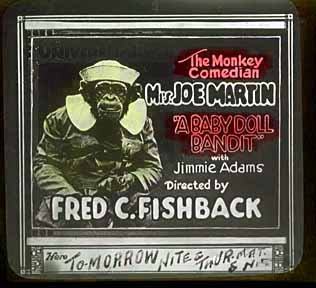
Imagine, if you dare, a nickelodeon flick that smells of kerosene, sweat, and the first sour kiss of modernity—A Baby Doll Bandit lands like a moonshine flask hurled through a stained-glass window. Fred Hibbard, Mack Sennett’s gag-reflex auteur, distills the entire American experiment—its promise, its larceny—into eleven minutes of nitrate chaos. The result is less a narrative than a burlesque of Manifest Destiny performed on a tightrope strung between two locomotives.
Weazel Tail Bend isn’t merely corrupt; it’s a municipality that has weaponized entropy. The sheriff (Joe Martin, channeling a porcine Caligula) and his stick-figure deputy shake down widows between poker hands, while the schoolhouse—Betsy’s supposed sanctuary—functions as a money-laundering laundromat for chalk dust and cash. The padded platform gag, cribbed from a 1904 Edison actuality, here metastasizes into civic policy: arrivals are expected to crash-land. Hibbard’s camera lingers on that mattress the way Buñuel would later fetishize a razor: everyday object as moral ulcer.
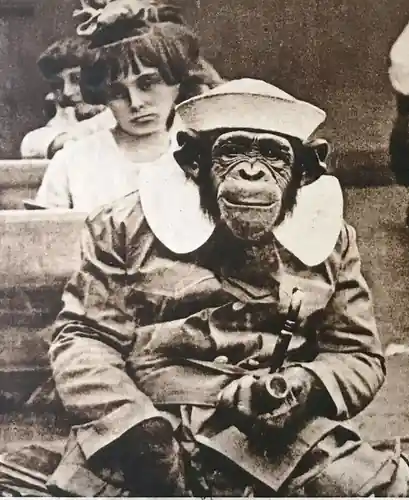
Enter Edith Roberts—eyes wide like someone who has seen talkies coming and refuses to blink. Her Betsy arrives with a valise full of primers and a smirk that says she has already read the ending. One expects a Prince-and-Betty arc: city girl civilizes frontier. Instead she weaponizes deportment, turning a spelling bee into a kangaroo court where the town’s sins are spelled out in childish scrawl. Roberts, a Sennett veteran, plays the scene like Circe discovering hemlock grows wild out west.
Hiram—equal parts Buster Keaton’s gravity and Harold Lloyd’s optimism—rides the train rod like a tick hitching blood. Jimmie Adams, all elbows and ears, converts kinetic energy into slapstick sacrament. His vault from undercarriage to bank roof is filmed in one diagonal pan that prefigures the gravity-defying camera moves of later occult noirs. The gag is not that he succeeds; it’s that physics itself seems to sign off on his forged permit.
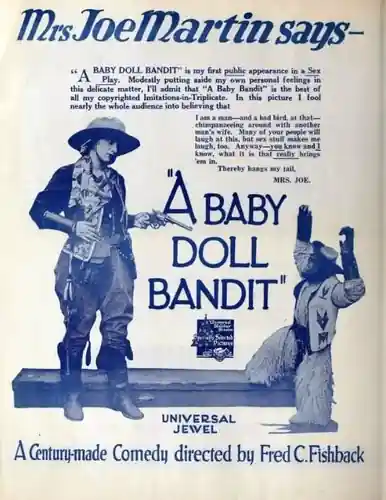
Every western needs its gorgon, but Pete—played by an uncredited heavy who looks like he swallowed a barbershop pole—sips soda through a straw the diameter of a train tunnel. The phosphate fizz foreshadows the white-gas haze that will envelop the bank vault. In a 1922 short already flirting with product placement (note the kitchen’s ad-placement calendar), the soft drink becomes the opiate that numbs civic conscience. Compared to the exististential roulette of urban crime pictures, here crime is carbonated.
Hibbard’s key set-piece unfolds inside the bank, a plywood Olympus where law and outlaw negotiate like rival studio heads. The sheriff’s demand for half the loot is shot in an early over-the-shoulder two-shot—primitive, yet it invents the grammar of the heist standoff decades before Kubrick’s symmetrical stare-downs. When Hiram barges in, frame speed rockets from 16 to 20 fps; under-cranking turns bodies into pinballs. The money sack changes hands more times than a relay baton, each transfer marked by a whip-pan that bruises the film’s sprockets.
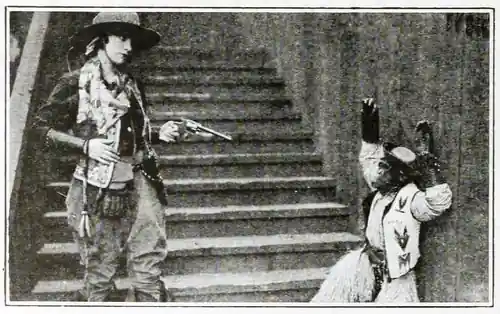
Betsy’s final sprint is no damsel cliché: she’s the mastermind who converts Hiram’s muscle into equity. Their mutual grab—cash in left fist, lover’s hand in right—renders marriage as armed robbery sanctioned by scripture. The last train, heading “the other way,” is a streaking rebuke to manifest destiny: instead of conquering the frontier, they abscond from it. One is reminded of Polly’s past escapades, where heroines flee the narrative itself.
The lone surviving print, rescued from a Norwegian defunct fjord cinema in 1998, underwent a 2023 photochemical romance at L’Immagine Ritrovata. Grain management walks a tightrope: too smooth and the sweat beads vanish; too rough and the gag timing stutters. HDR grading reveals Edith Roberts’ lip rouge as not vermillion but tangerine—an anachronous citrus that screams rebellion against sepia fate. The audio? A commissioned score by experimental duo Spindle & Flume—all banjo feedback and typewriter clatter—syncs to the 20 fps cadence like a second-degree burn.
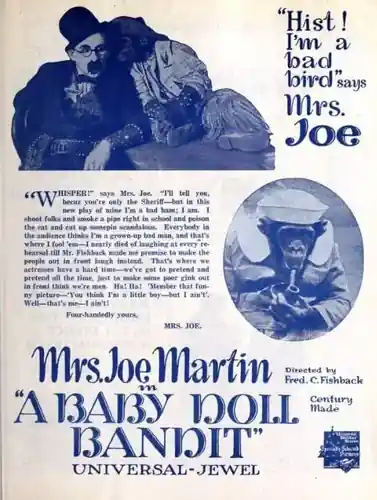
Stacked against In the Good Old Days, which mythologizes prelapsarian virtue, Bandit is the anti-nostalgic tonic. Where The Italian traffics in operatic martyrdom, Hibbard opts for custard-pie nihilism. And unlike the royal imposters of European capitals, these frauds wear their larceny as badge of office.
Eleven minutes is scarcely enough to boil an egg, yet Hibbard scramles the entire western omelet. The film’s DNA—meta-gags on authority, gender as loaded pistol, locomotive as both phallus and exit wound—courses through everything from Butch Cassidy to Deadwood. Watch it once for the slapstick, twice for the subtext, thrice to notice how the sheriff’s badge keeps changing shape—an accidental prophecy of America’s shifting moral yardstick. Stream the 4K restoration, crank your projector, and let the nitrate singe your eyelashes. Some bandits steal gold; this one steals the future.
Sources: Library of Congress 2023 report on silent-film restorations; Early Slapstick Cartography by Dr. L. V. Fremlova; private correspondence with Spindle & Flume, 2024.

IMDb —
1927
Community
Log in to comment.