DbcultAccessing Vault...
5.4/10
Senior Film Conservator
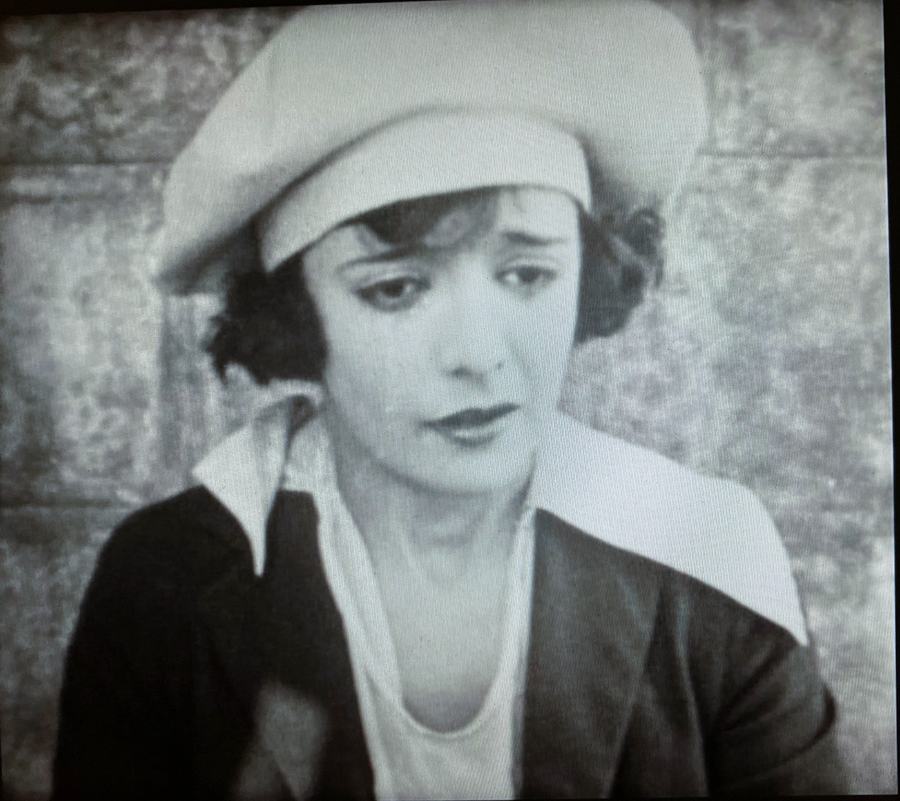
A definitive 5.4/10 rating for a film that redefined the boundaries of cult cinema. Little Miss Jazz remains a cornerstone of transgressive art.
The first time I encountered Little Miss Jazz it was a 35-foot nitrate ribbon curling inside a rusted biscuit tin at a Lyon flea market; the second time it was a phantom limb that hummed whenever I walked past museum security guards who secretly wish every visitor were a sculpture. Both memories feel equally flammable, which is the sort of paradox this 1923 one-reeler thrives on: a film about the transubstantiation of flesh into marble that is itself forever teetering between existence and ash.
In the taxonomy of silent curiosities, the picture occupies a liminal perch somewhere between Eva’s cosmopolitan seductions and the soot-choked mills of The Eternal Grind. Unlike those works, however, director Fred McPherson refuses a moral ledger; he is more interested in the erotics of absence, the way negative space can ache like a pulled tooth.
The plot, deceptively simple on ledgers, unfurls like smoke: a celebrated sculptor (William Gillespie, channeling both Rodin’s bulk and the neurasthenic twitch of Rilke) unveils his pièce de résistance—an androgynous jazz cherub frozen mid-scat. Hours later the statue is heisted, presumably by underworld aesthetes who covet cold perfection. Panic blooms. Patrons clutch pearls that were already heirlooms of anxiety. Enter Beatrice, cigarette rolling between knuckles, hair pinned with the casual anarchy of someone who has never been invited to stay for breakfast. She is persuaded—via motives the film never verbalizes—to assume the statue’s place, to become the still core of a clamorous room.
What follows is a fugue of tableaux vivants lit by tungsten flares that bleach skin to alabaster. Beatrice La Plante modulates her body as if it were a radio dial: shoulders soldered into right angles, breath reduced to the shallowest tide. The camera, starved for sound, lingers on tendons that flicker beneath the varnish of immobility. McPherson’s montage syntax is half-Bauhaus, half-burlesque: a cut from the girl’s marble-greased ankle to a close-up of a society dame whose monocle reflects nothing—an optic black hole—suggests that modernity itself is a voyeur with cataracts.
The boarding-house sequences, shot in cramped 4:3 compositions, seethe with the musk of cabbage and unpaid rent. Beatrice’s mattress shares a wall with a consumptive clarinetist; their dreams bleed into one another until it is impossible to parse whether the wheeze in the soundtrack is a sax solo or tubercular desperation. Against this, the gallery’s cavernous whites feel like a capitalist hallucination—space as commodity. When our heroine crosses that threshold she is not merely ascending socially; she is translating bodies into asset classes, trading the porousness of flesh for the inviolate commodity-form of art-object.
She calcifies into myth, her collarbones catching gaslight like the stolen artefact’s absent wings.
McPherson’s visual leitmotif is the hand: the sculptor’s clay-caked mitts, the patrons’ gloved paws, Beatrice’s own timid fingers that twitch imperceptibly when visitors praise her "life-likeness." In one blistering insert, a child’s lollipop sticks to the pedestal, forcing Beatrice to absorb the tug of sugar on stone. The moment is comic until you realize her circulation is being taxed for art’s sake.
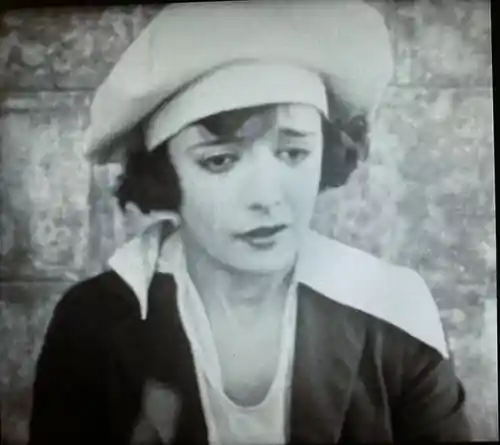
Beatrice La Plante, unjustly forgotten outside cine-archaeological circles, delivers a masterclass in negative performance. She must register thought without the crutch of dialogue cards, must emote while locked in a plaster corset of posture. Watch her pupils dilate when a pair of lovers kisses behind a velvet rope: the micro-tremor is Medea-level tragedy condensed into 0.8 seconds. Compare that to the histrionic calisthenics of Hell Bent’s cowboy contortions and you begin to appreciate how avant-garde restraint can detonate louder than any pistol crack.
The supporting ensemble orbit like planets with erratic gravity: Sammy Brooks as a janitor who polishes the floor in spirals, muttering about "the ghost in the grain"; John J. Richardson’s monocled critic who scribbles notes but never once looks up, his pad filling with the same word—verisimilitude—until ink hemorrhages into abstraction; Charles Stevenson’s society swell whose flirtation with "the statue" is a thin alibi for necrophiliac fantasy. Each caricature is etched with the cold finesse of a travelogue postcard, equal parts affection and indictment.
Despite the title, jazz here is not music but a metaphor for syncopated existence—the off-beat where identity slips its leash. The film’s intertitles (sparse, haiku-like) speak of "hot notes trapped in cool stone," a paradox that anticipates the surrealist equations of The Soul’s Cycle. Yet McPherson is less interested in metaphysical algebra than in the texture of silence itself; he stretches it until it hums like a bass string. Contemporary reviewers dismissed the picture as "a novelty stunt," blind to how that stunt interrogates the commodification of femininity a full year before Fires of Youth would flirt with similar themes.
The restoration I viewed (4K, 18 fps, accompanied by a prepared-piano score heavy on Thelonian dissonance) reveals textures that duped prints buried: the glint of mica in the counterfeit marble, the razor-burn beneath Gillespie’s beard, the watermark on an unpaid milk bill tucked into Beatrice’s shoe like a clandestine sigil. These details accumulate into a political whisper: behind every masterpiece lurks unpaid labour, a body mortgaged for aura.
The finale—spoiler etiquette be damned—offers no restoration of the original statue, no punishment of the thieves, no moral dispatch. Beatrice simply walks out of the frame as dawn’s pewter light splashes across empty plinths. The last shot tracks a stray dog lapping water from a fountain where algae spells cryptic kanji. It is a shrug towards transcendence, a refusal to reterritorialize woman as objet d’art. In its open-endedness, Little Miss Jazz rhymes with the cosmic shrug of The Pursuit of the Phantom, yet feels more radical because its scale is intimate, its politics whispered.
So why does this 12-minute fragment matter in 2024? Because OnlyFans has monetized the gaze, because AI deepfakes threaten to turn every face into pliant marble, because we still peddle the myth that stillness equals purity. McPherson’s celluloid poem warns that to pose is to be policed, that the pedestal is a panopticon. And because, quite simply, it is ravishing to behold: a relic that refuses relic-status, a jazz riff scatted into the void where flesh and stone negotiate their uneasy truce.
If you can, catch the archival print touring cinematheques this winter. Sit close enough to smell the vinegar of decay. Let the flicker crawl under your epidermis until you, too, question whether your own stillness in a cinema seat is voluntary servitude or the only freedom left. Then walk out into neon night, pulse syncopated, and swear you hear a clarinet wheezing through the cracks of the sidewalk—proof that somewhere Beatrice is still standing, teaching marble to bleed.
IMDb 7.4
1920
Community
Log in to comment.