DbcultAccessing Vault...
6.3/10
Senior Film Conservator
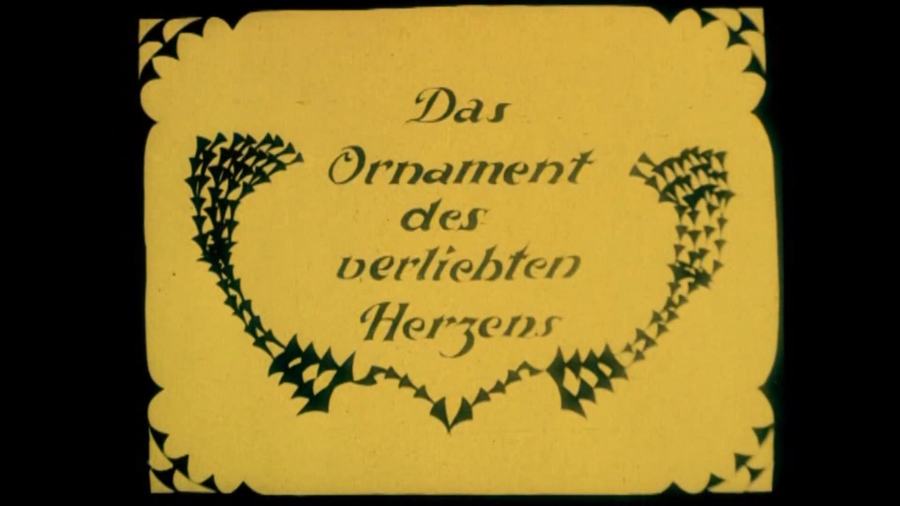
A definitive 6.3/10 rating for a film that redefined the boundaries of cult cinema. The Ornament of the Lovestruck Heart remains a cornerstone of transgressive art.
In the nascent years of cinematic exploration, when the medium was still grappling with its identity, a singular vision emerged from the fertile ground of German expressionism: Lotte Reiniger. Her debut, The Ornament of the Lovestruck Heart, is not merely a film; it is a profound artistic statement, a meticulous ballet of light and shadow that predates and profoundly influences the animation landscape. This short, yet immensely impactful, work arrived at a time when cinema was largely dominated by live-action narratives, often grand melodramas or slapstick comedies, exemplified by films like Mr. Fix-It or the dramatic tension of The House of Tears. Reiniger, however, charted an entirely different course, crafting a universe of intricate paper cutouts that moved with an astonishing fluidity, giving birth to an art form that resonated with a unique, ethereal beauty.
The film’s brilliance lies in its deceptively simple premise: two lovers, rendered as elegant, black silhouettes against a luminous backdrop, engage in a delicate courtship. But to merely describe it as such is to overlook the profound depth of its execution. Reiniger, a true pioneer, understood the power of visual metaphor, and here, she masterfully wields it. The lovers’ interactions are not confined to their physical forms; rather, their emotions, their burgeoning affection, and the very essence of their connection are externalized and made tangible through an ever-shifting, ornate background. This backdrop is no passive stage dressing; it is a living, breathing entity, a dynamic tapestry that mirrors and amplifies their balletic movements, their unspoken desires, and their profound bond. It’s a testament to the sophistication of early animation that such a complex interplay could be conceived and executed with such grace, a feat requiring an unparalleled blend of artistic vision and painstaking technical prowess.
Reiniger’s technique is nothing short of revolutionary, demanding an almost unimaginable degree of patience and precision. Using hinged cutouts of black paper, carefully manipulated frame by infinitesimal frame under a camera, she brought a level of articulation and expressive potential to animation that was utterly unprecedented. Unlike the more boisterous, cartoonish animations that would later emerge, Reiniger’s silhouettes possess an inherent elegance, a timeless quality that evokes ancient shadow puppetry while simultaneously pushing the boundaries of cinematic art. The absence of facial features, often considered crucial for conveying emotion in traditional acting (think of the nuanced expressions in films like The Dumb Girl of Portici or the dramatic flair of The Death Dance), becomes, in Reiniger’s hands, an extraordinary strength. It compels the viewer to focus entirely on posture, gesture, and the elegant sweep of the figures, allowing the imagination to fill in the emotional blanks, creating a deeply personal and immersive experience that transcends the literal.
The lovers’ movements are meticulously choreographed, each subtle tilt of a head, each outstretched arm, each intertwining form speaking volumes. There's a palpable tenderness in their initial approach, a burgeoning curiosity that blossoms into mutual adoration. The way their silhouettes lean into each other, the delicate brush of their paper fingers, the synchronous sway of their bodies – these are the brushstrokes of emotion, rendered in pure, unadulterated form. It’s a remarkable feat of visual storytelling, demonstrating that profound sentiment can be communicated without a single word or even a discernible facial expression, relying instead on the universal language of body movement, a principle also explored in the pantomimic traditions seen in works like Pierrot, albeit through a vastly different and often more direct theatrical medium. Reiniger's abstraction elevates this communication, making it universal and deeply resonant.
What truly elevates The Ornament of the Lovestruck Heart beyond a mere technical exercise is the symbiotic relationship between the characters and their environment. The ‘ornament’ of the title is far from static; it is a fluid, organic extension of the lovers’ internal states, a visual echo of their evolving rapport. As their affection deepens, the intricate patterns of the background morph and evolve, sometimes blossoming into swirling floral motifs that suggest nascent joy, at other times spiraling into more complex, almost architectural designs that mirror the deepening structure of their bond. This dynamic backdrop acts as a visual barometer of their hearts, a silent chorus to their romantic overtures, constantly transforming to reflect the emotional temperature of their interaction. One might compare this innovative approach to set design and its symbolic function to the more elaborate theatrical productions of the era, though Reiniger’s method achieves a level of abstraction and direct emotional mirroring that live-action sets could rarely emulate, bound as they were by physical constraints.
Imagine the subtle shift in a leaf pattern as a hand tentatively reaches out, or the blossoming of a stylized flower as two figures draw near, their forms almost merging. These are not coincidences; they are deliberate, painstaking choices by an artist who understood that every element on screen contributes to the overall narrative and emotional impact. This profound interconnectedness creates a sense of undeniable harmony, a world where love quite literally reshapes reality, where internal feelings manifest externally in a dance of form and void. It’s an early, powerful example of environmental storytelling, where the setting is not just a place but an active, indispensable participant in the story's emotional arc. This level of innovative visual integration was far ahead of its time, pushing against the more straightforward narrative structures prevalent in many films of the period, such as the episodic adventures of Beatrice Fairfax Episode 12: Curiosity, which relied on plot twists rather than environmental resonance.
Lotte Reiniger’s work, beginning with this remarkable debut, laid foundational stones for the art of animation. Her meticulous approach to frame-by-frame manipulation, her innovative use of light and shadow, and her profound understanding of visual rhythm established a new paradigm. While Walt Disney would later popularize cel animation, Reiniger carved out her own unique niche, proving the versatility and artistic depth of animation as a medium. Her films are not just historical curiosities; they are vibrant, emotionally resonant works that continue to captivate audiences with their elegance and ingenuity, showcasing a path animation could take that was distinct from the burgeoning cartoon industry.
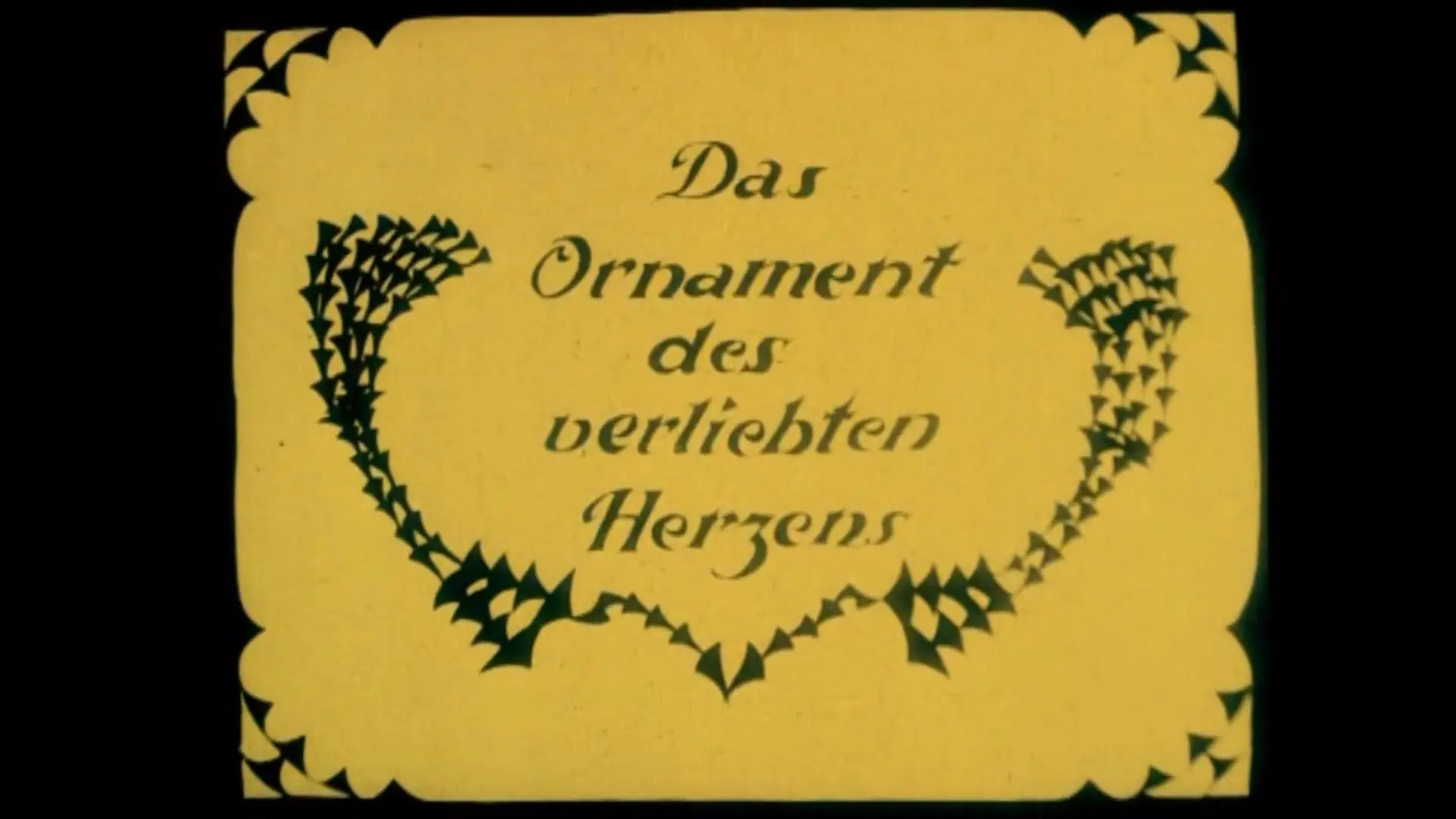
The influence of The Ornament of the Lovestruck Heart, and Reiniger’s subsequent body of work, extends beyond the realm of silhouette animation. It speaks to the power of abstraction, of conveying complex ideas and emotions through simplified forms. In a cinematic era often characterized by overt dramatic gestures and literal interpretations, Reiniger offered a refreshing counterpoint, a world of suggestion and poetic grace. Her approach to visual storytelling, where the background is as much a character as the foreground figures, foreshadows later experiments in animation and even live-action filmmaking, where environments are crafted to reflect psychological states or narrative progression. This subtle yet powerful integration stands in stark contrast to the more utilitarian backdrops often seen in contemporary films like The Winning Stroke or Up from the Depths, which focused more on action and plot mechanics and less on symbolic environmental resonance. Her pioneering spirit carved out a space for animation as a serious art form.
The aesthetic purity of Reiniger’s silhouettes is striking. There are no garish colors, no distracting details; only the stark contrast of black against a luminous, often subtly textured field. This monochromatic palette forces the viewer to engage with form, line, and movement in their most fundamental expressions. The interplay of light and shadow is not just a technical necessity; it is a deliberate artistic choice that imbues the film with a dreamlike, almost otherworldly quality, reminiscent of ancient myths brought to life. The figures seem to float, to glide, their movements imbued with a grace that transcends the physical limitations of paper cutouts. It’s a testament to Reiniger’s genius that she could evoke such profound beauty and emotional depth from such elemental components, transforming simple paper into vibrant, living beings.
The intricate details within the ornamental background, despite being silhouettes, are astonishing. One can discern delicate filigree, swirling vines, and blossoming flora, all crafted with an almost impossible precision. These details are not static; they ripple and flow, expanding and contracting in perfect synchronization with the lovers’ dance, creating a visual dialogue between character and environment. This kinetic artistry creates a mesmerizing visual rhythm, a silent symphony of movement and transformation that enthralls the eye. It’s a level of artistic commitment that rivals the most ambitious live-action productions of the period, such as the epic scale attempted in Joan of Arc or De lefvande dödas klubb, albeit through a radically different, more intimate, and profoundly imaginative lens.
At its heart, The Ornament of the Lovestruck Heart tells a universal story: the unfolding of love. Stripped of dialogue and intricate plot, the film distills the essence of human connection to its purest form. It speaks to the unspoken language between two individuals, the intuitive understanding that blossoms as affection deepens, the subtle cues and responses that define nascent romance. The balletic movements of the lovers are not merely physical; they are an externalization of their souls intertwining, a visual metaphor for the delicate dance of courtship, from hesitant glances to confident embraces. This timeless theme ensures the film's enduring relevance, transcending its historical context and technical innovations, speaking directly to the human experience of longing and connection.
The film’s brevity enhances its impact, leaving a lasting impression through its concentrated artistry. It’s a masterclass in economy of expression, proving that profound artistic statements don’t require elaborate runtimes or complex narratives. Instead, through focused vision and meticulous execution, Reiniger creates a complete world, a fully realized emotional journey within a few captivating minutes. This stands in stark contrast to the longer, often sprawling narratives of the era, such as the numerous reels of The Littlest Rebel or the extended social commentary of Warning! The S.O.S. Call of Humanity. Reiniger proves that sometimes, less is indeed more, especially when that 'less' is imbued with such exquisite artistry and profound symbolic resonance.
Reiniger’s genius also lies in her ability to evoke so much from so little. The black silhouettes, by their very nature, invite projection. The viewer's mind fills in the details, imagining the expressions, the textures, the nuances that are deliberately omitted. This active participation from the audience deepens the engagement, making the experience uniquely personal and introspective. It's a testament to the power of suggestion, a technique that masterful visual artists have employed for centuries, now brought to the nascent medium of cinema with groundbreaking effect. This reliance on the viewer's imagination sets it apart from more literal visual narratives, creating a more intimate and introspective experience. It's a film that resonates not just through what it shows, but through what it inspires us to perceive, truly a triumph of cinematic suggestion.
In an era where filmmakers were still discovering the grammar of cinema, Reiniger was already writing poetry with it, pushing the boundaries of what was thought possible for the moving image. She transcended the simple documentation of reality, venturing into the realm of abstract art and emotional symbolism with unparalleled confidence. Her debut is not just a historical footnote; it is a vibrant, living piece of art that continues to inspire and enchant. It reminds us that animation is not merely a genre for children or a technical gimmick, but a potent, versatile artistic medium capable of expressing the most profound human experiences with unparalleled grace and originality. The quiet power of Die blaue Laterne, another German film from the period, perhaps shares some of its introspective quality, but Reiniger's work stands alone in its unique aesthetic and pioneering animated form, a true beacon of innovation.
The Ornament of the Lovestruck Heart is a foundational text in the history of animation, a shimmering example of early cinematic innovation, and a beautiful, timeless meditation on love and its expression. It is a film that rewards repeated viewings, revealing new layers of artistic detail and emotional resonance with each encounter. Reiniger’s precise, elegant vision, so evident in this debut, established her as an animator of unparalleled skill and a true artist of the moving image. Its legacy is not just in the films it directly inspired, but in its unwavering proof that imagination, coupled with meticulous craft, can create cinematic wonders that defy the passage of time. The film is, in essence, an ornament itself – delicate, intricately crafted, and utterly captivating, a jewel in the crown of early cinema.
IMDb —
1923
Community
Log in to comment.