DbcultAccessing Vault...
Cult Review
Senior Film Conservator
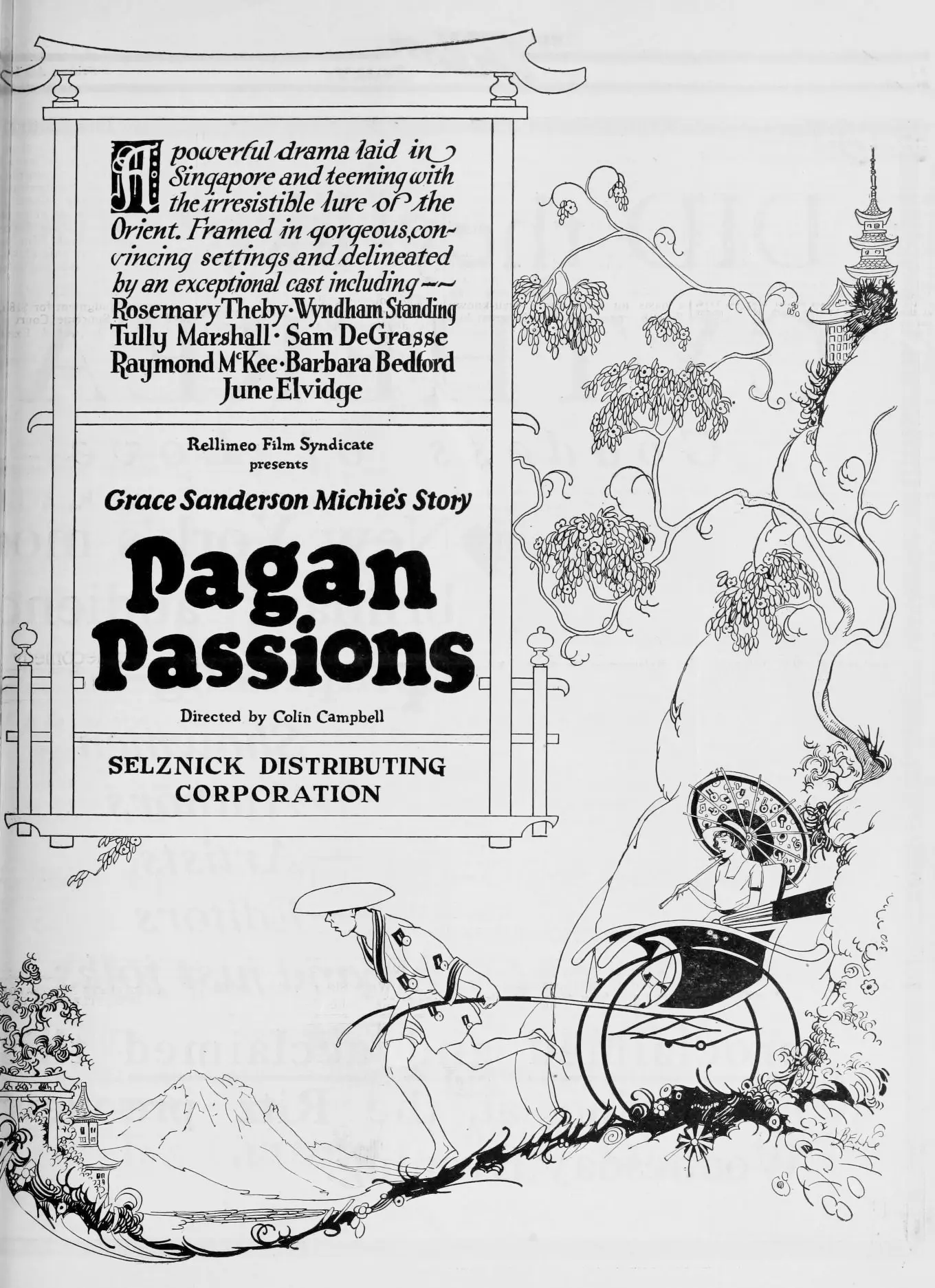
In the pantheon of silent-era melodramas, few films capture the agonizing viscosity of a downward spiral with the same unflinching gaze as Pagan Passions (1924). Directed with a keen eye for shadow and social stratification, the film transcends the simplistic tropes of the 'fallen man' to present a sophisticated interrogation of how trauma and environment conspire to erode the human spirit. Unlike the more whimsical explorations of class found in Peg o' My Heart, this narrative is drenched in a melancholic fatalism that feels startlingly modern.
The opening sequences, set in the Malay Peninsula, are a masterclass in atmospheric dread. We see Dreka Langley (portrayed with a haunting, predatory grace by Rosemary Theby) navigating the wreckage of her marriage. The suicide of her husband isn't treated as a mere plot point but as a seismic shift that destabilizes her moral compass. When she abandons her child, the film doesn't just ask us to judge her; it forces us to witness the sheer weight of her desperation. This isn't the sanitized poverty of Daddy-Long-Legs; this is a raw, jagged survivalism that sets the stage for the carnage to follow.
The transition to the Chinese underworld marks a profound shift in the film's visual language. Here, the cinematography adopts a chiaroscuro intensity that mirrors the psychological state of John Dangerfield. Wyndham Standing’s performance as Dangerfield is a revelation of slow-motion collapse. We watch as his tailored suits give way to the tattered garments of a man who has surrendered his identity to the void. The 'pagan' in the title refers not to a specific theology, but to this perceived abandonment of Western, Christian moral structures in favor of an anarchic, opium-tinged hedonism.
This portrayal of the underworld is, of course, filtered through the lens of 1920s Orientalism, yet it possesses a grit that distinguishes it from contemporaries like The Secret of the Swamp. The subterranean sets are dense with texture—smoke, damp stone, and the constant, oppressive presence of the 'other.' It is within this crucible that the film explores the malleability of the male ego. Dangerfield’s eventual ascent from this pit is less a triumph of will and more a somber realization of the vacuum he left behind.
The second act of Pagan Passions introduces a layer of complexity that elevates it above standard melodrama: the crisis of racial identity. Frank, the abandoned son, is raised believing he is Chinese. This plot point allows the film to touch upon the visceral anxieties of the era regarding miscegenation and 'passing.' When Frank (Raymond McKee) falls for Shirley (Barbara Bedford), the tension isn't merely romantic—it's ontological. He believes himself to be an outsider in his own skin, a theme that resonates with the social critiques found in The Average Woman, though handled here with significantly more gravitas.
The irony of Dangerfield unwittingly adopting his lover's son creates a narrative friction that propels the film toward its tragic conclusion. The California school setting serves as a stark, sun-drenched contrast to the murky depths of the first half, yet the shadows of the past loom just as large. The film suggests that no matter how far one travels—from Malay to China to California—the bloodlines of sin and sacrifice are inescapable. This thematic preoccupation with the 'sins of the mother' provides a fascinating counterpoint to the maternal idealism seen in Mothers of Men.
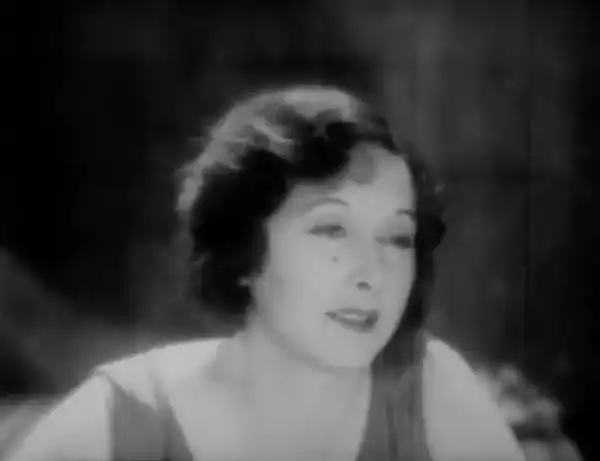
Rosemary Theby’s Dreka Langley is perhaps one of the most complex antagonists of the silent era. She is not a 'vamp' in the traditional, cartoonish sense; she is a woman who has been hollowed out by her circumstances. Her interactions with Dangerfield are characterized by a desperate sort of intimacy—she needs him to fall so that she isn't alone in her degradation. When she reappears in the final act, she is a ghost of her former self, a walking memento mori. Her eventual sacrifice—taking a bullet intended for her son—is the only currency she has left to buy redemption.
The technical execution of her death scene is remarkably restrained. There are no histrionics, only a quiet, bloody epiphany. It is a moment that rivals the emotional intensity of St. Elmo, yet it feels more grounded in the harsh realities of the characters' lives. Grace Sanderson Michie’s screenplay doesn't offer easy forgiveness, but it does offer a path toward closure that feels earned through suffering.
Visually, Pagan Passions is a feast of silent-era technique. The use of tinting—deep blues for the nights in the Malay Peninsula and amber hues for the domestic interiors—creates a rhythmic pulse that guides the viewer through the film's decade-spanning narrative. The pacing is deliberate, allowing the characters' internal states to manifest through long, expressive close-ups. Tully Marshall, in a supporting role, provides a textured performance that adds a layer of grit to the proceedings, ensuring the film never veers too far into the ethereal.
The film’s climax, while adhering to the expected conventions of the genre, manages to subvert the 'happy ending' trope by leaving the audience with a sense of profound loss. Yes, Frank marries Shirley, and yes, Dangerfield returns to his wife, but the cost of this restoration is the total annihilation of the woman who started the journey. It is a cynical, yet honest, appraisal of social preservation. In this regard, it shares a certain DNA with the darker undertones of The Desired Woman.
To watch Pagan Passions today is to witness the silent cinema at its most ambitious. It is a film that grapples with the grand themes of human existence—identity, betrayal, and the possibility of grace—without flinching from the ugliness of the process. While some of its racial politics are undeniably dated, the core emotional truth of the film remains potent. It is a story about the masks we wear and the high price of removing them. As a piece of narrative architecture, it is as sturdy and intricate as any modern drama, proving that the language of silent film is far from primitive.
For those who appreciate the psychological depth of Blackmail or the epic scope of Ruslan i Lyudmila, Pagan Passions is an essential artifact. It reminds us that the human heart, with all its 'pagan' impulses, has always been the most fertile ground for cinematic exploration. The film stands as a testament to the power of the melodrama to act as a mirror to our most hidden selves, reflecting back a image that is both terrifying and, ultimately, profoundly human.
IMDb —
1925
Community
Log in to comment.