DbcultAccessing Vault...
Cult Review
Senior Film Conservator
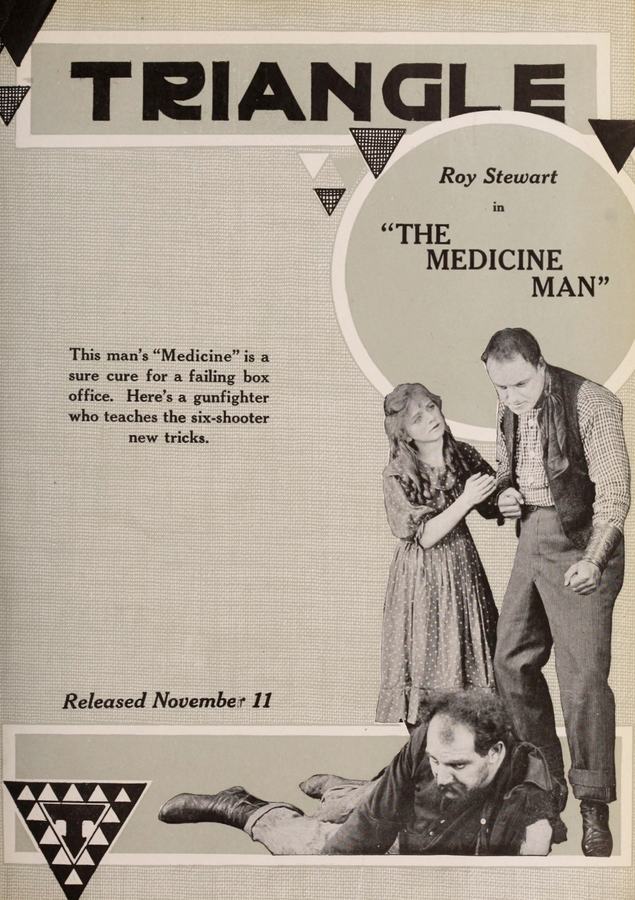
A sun-scorched parable of ownership and identity, The Medicine Man unspools across the blistered planks of El Dorado like a fever dream told by a rattlesnake.
Sheriff Jim Walton—equal parts custodian and cautionary tale—slaps a closure order on a yawning mine shaft that coughs up ghosts and pyrite in equal measure. Enter Joe Malone, a man whose moral compass spins like a weather vane in a tornado, uncovering that the vein of gold he’s been spooning in the moonlight is legally entangled with the pirouetting silhouette of Edith Strang, a traveling dancer whose sequins catch every lie told beneath kerosene lamps.
Director Alan James and scenarist Jack Cunningham stage this frontier custody battle with the austerity of a chapbook and the emotional wallop of a pulpit sermon. The result is a 58-minute tone poem that feels closer to The Despoiler’s ethical rot than to the sentimental uplift of A Welsh Singer. Every frame is baked until the celluloid threatens to craze, mirroring the characters’ cracked ideals.
William Fairbanks—no relation to Douglas—plays Walton with the stillness of a man who has memorized every grave marker in the county. Watch his eyes when he first spots Edith across the saloon: a flicker of recognition, then the instant shutter, because empathy can be a liability in a jurisdiction where deeds are printed on sweat and gunpowder.
Ann Forrest’s Edith is anything but the wilting daisy the intertitles first suggest. Her dance-hall routine is all business until the footlights dim; then the shoulders droop, the mascara smudges, and we glimpse the orphan calculating survival odds with every bat of an eyelash. Forrest carries the film’s central irony—that the only person who doesn’t thirst for the mine is its rightful heir—with a stoicism that rivals Lillian Gish without the Victorian frills.
Wilbur Higby’s Doc Hamilton oozes the oleaginous charm of every snake-oil sermon you’ve ever side-stepped in a county fair. He’s a frontier Zuckerberg, monetizing ephemera—except his IPO is literal ore. Note how Higby lets the smile collapse into a rictus the moment investors’ backs are turned; it’s a silent-era masterclass in micro-expression.
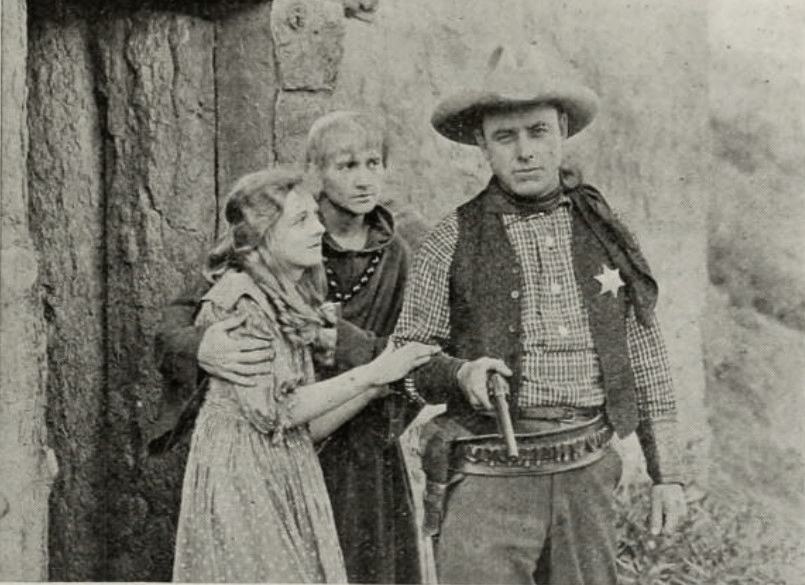
Cinematographer Roy H. Klaffki—unheralded outside archival circles—composes interior scenes like Dutch still-lifes: a whiskey bottle, a deed, a derringer, all arranged with Calvinist severity. Yet step outside and the camera gulps vast alkali vistas, dwarfing human greed beneath indifferent skies. The abandoned mine becomes a reverse cathedral, its pulpit plunging downward, promising transcendence via excavation.
Colorists restoring the 2022 4K print leaned into sepulchral cobalt for night sequences, allowing Hamilton’s wagon to glow like a plague doctor’s lantern—an unsubtle but chilling effect. The amber daytime tones, meanwhile, evoke cracked vellum, underscoring that every nugget yanked from the ground is another sentence inscribed on a palimpsest of violence.
Intertitles—often the Achilles heel of silent melodrama—here crackle with frontier vernacular. When Hamilton boasts, “There’s more gold in that girl’s signature than in her veins,” the line ricochets, hinting at both paperwork and patrimony, commerce and corporeality. Cunningham understands that in 1923, land ownership was already a metaphysical joke; the real currency is narrative—who gets to author the legend, who ends up a footnote.
Compare this to Pay Dirt’s blunt-force dialogue, where claim-jumping is merely an action verb. The Medicine Man treats every syllable as a potential lien on someone’s future.
Though originally exhibited with a house pianist, the contemporary restoration commissioned a score by Colleen O’Doherty that escorts the narrative rather than prods it. Banjo motifs arrive brittle and detuned, evoking strings stretched by desert air; a distant, distorted harmonica replicates the wheeze of a mine’s dying bellows. When Edith finally signs her name—under duress—the score drops to tinnitus-level feedback, as though the film itself refuses to romanticize the moment.
Genre historians often plant the feminist flag at The Girl and the Game (1915) or later at Helene of the North, but Edith Strang complicates that lineage. Yes, she requires rescue—twice—but the film’s closing beat belongs to her agency. Her decision to stay and marry Walton reads less as capitulation than as tactical alliance, a recognition that legitimacy on the frontier is forged not by parchment but by partnership. The film doesn’t trumpet this; it merely lets the locomotive steam away without her, a visual shrug that feels revolutionary in a decade still enamored with damsel tropes.
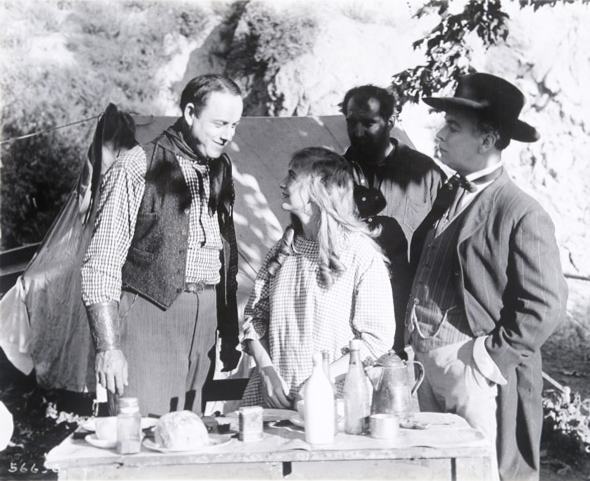
Watch The Treasure of the Sierra Madre after a Medicine Man screening and notice how John Huston borrows the claustrophobic cabin confrontation, the paranoia of shared wealth, the sudden moral inversion when pickaxes glint less brightly than pistols. Or revisit There Will Be Blood and sense the same spiritual desiccation: fortunes excavated, fathers devoured, sons left holding only the dust of filial betrayal.
Yet where those epics sprawl, Medicine Man compresses, proving that the short-form parable can scar as deeply as the three-hour opera of greed.
The 2022 4K restoration—funded by a coalition of University of Nevada-Reno archivists and a private consortium of Fairbanks descendants—premiered at Il Cinema Ritrovato and is now streaming on Kanopy in North America and MUBI in select European territories. A Blu-ray from Deaf Crocodile includes an audio essay by Kent Jones and a 20-page booklet on the peripatetic career of Ann Forrest, whose star dimmed too soon after the talkie transition.
For purists, a 35mm print with live accompaniment still tours select cinematheques; catch it if you can—the tactile flicker of nitrate amplifies the film’s existential shiver.
In an era when every pebble of classic cinema has been Instagrammed, hashtagged, and monetized, The Medicine Man retains the thrill of the unearthed vein. It’s a compact fable that interrogates ownership without delivering a TED Talk, a western that shoots the genre’s mythology in the foot and limps off whistling. Most crucially, it reminds us that every ghost town once throbbed with the same banal ambitions that currently overheat our own silicon mines—cryptocurrency, data, influence. The machinery updates; the claim-jumping endures.
So dim the lights, tilt your screen to eliminate glare, and let this brittle artifact whisper its dry caution: the real gold isn’t beneath your feet—it’s the story you’re willing to sign away.
IMDb 6.9
1934
Community
Log in to comment.