DbcultAccessing Vault...
Cult Review
Senior Film Conservator
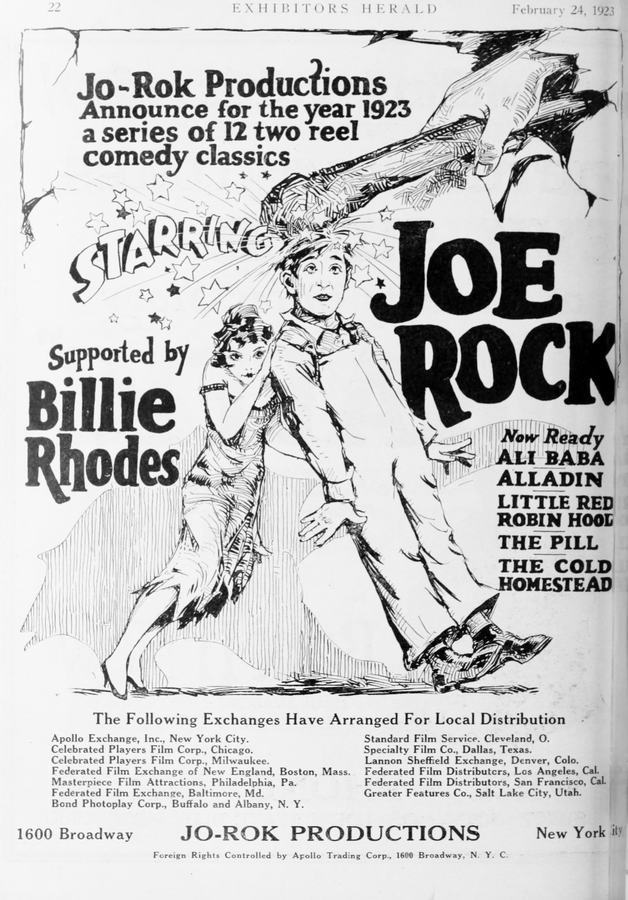
Stepping back into the golden, albeit silent, age of cinema, we encounter a peculiar yet profoundly charming little film: Little Red Robin Hood. Released in an era brimming with innovation and burgeoning narrative forms, this picture, starring the inimitable Joe Rock, Billie Rhodes, and Frank Alexander, presents a fascinating microcosm of human aspiration and the transformative power of fantasy. It’s more than just a comedic romp; it’s a quiet meditation on the origins of courage, dressed in the whimsical garb of a dream.
At the heart of this narrative lies Joe, a character so steeped in diffidence that his very presence seems to apologize for occupying space. He is not merely shy; he is paralyzed by an acute lack of self-belief, a condition exacerbated by the cruel realities of romantic competition. His affections are fixed upon a young woman, portrayed with delicate charm by Billie Rhodes, whose very existence seems to mock his quiet despair. But alas, love, as is often the case in these early cinematic tales, is not a smooth path for the faint-hearted. Standing squarely, and indeed rather portly, in Joe’s way is a formidable rival, brought to life with imposing comedic presence by Frank Alexander. This rival is everything Joe is not: confident, assertive, and physically dominant. The contrast between the two men is stark, almost painfully so, highlighting Joe’s perceived inadequacies and deepening his internal struggle. How can such a meek soul possibly contend with such an entrenched obstacle to his desires? His world, painted in the monochrome hues of his own anxiety, offers no easy answers, pushing him towards a most unconventional form of solace.
Faced with this seemingly insurmountable romantic hurdle, Joe does what many of us, in moments of profound helplessness, might consider: he retreats into the comforting embrace of literature. His chosen refuge is the venerable tale of Robin Hood, a narrative steeped in daring, justice, and the triumph of the underdog. It’s a story that resonates with a yearning for agency, a desire to right wrongs and claim what is rightfully one’s own, even if only in the pages of a book. The legend, with its verdant forests, its band of merry men, and its heroic leader, offers Joe a potent antidote to his dreary reality. He devours the tales of derring-do, imagining himself in the shoes of the legendary outlaw, finding a peculiar kind of soothing encouragement in the exploits of a man who fought fearlessly for what he believed in. This act of reading is more than mere pastime; it’s an active engagement with an alternative reality, a mental rehearsal for a bravery he believes is beyond his grasp. The power of narrative to transport, to inspire, and to shape our inner worlds is beautifully underscored here, a testament to the enduring human need for heroes.
It is within this fertile ground of literary immersion that the film truly takes flight. Overwhelmed by the narrative’s allure and perhaps by the sheer exhaustion of his emotional plight, Joe succumbs to sleep. What follows is not merely a dream, but a cinematic spectacle of wish fulfillment. Joe, the timid suitor, is transformed into Robin Hood himself. This dream sequence is the film’s imaginative core, a vibrant splash of fantasy that liberates both character and audience from the constraints of mundane reality. Suddenly, Joe is no longer the shrinking violet but a figure of commanding presence, clad in the iconic garb of the legendary outlaw. He brandishes a bow with newfound confidence, orchestrates daring feats, and confronts injustice with an unshakeable resolve. The world of Sherwood Forest, with its challenges and triumphs, becomes his training ground, a psychological crucible where his latent courage is forged. This isn't just a simple retelling of the Robin Hood story; it's Joe's unconscious mind actively re-scripting his own identity, absorbing the "adventure fever" that the legend instills. The visual language of this sequence, though confined by the technological limitations of the era, must have been utterly captivating, relying on exaggerated expressions, dynamic staging, and perhaps clever editing to convey the thrill of the dream. It reminds one of the imaginative leaps seen in films like One Glorious Day, where internal worlds manifest with vivid, often humorous, consequences.
The most compelling aspect of Little Red Robin Hood is not the dream itself, but its profound reverberations in Joe’s waking life. The dream is not a mere escape; it is a catalyst. When Joe finally awakens, the echoes of Sherwood Forest still resonate within him. The audacious spirit of Robin Hood has not vanished with the dawn; it has taken root, transforming his once-timid heart. He carries with him not just memories of a fantastical adventure, but the internalized experience of being brave, decisive, and victorious. The transformation is palpable. Where once he hesitated, he now acts; where once he cowered, he now confronts. This newfound confidence is not a superficial veneer; it is a genuine shift in his self-perception, a re-evaluation of his own capabilities. The dream has shown him what he *could* be, and in doing so, has empowered him to *become* it. This psychological journey, from diffidence to assertiveness, is the film's true triumph, demonstrating how the mind, even through the seemingly ephemeral medium of dreams, can reshape reality.
The success of such a narrative, particularly in the silent era, hinges entirely on the actors' ability to convey emotion and character through gesture, facial expression, and physical comedy. Joe Rock, in the titular role of Joe/Robin Hood, delivers a performance that is both endearing and surprisingly nuanced. His initial portrayal of the meek suitor is wonderfully empathetic, making his subsequent transformation all the more satisfying. Rock’s physical comedy skills, honed in numerous short films of the era, are undoubtedly put to good use in the dream sequence, allowing him to embody the swashbuckling hero with a blend of earnestness and comedic flair. Billie Rhodes, as the object of Joe’s affection, brings a delicate charm and a certain vulnerability to her role, making her a compelling figure for whom Joe's struggle feels worthwhile. Her reactions, often subtle, anchor the romantic stakes of the story. Frank Alexander, a stalwart of silent film comedy, is perfectly cast as the imposing rival. His bulk and bluster create a tangible threat, providing the perfect foil for Joe’s initial timidity and subsequent newfound boldness. The interplay between these three performers, relying solely on visual cues and intertitles, is a masterclass in silent film acting, each contributing to the film's delightful comedic and emotional texture. One might draw parallels to the expressive physicality found in other silent comedies of the time, where exaggerated yet precise movements conveyed entire dialogues.
While details regarding the film's specific direction are sparse, the efficacy of its storytelling speaks volumes. The narrative arc is clear, engaging, and remarkably efficient, a hallmark of well-crafted silent shorts. The use of intertitles would have been crucial, not just for dialogue, but for setting the scene and conveying Joe’s internal monologues, especially during his reading of Robin Hood. The cinematography, though perhaps not groundbreaking by today's standards, would have focused on clear compositions, expressive close-ups, and dynamic staging during the dream sequence to maximize its impact. The film deftly juggles several compelling themes. Foremost among them is the idea of **escapism as empowerment**. Joe doesn't just run away from his problems; he uses a fantasy world to find the tools to conquer them. This is a crucial distinction, elevating the narrative beyond a simple comedic premise. It speaks to the human capacity for self-improvement through imaginative engagement. Then there's the exploration of **masculinity and self-worth**. Joe’s journey is a classic tale of a man finding his inner strength, challenging societal expectations of what a 'hero' should look like, and proving that courage can be cultivated. The film also touches upon the **power of narrative and literature** to shape individual identity, a timeless concept that resonates even in our hyper-visual age. The dream sequence itself serves as a powerful metaphor for unlocking one's hidden potential, a theme explored in various forms throughout cinematic history, sometimes through more direct means like in The Hypnotist, where external influence alters perception and action.
Little Red Robin Hood, like many silent shorts of its time, was likely a part of a larger program, perhaps accompanying a feature film or a newsreel. These short comedies played a vital role in the early film industry, serving as training grounds for actors and filmmakers, and providing audiences with quick, often hilarious, doses of entertainment. They were accessible, broadly appealing, and often experimented with narrative structures and comedic tropes that would later inform feature-length productions. The film's premise, while simple, is remarkably effective for a short format, delivering a complete character arc within a concise timeframe. It embodies the ingenuity of early filmmakers who had to convey complex emotions and stories without the aid of spoken dialogue or sophisticated sound design. Comparing it to another film of the era, such as The Peddler, one can appreciate the diverse range of character-driven comedies that populated the screens, each offering its unique take on everyday struggles and triumphs. The sheer volume of films produced during this period meant that many, like Little Red Robin Hood, might not have achieved widespread historical recognition, yet they collectively form the rich tapestry of cinematic heritage.
Despite its brevity and the passage of a century, Little Red Robin Hood offers a surprisingly resonant message. It’s a testament to the idea that confidence is not an inherent trait but a skill that can be learned, often through unexpected means. Joe’s journey from a diffident admirer to a self-assured suitor is a reminder that sometimes, to overcome our biggest fears, we need to first conquer them in our minds. The film playfully suggests that the heroes we admire in stories can, in a very real sense, help us discover the hero within ourselves. This idea, that literature and fantasy can be more than mere escape – that they can be instruments of personal growth – is a powerful and timeless one. It encourages us to embrace our imaginations, to draw strength from the tales that inspire us, and to believe in the transformative power of a well-spun yarn. In an age where self-doubt and anxiety are ever-present, Joe’s silent, comedic triumph serves as a delightful and surprisingly profound reminder that courage often begins with a dream, a book, and a little bit of imaginative audacity. It's a charming piece of cinematic history that, when viewed through a modern lens, still manages to elicit a smile and perhaps even a flicker of inspiration. Its simple, heartfelt premise proves that even without spoken words, a powerful story can be told, leaving a lasting impression on the heart and mind, much like the subtle yet impactful character studies found in films such as The Virtuous Model, which also explored internal transformations in the face of external pressures. The film is a gentle nudge, a cinematic whisper, urging us to find our own inner Robin Hood, ready to face the dragons of our personal lives.
IMDb —
1924
Community
Log in to comment.