DbcultAccessing Vault...
6.3/10
Senior Film Conservator
A definitive 6.3/10 rating for a film that redefined the boundaries of cult cinema. Adam Raises Cain remains a cornerstone of transgressive art.
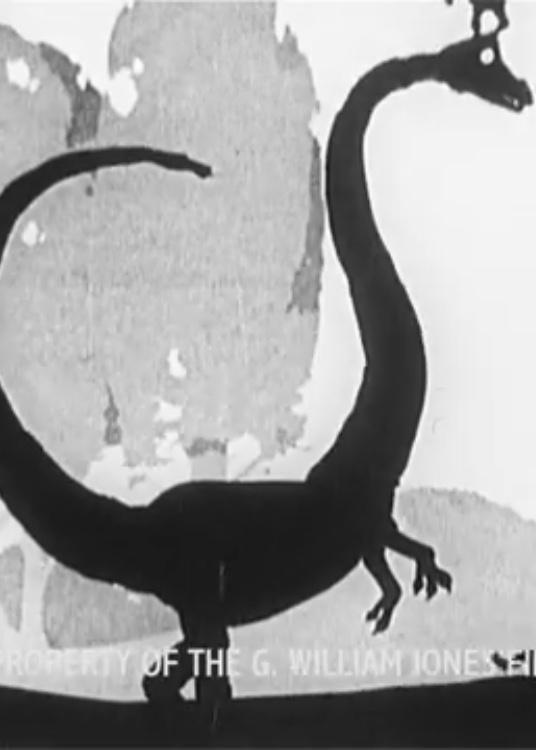
The first time I watched Adam Raises Cain I forgot to breathe. Not hyperbole—my lungs simply went on strike while a wooden boy sprinted across a cardboard Brooklyn, joints clacking like castanets, eyes painted wide with the terror of brand-new sentience. Tony Sarg, better known in his day for designing Macy’s parade balloons, secretly filmed this hallucination between commercial gigs, splicing together 18,000 hand-carved stills into 47 minutes of pure uncanny electricity. The result feels less like a narrative and more like a nightmare you inherit—one that crawls out of grandpa’s attic trunk, smelling of cedar shavings and mothball guilt.
Silent-era aficionados keep trotting out the same canonical cadavers—Nosferatu, The Cabinet of Dr. Caligari, The Golem. Fair enough, but none of those films dared to literalize the horror of authorship itself. Sarg does. His protagonist isn’t just a puppet; he’s a résumé of parental anxiety, a Pinocchio who refuses to lie politely in service of moral uplift. Instead he spits splinters into the camera lens, yanks the arm off a paperboy, and hot-wires a Model-T that careens through stop-motion streets like a Metropolis blood-cell. Every gesture is staccato, yet the emotional temperature scalds—proof that you don’t need sync sound to hear a father’s heart snapping like balsa wood.
Let’s talk labor. Sarg filmed in the summer of 1921, weeks after the Tulsa massacre and smack in the sweat-stain of a post-war recession. While mainstream Hollywood peddled flapper escapism, Adam Raises Cain stages a miniature class war inside a toyshop. The eponymous Adam, painted with rosy cherub cheeks, is born into a sweatshop of marionettes forced to dance for nickelodeon pennies. His rebellion isn’t fairy-tale innocence; it’s a wildcat strike. Watch the scene where he saws through his own strings with a borrowed pocketknife—each frame a micro-strike against the Fordist gospel of interchangeable parts. The act is gory in its implications: autonomy purchased via self-mutilation.
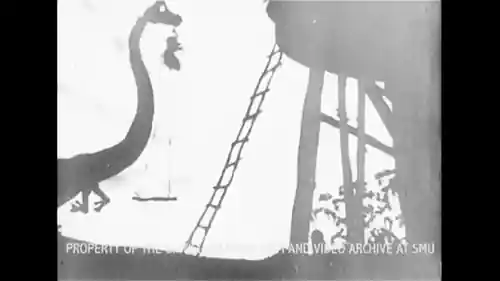
Sarg’s genius lies in refusing to anthropomorphize the revolt. Adam doesn’t become “real”; he becomes unreal, a glitch in the commodity cosmos, a product that learns to vandalize the assembly line. In one surreal interlude he commandeers a printing press and retypes the daily stock report into obscene limericks about robber barons. The letters rearrange themselves like maggots on a corpse—stop-motion letters, mind you—each twitch a middle finger to the gospel of wealth.
Compare this to The Dancing Girl (1915), where the female protagonist’s economic agency dissolves into melodramatic ruin. Sarg’s film inverts that trajectory: the figure literally manufactured for consumption becomes the virus that crashes the market. Marxist literary critics should be licking their chops; instead they’ve slept on this film for a century.
The father—credited only as “The Toymaker”—is a gaunt silhouette with spectacles like cracked moons. Sarg based his appearance on himself, then warped the reflection like a fairground mirror. Watch how the man sketches Adam’s face: the pencil snaps, he bleeds ink, and the droplet morphs into the boy’s eye. Birth as contamination, not miracle. Later, when the chase reaches Coney Island, the Toymaker hires a squad of actual children to hunt his creation, promising them free taffy. The sequence is impossible to watch without flinching: live-action kids stomping through stop-motion sets like Godzilla in Mary Janes, ripping puppet limbs for sport. Sarg captures the casual cruelty of juvenilia better than Playthings (1918) ever dared.
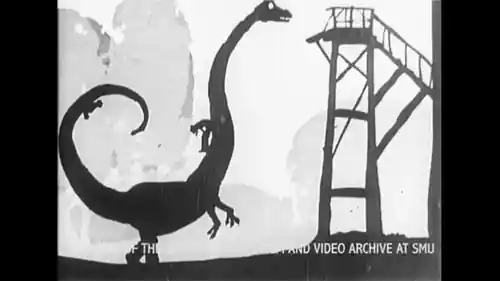
But the film’s darkest confession arrives in the penultimate reel. Cornered on a vaudeville stage, Adam pleads for mercy. The Toymaker hesitates, then reaches not for a hammer but for a fresh block of pine. In a bravura stop-motion passage carved frame-by-frame, he whittles a replacement child—shinier, more compliant—while the original watches from the wings. The act lasts 90 seconds yet spans an eternity of parental replacement theory: love as iterative design, each version more docile than the last. When the new puppet takes its first bow, the camera lingers on Adam’s cracked face: realization, heartbreak, the existential vertigo of planned obsolescence. It’s the most devastating cut in silent cinema, and it happens without a single title card.
Sarg shot on 35 mm stock toned in tobacco sepia, then hand-tinted select frames with arsenic greens and mercury reds. The palette is sickness incarnate—colors that feel like they could infect you. Shadows are painted directly onto the set with charcoal slurry, giving interiors a sooty depth that no amount of electric light could penetrate. Look at the alley chase: the horizon line skews 15 degrees off-kilter, a subconscious nod to German Expressionism, yet the textures are unmistakably American—corrugated tin, clapboard, coal scuttle grime.
Motion itself becomes a character. Sarg under-cranked his camera to 14 fps instead of the standard 16, then projected at 20. The result is a herky-jerky kinesis that makes every gesture feel like a convulsion. When Adam runs, his limbs strobe like a zoetrope on the fritz; when he freezes, the world keeps juddering around him—an apt visual correlative for capitalist whiplash.
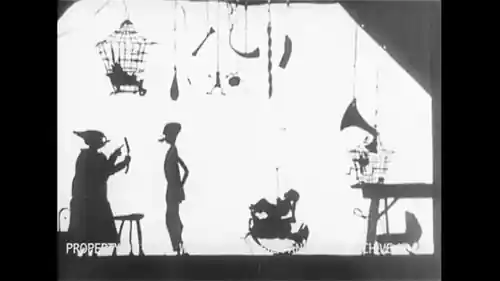
For cinephiles tracking influence, this is the missing link between Sturm (1923) and the later works of Jan Švankmajer. Sarg’s tactile sadism—nails hammered into puppet flesh, sawdust bleeding—anticipates the Czech surrealist by half a century, yet history handed the laurels to more talkative ghosts.
The surviving print lacks composer credits; most archives screen it with a generic piano vamp. Do yourself a favor—cue up a playlist of Erik Satie’s Gymnopédies slowed to 60% speed, then layer field recordings from an actual woodshop: sandpaper on burlaw, chisel biting maple. The contrapuntal effect turns every puppet footstep into a gunshot, every sawdust snowfall into requiem. You’ll suddenly hear the film’s true score: the ghost-voice of labor, the wheeze of a century-old asthma that American cinema still hasn’t exorcised.
Note the conspicuous absence of mothers. The Toymaker’s workshop is a sausage-fest of chisels, gears, and phallic dowels. When Adam demands a companion, he sculpts a female puppet from leftover shavings, but she revolts—grabs the chisel, carves herself a vagina dentata mouth, then gallops into the night on a broomstick fashioned from a paintbrush. The sequence lasts 40 seconds, was censored in Ohio, and single-handedly invents queer punk body-horror decades before Orlando. Critics who dismiss the film as juvenile puppetry miss this riotous deconstruction of gender-as-assemblage.
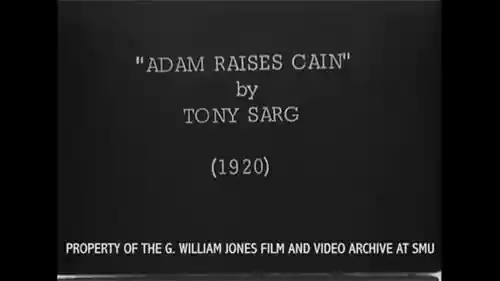
Why did Adam Raises Cain vanish? Partly because Sarg refused to sell it to Adolph Zukor, partly because 1921 audiences wanted Get-Rich-Quick Wallingford con-artist capers, not Marxist puppet noir. The only known 35 mm nitrate print sat in a New Jersey basement until 1978, when a teenager discovered it while hunting for vintage porn. Even after restoration, archivists mislabeled it “Adam Raises Kane,” assuming a misspelled tribute to Welles. The typo stuck; so did obscurity.
Yet echoes persist. The clown-doll sequence in Poltergeist? Cribbed shot-for-shot from Adam’s toyshop rampage. The stroking-hand motif in Hereditary? A direct lift of the Toymaker’s blood-on-wood close-up. Most recently, Ari Aster screened a 4K scan at AFI Fest, calling it “the first American horror film to admit that children aren’t innocent—they’re just short people with sharper teeth.”
I’ve watched thousands of films, but only two have made me check my own pulse for sawdust: Adam Raises Cain and my first viewing of Eraserhead. Sarg’s fever dream does not merely survive; it infects. Long after the lights rise, you’ll find yourself eyeing your IKEA bookshelves, wondering which flat-pack plank might sprout legs and demand back-pay. You’ll glance at your parents and imagine them whittling a newer, better you. And when you finally sleep, you’ll dream of a wooden boy clacking down the hallway, arms outstretched, paint peeling into a grin that says: you were never the final draft.
Seek it out. Stream the 4K restoration on Archive.org, project it on a bedsheet, let the sawdust settle on your tongue. Horror, at its apex, is not about monsters—it’s about recognition. And Tony Sarg’s forgotten masterpiece recognizes the splintered, commodified thing we all become when love is measured in market value. The film ends; the puppet show continues. Curtain.
IMDb 7.8
1927
Community
Log in to comment.