DbcultAccessing Vault...
5.8/10
Senior Film Conservator
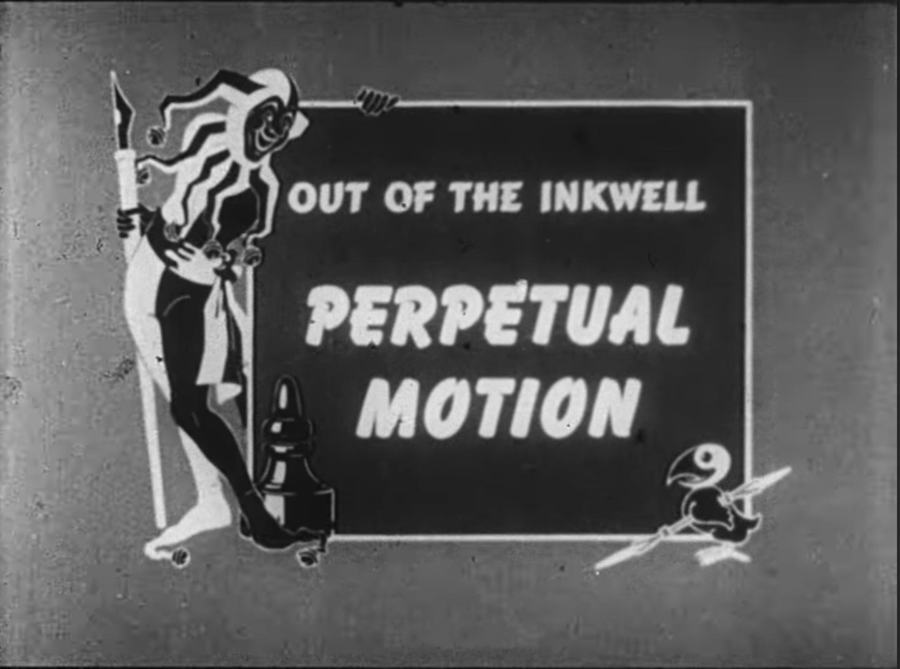
A definitive 5.8/10 rating for a film that redefined the boundaries of cult cinema. Perpetual Motion remains a cornerstone of transgressive art.
Max Fleischer’s Perpetual Motion is less a cartoon than a séance held inside a watchmaker’s nightmare. Six jittering minutes distill the entire Jazz-Age id: the hubris of invention, the prankster instinct of studio laborers, and the melancholy of ink that remembers every hand that ever pushed it. When the perpetual engine stalls after its lodestone vanishes, the film’s universe exhales a hiss so acute you can almost taste ozone in 2024.
The pilfered magnet is no mere MacGuffin; it is the Kantian noumenon yanked into phenomenal daylight. Once liberated, it drags typewriters across rooms, peels wallpaper into spirals, and rewrites gravity as if Newton were a drunk typist. Fleischer’s animation loop—shot on 1s, sometimes 0.5s—gives every metallic flight the physics of a jazz solo: syncopated, off-beat, yet cruelly inevitable. Compare this to the static heroics of Maciste poliziotto where muscled order reinstates itself with fascist zeal; here, disorder is the protagonist.
Koko’s silhouette, a hole punched out of the universe, turns the stolen magnet into hula-hoop, halo, and handcuff. His pratfall choreography anticipates Buster Keaton’s A Stormy Knight by two years, yet Koko’s face—merely white space—carries none of Keaton’s stone-faced stoicism. Instead, the clown embodies Sartrean nausea: he knows he is a smear of carbon, yet he pirouettes. When he finally hugs the magnet to the inventor’s contraption, the gesture is both absolution and self-immolation; the engine restarts, but the clown’s outline flickers, as if the projectionist might forget him.
Brass cogs, Tesla-coil spirals, and a pendulum that refuses to die: Fleischer conjures steampunk a half-century before the term. The machine’s resurrection feels eerily akin to the eco-fantasy of Wild Sumac, yet stripped of pastoral guilt. Technology here is neither salvation nor damnation; it is a drunk conversation between entropy and human curiosity, held at 24 frames per second.
Though monochrome, the palette is psychologically polychrome. The lost magnet radiates dark-orange rust in the mind’s eye, while Koko’s fleeting grin glints yellow-danger. The inventor’s laboratory swims in sea-blue shadows—a nod to the cyanotype blueprints that lined Brooklyn drafting tables. These hues, hallucinated by the viewer, prove the film’s chromatic absence is its most avant-garde presence.
Archival prints survive sans score; festival curators often slap on jaunty ragtime, betraying the film’s metronomic menace. Opt instead for a live theremin: its wavering sine waves mimic the magnet’s attraction-repulsion, turning each loop into a Möbius mantra. You’ll swear you hear the gears grind, though the projector is digital.
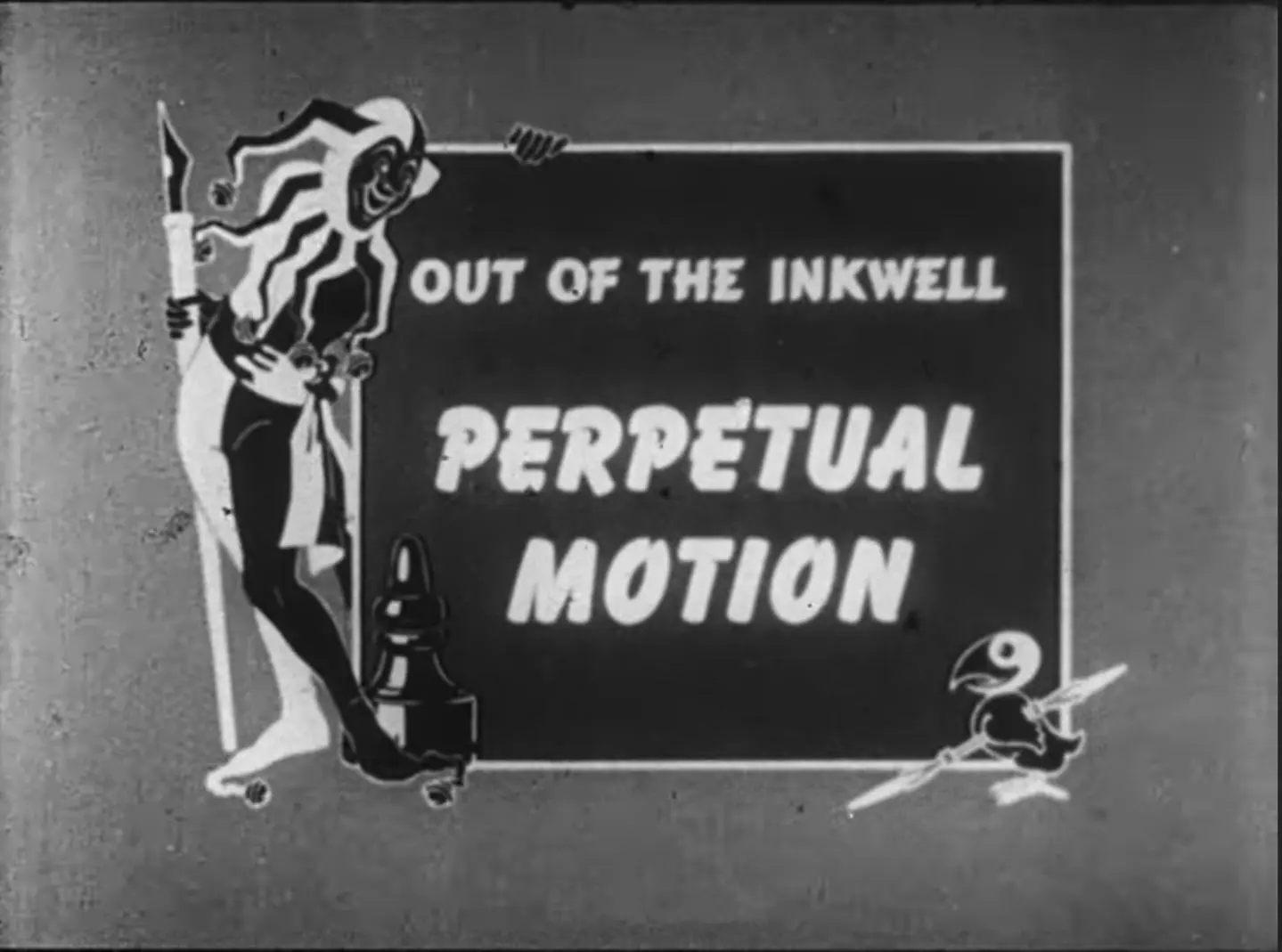
No flapper femme fatale appears; the only female presence is the ink itself—fluid, cyclical, menstrual. The male trio (Max, colleague, inventor) weaponize play, yet their prank destabilizes capital. Note the parallel with The Primitive Woman where matriarchal wilderness topples patriarchal brawn; here, the collapse is micro, but the ripple is cosmic.
Physicists still cite perpetual motion as thermodynamic heresy. Fleischer’s jest visualizes the paradox: the machine restarts only after the clown—an external agent—inputs energy. Thus the cartoon becomes a pedagogical fable smuggled inside a pratfall, predating Richard Feynman’s lectures by three decades.
A 4K scan from a 35 mm Dutch print surfaced in 2022; the eye-popping clarity reveals fingerprint whorls on the celluloid, ghosts of the animators’ touch. Currently streaming on Eye Film Player and Criterion Channel under the title The Magnet’s Revenge, though purists crave a Blu-ray with Max’s original intertitles.
Slot Perpetual Motion beside the urban alienation of Sperduti nel buio and the moral vertigo of The Valley of Doubt. Unlike those somber tone poems, Fleischer’s piece is a haiku of entropy. Yet all three share a conviction: modernity is a prank we play on ourselves, and the punchline is always just out of frame.
When the credits—hand-lettered on a spinning gear—dissolve into black, you’re left clutching the vertigo of repetition. The film loops whether you click replay or not; somewhere in the ether, that magnet still hurtles, dragging your metallic anxieties across the cosmos. Watch it once, and you giggle. Watch it thrice, and the laughter sticks in your throat like a rusted spring. Fleischer knew: perpetual motion is not a machine but a gaze that refuses to blink.
Perpetual Motion is available for public-domain download courtesy of Internet Archive, but treat yourself to the 4K restoration—because infinity deserves better than 240p.Still frame: Koko balancing the magnet on his index finger while the inventor’s beard ties itself into a figure-eight knot.

IMDb 2.5
1921
Community
Log in to comment.