DbcultAccessing Vault...
Cult Review
Senior Film Conservator
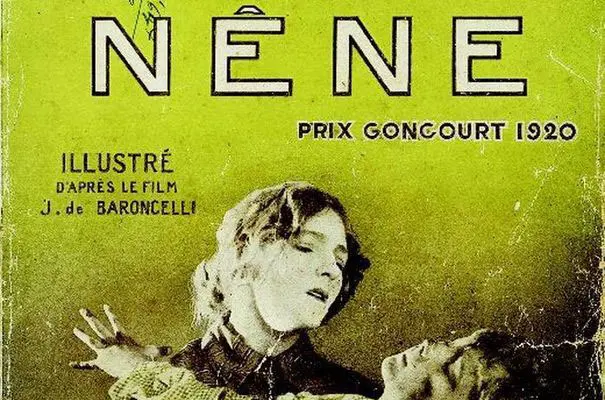
Stepping back into the annals of French silent cinema, one encounters Jacques de Baroncelli's 1924 masterpiece, 'Nène', a film that, despite its vintage, resonates with a timeless emotional authenticity. Adapted from Ernest Pérochon's acclaimed novel, the picture is far more than a simple narrative; it's a deep dive into the delicate architecture of a reconstituted family, a quiet symphony of human connection forged in the crucible of loss and new beginnings. At its core, 'Nène' offers a masterclass in understated storytelling, where the unspoken emotions often carry more weight than any intertitle could convey.
The film introduces us to Michel Corbier, a widower whose world has been irrevocably altered by the absence of his wife. He is left with two young children, Lalie and Jo, whose innocence is tinged with the quiet melancholy of their motherless existence. Baroncelli, with a discerning eye, captures the subtle nuances of their grief, never sensationalizing it, but rather portraying it as an inherent part of their daily rhythm. The arrival of Madeleine, Michel’s new wife, could easily have been a narrative fraught with cliché – the archetypal 'wicked stepmother' trope so prevalent in folklore. Yet, 'Nène' subverts these expectations with a refreshing candor. Madeleine, portrayed with remarkable grace and empathy by Sandra Milovanoff, is not an intruder but a balm, her gentle spirit slowly, almost imperceptibly, permeating the household and mending its fractured heart.
Milovanoff’s performance is nothing short of revelatory. In an era where melodramatic gestures often dominated the silent screen, she crafts a character defined by quiet dignity and profound warmth. Her expressions, subtle shifts in posture, and the tender way she interacts with the children speak volumes, conveying a maternal love that transcends bloodlines. It's a portrayal that feels remarkably modern in its psychological depth, allowing Madeleine's journey from outsider to beloved 'Nène' to unfold with an organic, compelling realism. This isn't a character who demands love; she earns it, through consistent kindness, unwavering patience, and an innate understanding of the children's needs.
The children, Lalie and Jo, are equally captivating. Their initial apprehension and eventual, unreserved acceptance of Madeleine are depicted with a sensitivity that avoids sentimentality. The moment they begin to call her 'Nène' – a term of endearment that signifies their complete embrace of her as their second mother – is a pivotal emotional crescendo, handled with a delicate touch that makes it profoundly moving. It's a testament to Baroncelli's direction and the young actors' naturalistic performances that this transition feels so utterly authentic, a true triumph of human connection over conventional familial boundaries. This kind of nuanced portrayal of childhood emotion is something we might also observe in films like Miyama no otome, where the inner lives of young characters are given significant weight, showcasing their resilience and capacity for love.
Baroncelli's directorial style in 'Nène' is characterized by its elegance and restraint. The cinematography, though perhaps not as overtly experimental as some of his contemporaries, serves the story with an unpretentious grace. He utilizes close-ups effectively to capture the raw emotions flickering across his actors' faces, allowing the audience to truly connect with their inner worlds. The rural setting is not merely a backdrop but an active participant in the narrative, its changing seasons mirroring the emotional shifts within the Corbier household. The landscape, often harsh and demanding, underscores the resilience required of its inhabitants, adding a layer of authenticity to their struggles and triumphs. The visual storytelling, devoid of extensive intertitles, trusts the audience to interpret the unspoken, a hallmark of compelling silent cinema.
The film's exploration of themes like grief, resilience, and the expansive nature of love is remarkably sophisticated for its time. It challenges the rigid definitions of family, asserting that emotional bonds can be as strong, if not stronger, than biological ones. Madeleine's journey is one of quiet heroism, as she navigates the complexities of a new marriage and the immense responsibility of nurturing children who are not her own. Her character embodies a profound sense of selflessness, a quiet strength that resonates deeply. This thematic depth sets 'Nène' apart from many of its contemporaries, elevating it beyond mere melodrama into a powerful human drama. In a way, one could draw parallels to the societal expectations and personal struggles depicted in His House in Order, where characters grapple with their roles and the pressures of domestic life, though 'Nène' focuses more acutely on the emotional integration rather than the strict adherence to social norms.
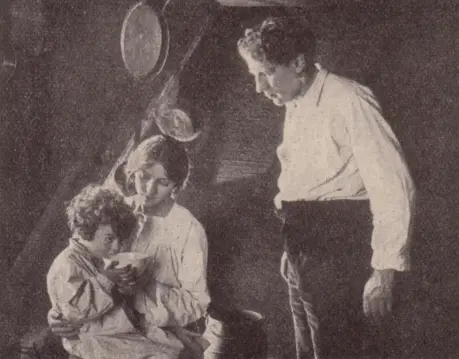
The supporting cast, including Edmond Van Daële as Michel Corbier, provides solid foundations for Milovanoff's luminous performance. Van Daële portrays Michel with a believable blend of paternal affection and a man still finding his footing after profound loss. His quiet strength complements Madeleine's, creating a believable partnership that forms the emotional bedrock of the film. The interactions between the adults and children feel lived-in, not staged, a testament to Baroncelli's ability to coax naturalistic performances from his ensemble.
Beyond its immediate narrative, 'Nène' offers a fascinating glimpse into the social fabric of early 20th-century rural France. The depiction of daily life, the modest homes, the struggles and simple joys, all contribute to a rich tapestry that grounds the emotional core of the story in a tangible reality. It's a film that speaks to the universal human experience of seeking connection and building a life amidst adversity, regardless of the specific historical context. The film's authenticity in portraying rural life and its challenges might remind some viewers of the stark realism found in Miss Peasant, another film that delves into the often-unseen lives of those working the land.
What truly distinguishes 'Nène' is its enduring relevance. The questions it poses about what constitutes a family, the challenges of blending lives, and the transformative power of unconditional love are as pertinent today as they were a century ago. It’s a powerful reminder that the human heart’s capacity for love and acceptance knows no bounds, and that sometimes, the deepest connections are forged not by blood, but by shared experience and genuine affection. The film avoids grand pronouncements, opting instead for a subtle accumulation of small, meaningful gestures that collectively build a profound emotional impact. This approach allows the audience to truly invest in the characters' journeys, making their triumphs and struggles feel deeply personal.
Considering the technical limitations of its era, 'Nène' stands as a remarkable achievement. The artistry of silent cinema, often underestimated in today's sound-dominated landscape, shines brightly here. The reliance on visual storytelling, body language, and the evocative power of music (which, though absent in its original presentation, is often added in modern screenings to enhance the experience) demands a different kind of engagement from the viewer. It's an active participation, an invitation to read between the lines, to interpret the unsaid, and in doing so, to forge a deeper connection with the narrative.
While some might find the pacing deliberate by contemporary standards, it's precisely this measured approach that allows the emotional weight of the story to fully settle. Baroncelli doesn't rush the development of relationships; he allows them to blossom organically, mirroring the slow, steady growth of trust and affection within a real family. This patient unfolding is one of the film's greatest strengths, creating a rich, immersive experience that rewards attentive viewing. It's a testament to the film's artistic integrity that it never panders to easy resolutions or superficial drama, preferring instead to explore the complex emotional landscape with honesty and grace.
In conclusion, 'Nène' is more than just a historical artifact; it is a vibrant, living piece of cinema that continues to speak to the human condition with clarity and compassion. Sandra Milovanoff's portrayal of Madeleine remains a beacon of silent screen acting, a performance that elevates the film into the pantheon of classic French cinema. It's a beautiful, heart-rending, and ultimately uplifting story about the power of love to heal and unite, a testament to the quiet strength found in the forging of new bonds. For anyone seeking a profound and emotionally resonant cinematic experience, 'Nène' is an essential viewing, a tender embrace from a bygone era that still feels remarkably fresh and relevant today. It reminds us that the best stories are often those that explore the intricate, everyday miracles of human connection.

IMDb 6.6
1933
Community
Log in to comment.