DbcultAccessing Vault...
Cult Review
Senior Film Conservator
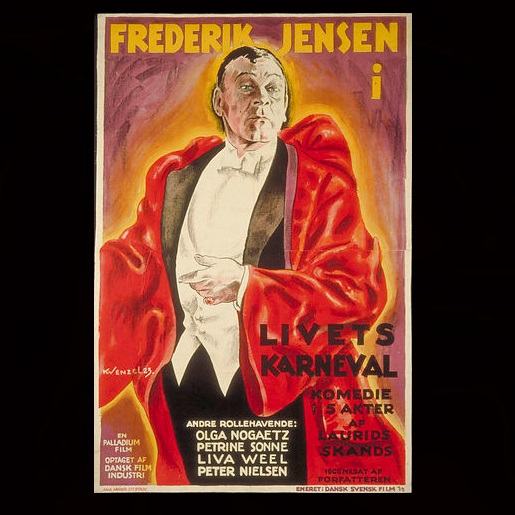
There are films that merely narrate a story, and then there are cinematic tapestries that weave themselves into the very fabric of human experience, resonating with an almost primal understanding of our desires and deceptions. Laurids Skands' 'Livets karneval' (Life's Carnival) unequivocally belongs to the latter category. This Danish silent film, a forgotten jewel from an era rich with expressive artistry, does more than just depict a plot; it plunges the viewer into a maelstrom of societal expectations, personal yearnings, and the intoxicating, often perilous, pursuit of self-definition. It’s a work that, despite its vintage, speaks with startling clarity to contemporary anxieties about authenticity in a world increasingly enamored with artifice.
At its core, 'Livets karneval' is a searing exploration of the human soul's perennial struggle between conformity and liberation. Our protagonist, Elara, brought to vivid, nuanced life by the extraordinary Dagmar Nielsen, is a character etched with both vulnerability and an nascent strength. She exists within the confines of a meticulously ordered, yet emotionally sterile, bourgeois world. The film's opening sequences masterfully establish this environment: the hushed tones, the rigid postures, the unspoken rules that govern every interaction. Skands, through his astute direction, paints a picture of a life that, while outwardly respectable, is inwardly suffocating. Elara's longing for something more, something genuine and unrestrained, is palpable, a silent scream against the monotony of her predetermined path. This yearning is not merely a youthful caprice; it is a fundamental human hunger for meaning beyond the superficial, a desire for a life less curated and more lived.
The titular 'Carnival of Life' arrives as a transformative force, a kaleidoscopic rupture in Elara's monochromatic existence. It is presented not merely as an event, but as a metaphor for the seductive power of escapism and the tantalizing promise of anonymity. The film’s portrayal of the carnival is a triumph of atmospheric filmmaking, a swirling vortex of masks, shadows, and heightened emotions. The cinematography here is particularly noteworthy, utilizing chiaroscuro lighting to create a sense of both enchantment and lurking danger. One can almost feel the press of bodies, the heady scent of perfume and wine, the thrill of forbidden glances exchanged. It is a world where identities are shed like discarded costumes, and inhibitions dissolve into the festive air. Elara, against the solemn warnings of her formidable aunt, portrayed with a severe yet ultimately sympathetic gravitas by Petrine Sonne, and the silent, earnest appeals of her devoted childhood friend, Karl (Peter Nielsen), yields to its irresistible pull. Nielsen imbues Karl with an understated sincerity, a quiet strength that serves as a poignant counterpoint to the carnival’s tumultuous energy. His unrequited affection is a subtle but persistent thread woven throughout the narrative, representing a path of stability and genuine connection that Elara initially overlooks in her quest for excitement.
Within this dazzling labyrinth, Elara encounters Count Valdemar, a character brought to life with mesmerizing charisma and chilling duplicity by Frederik Jensen. Jensen's performance is a masterclass in silent screen villainy; his eyes convey a dangerous magnetism, his gestures a practiced elegance that belies a predatory nature. Valdemar is the embodiment of the carnival's darker side: the superficial glamour, the fleeting pleasures, and the profound emptiness that often lies beneath the surface. He is a charming rogue, a connoisseur of human weakness, and he quickly identifies Elara’s yearning for a life less ordinary. His promises of passion and freedom are intoxicating, drawing Elara into a whirlwind romance that rapidly accelerates beyond her control. The contrast between Valdemar’s glittering world and Elara’s former life is starkly drawn, creating a compelling dramatic tension. Skands uses visual motifs—the opulence of Valdemar’s salon versus the subdued elegance of Elara’s home—to underscore this dichotomy, making the film a visually rich commentary on social strata and moral landscapes.
As Elara delves deeper into Valdemar's orbit, the initial enchantment begins to fray. The world he inhabits, initially perceived as a haven of liberation, reveals itself to be a gilded cage. It is a society populated by cynical socialites, whose laughter rings hollow, and reckless gamblers, whose fortunes are as volatile as their ethics. Olga Nogaetz, as the calculating Madame Serena, delivers a nuanced performance of a woman hardened by experience, her ambition thinly veiled beneath a veneer of charm. Serena's own designs on Valdemar add another layer of intrigue and peril to Elara's predicament, highlighting the treacherous nature of this new social landscape. Elara witnesses Valdemar's casual deceptions, his moral compromises, and the casual cruelty with which he manipulates those around him. The film, in these moments, echoes the moral complexities explored in Cecil B. DeMille’s The Cheat, where societal judgment and personal integrity collide in a dramatic fashion. Both films dissect the consequences of actions driven by passion and desperation, exposing the often-harsh realities beneath a glamorous exterior.
Even Elara's free-spirited friend, Lena, portrayed with vivacious energy by Liva Weel, begins to voice her disquiet. Lena, who initially encouraged Elara's pursuit of passion, now sees the dangerous undertow beneath Valdemar's charm. Weel's performance is a vital counterpoint, offering a perspective that is both empathetic and increasingly alarmed. Her growing concern serves as an early warning, a subtle premonition of the unraveling to come. The film carefully builds this sense of impending doom, not through overt melodrama, but through a series of subtle visual cues and the escalating tension in the characters' interactions. Skands masterfully uses the setting itself to reflect Elara's emotional state: the carnival, once a symbol of freedom, gradually transforms into a claustrophobic trap, its masks now hiding not joy, but deceit and despair.
As the carnival season reaches its crescendo, Elara finds herself embroiled in a series of escalating crises. Her once-unshakeable family trust crumbles, her reputation is irrevocably jeopardized, and the full extent of Valdemar's perfidy is brutally laid bare. This revelation, perhaps involving a cunning financial scheme or a callous betrayal of another innocent, shatters Elara's romantic illusions. The film's dramatic tension mounts with each discovery, culminating in a powerful, emotionally charged confrontation. It is a moment of profound awakening, where the allure of the masquerade finally gives way to the stark, unforgiving light of reality. This journey of disillusionment, while painful, is ultimately transformative, mirroring the thematic depth found in films like Souls for Sale, which also explored the high cost of ambition and the sacrifices made in pursuit of a dream, often at the expense of one's soul.
The climax, potentially set amidst the very same grand carnival ball that first captivated Elara, is a masterstroke of narrative closure. Here, stripped of her illusions, Elara faces a monumental choice. It is not merely a choice between Valdemar's destructive allure and Karl's steadfast devotion, but a more profound decision about her own self-worth and autonomy. Skands allows Elara to forge her own path, transcending the simplistic dualities of good and evil, love and betrayal. She discovers that true 'life's carnival' is not about escaping reality through the anonymity of a mask, but about confronting it head-on, embracing the complexities of existence, and finding genuine selfhood amidst life's inherent paradoxes. This powerful conclusion elevates 'Livets karneval' beyond a mere romantic drama; it becomes a profound philosophical statement on the nature of freedom and the arduous journey of self-discovery.
'Livets karneval' is a testament to the enduring power of Danish silent cinema, a period often overshadowed by its German and American counterparts but rich with its own distinctive artistic voice. Laurids Skands, as both writer and director, demonstrates an exceptional understanding of visual storytelling, utilizing the medium's inherent strengths to convey deep emotional truths without the crutch of dialogue. The film's pacing is deliberate, allowing moments of quiet introspection to breathe alongside scenes of dramatic intensity. The ensemble cast, under Skands' direction, delivers performances that are remarkably nuanced for the silent era, relying on expressive physicality and poignant facial expressions to communicate their characters' inner lives. Dagmar Nielsen, in particular, carries the emotional weight of the film with astonishing grace, her transformation from naive yearning to hardened self-awareness being utterly compelling. Her ability to convey such a wide spectrum of human emotion without uttering a single word is a powerful reminder of the artistry of silent film acting.
The film's thematic resonance extends far beyond its historical context. Its exploration of illusion versus reality, societal pressure versus individual freedom, and the search for authentic selfhood remains profoundly relevant. In an age saturated with curated identities and digital masquerades, 'Livets karneval' serves as a timeless cautionary tale, urging us to look beyond the surface, to question the glamorous facades, and to seek genuine connection over fleeting superficiality. Its narrative echoes the moral quandaries found in films like Damaged Goods, which unflinchingly exposed the hypocrisy and hidden vices of society, forcing audiences to confront uncomfortable truths about human nature. Both films, in their respective ways, serve as powerful social commentaries, challenging prevailing norms and sparking crucial conversations about morality and personal responsibility.
Furthermore, the film's aesthetic qualities are undeniable. The period costumes are meticulously crafted, transporting the viewer to a bygone era, while the set designs, particularly those of the carnival, are breathtaking in their detail and evocative power. The use of light and shadow is not merely functional; it is an integral part of the narrative, highlighting emotional states, concealing secrets, and revealing truths. The film's innovative visual language, combined with its profound thematic depth, cements its status as a significant, albeit often overlooked, contribution to cinematic history. It stands as a testament to the fact that compelling storytelling and powerful performances transcend the limitations of spoken dialogue, reaching across the decades to touch the hearts and minds of new generations of viewers. 'Livets karneval' is not just a film to be watched; it is an experience to be absorbed, a mirror reflecting the eternal human quest for meaning, authenticity, and a life truly lived.
In conclusion, 'Livets karneval' is a masterpiece of early cinema, a film that deserves to be rediscovered and celebrated. It is a powerful, emotionally resonant work that showcases the artistic prowess of Laurids Skands and the unforgettable performances of its cast, particularly Dagmar Nielsen. Its themes are timeless, its visuals captivating, and its message enduring. For anyone with an appreciation for the rich history of film or a desire to explore the depths of human experience, 'Livets karneval' offers a profound and immensely rewarding journey. It reminds us that sometimes, the most vibrant truths are found not in the cacophony of words, but in the silent, expressive language of the human heart, played out on the grand, bewildering stage of life's own carnival.
IMDb 7.1
1931
Community
Log in to comment.