DbcultAccessing Vault...
Cult Review
Senior Film Conservator
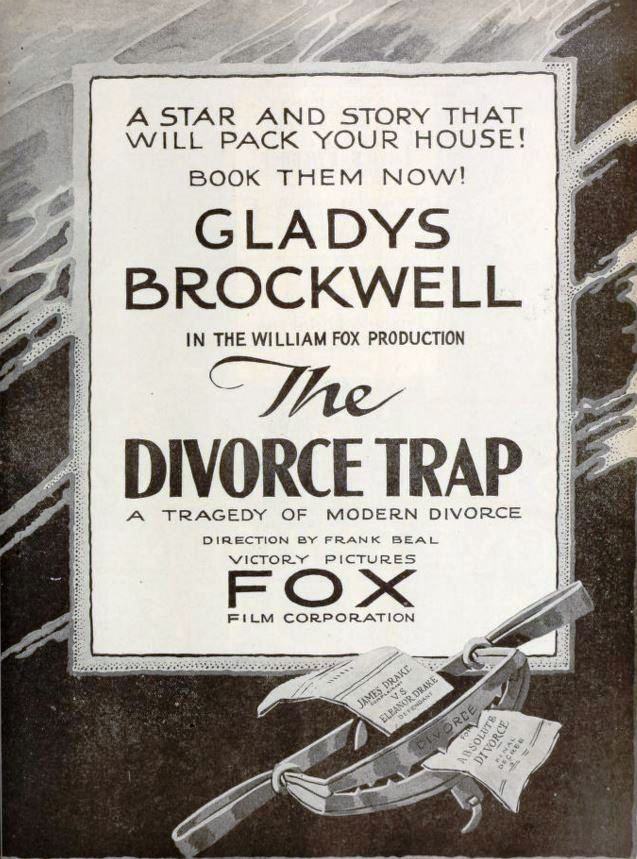
The year 1919 was a watershed moment for American cinema, a period where the industry began to pivot away from simplistic moral fables toward a more nuanced, often cynical, exploration of the human condition. The Divorce Trap, directed by Jack Conway and written by the formidable duo of Denison Clift and Jasper Ewing Brady, stands as a quintessential artifact of this transition. It is a film that refuses to shy away from the transactional nature of marriage or the predatory instincts of the disinherited elite. Unlike the more ethereal explorations found in Lorelei of the Sea, this narrative is grounded in the soot and steel of urban survival.
Gladys Brockwell portrays Eleanor Burton with a translucent vulnerability that was rare for the era. As a hotel telephone operator, Eleanor occupies a unique sociological space—she is the silent witness to the secrets of the wealthy, a human nexus of communication who remains, herself, largely unheard. This role prefigures the voyeuristic tensions we see in Mysteries of the Grand Hotel. When she rejects Frederick Lawson (William Scott), the film makes a bold statement about female agency. Frederick represents the old world—a man who views love as a form of benevolent ownership. His 'domineering attitude' is not merely a character flaw but a systemic symptom of the legalistic patriarchy he serves as a lawyer.
The shift from the polished corridors of the hotel to the cramped, atmospheric shadows of a Harlem flat marks the film’s descent into social realism. Here, the cinematography employs a starker palette, emphasizing the claustrophobia of poverty. This is not the stylized destitution often seen in The Corner Grocer; rather, it is a visceral portrayal of how economic pressure can erode the foundations of a marriage. Jim Drake (Herschel Mayall) is a fascinating study in pusillanimous entitlement. His inability to adapt to a life of labor renders him a parasite, living off the very woman his father deemed 'mercenary.'
The core of the film—the 'trap' itself—is a masterclass in narrative tension. The scheme proposed by Jim’s lawyer friend is a dark reflection of the legal system's capacity for cruelty. In an era where divorce was often only attainable through proof of adultery, the manufacturing of sin became a lucrative cottage industry. The film captures this moral rot with a precision that rivals The House of Mirth. The sequence where Eleanor is lured to a hotel under the guise of Jim’s illness is shot with an almost noir-like sense of dread. The use of 'planted evidence'—a discarded cigar, a misplaced garment—highlights the terrifying fragility of a woman’s reputation in 1919.
One cannot discuss this film without acknowledging the technical prowess of the Fox Film Corporation during this period. The lighting in the hotel scenes creates a chiaroscuro effect that mirrors the duplicity of the characters. We see echoes of this visual sophistication in The Secret Game, yet The Divorce Trap feels more intimate, more grounded in the personal stakes of its protagonist. The editing, particularly during the climax where Frederick uncovers the conspiracy, maintains a frantic pace that was ahead of its time, eschewing the languid transitions common in contemporary European imports like Dockan eller Glödande kärlek.
Brockwell’s performance is the anchor of the film. She manages to convey a spectrum of emotion—from the initial spark of romantic hope to the crushing weight of betrayal—without the histrionics that often plague silent-era acting. Her restraint makes the moments of high drama, such as the confrontation in the hotel room, feel earned rather than performative. In many ways, her character's journey mirrors the thematic arc of The Birth of Character, where adversity serves as the crucible for the soul.
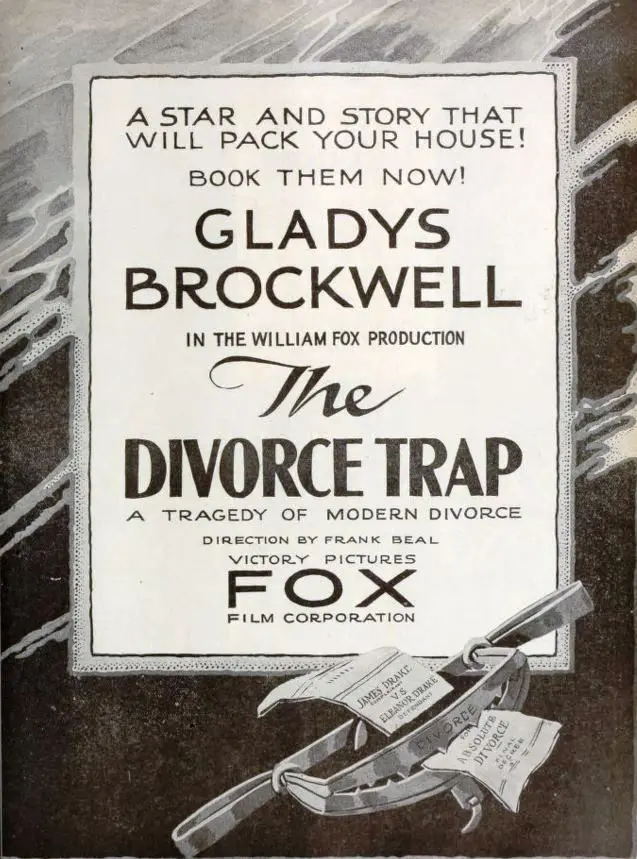
The supporting cast is equally adept. John Steppling’s portrayal of the elder Drake provides a chilling look at the arrogance of the banking class—a man who believes that every human interaction is a transaction. His redemption, if it can be called that, is less about a change of heart and more about the restoration of his family’s public image. This cynicism adds a layer of depth to the film that distinguishes it from more sentimental works like The Education of Mr. Pipp.
Beneath the surface of this melodrama lies a scathing critique of the American Dream. Eleanor works hard, plays by the rules, and yet is nearly destroyed by the whims of those with capital. The film suggests that the 'trap' is not just the specific legal frame-up, but the entire socio-economic structure that forces a woman to choose between a domineering partner and financial ruin. This thematic resonance connects it to When Men Desire, although Clift’s screenplay is notably more focused on the legalistic machinations than the purely carnal ones.
The resolution of the film, while satisfying the audience's desire for justice, is tinged with a certain irony. Eleanor returns to Frederick, the man she once rejected for his overbearing nature. Does this signify a defeat, or has Frederick truly changed? The film leaves this somewhat ambiguous, suggesting that perhaps in the world of 1919, a 'benevolent' protector was the best a woman could hope for. This complexity is what elevates the film above standard fare like Love Watches or the comedic lightness of Are Married Policemen Safe?.
In the broader canon of silent cinema, The Divorce Trap deserves a seat alongside the great psychological dramas of its time. It lacks the religious grandiosity of Christus or the nationalist fervor of His Birthright, but it possesses a gritty, urban soul that feels remarkably modern. The way it utilizes the hotel setting as a place of both connection and deception is a brilliant narrative device that would be echoed decades later in the film noir genre.
The script by Denison Clift is particularly noteworthy for its economy of language in the intertitles. Every word carries weight, pushing the plot forward while simultaneously building the psychological profiles of the characters. We see a similar narrative efficiency in The Message of the Mouse, but here it is applied to a much more complex domestic sphere. The film’s exploration of the 'impostor' theme—where Jim pretends to be a loving husband while plotting his wife's downfall—resonates with the tension found in The Impostor.
To watch The Divorce Trap today is to witness the birth of the modern thriller. It is a film that understands that the greatest horrors are not found in the supernatural, but in the calculated betrayals of those we trust. It is a testament to the power of silent cinema to convey complex social issues through visual storytelling and raw emotional performance. Gladys Brockwell remains a revelation, and the film’s unflinching look at the intersection of law, money, and marriage remains as relevant today as it was over a century ago.
The restoration of such films is vital for our understanding of cinematic history. The Divorce Trap is more than just a melodrama; it is a document of a changing world, a study in resilience, and a reminder that the truth, no matter how deeply buried under a web of lies, eventually finds its way to the light. It is a compelling, dark, and ultimately triumphant piece of art that demands to be seen by any serious student of the silver screen.
IMDb 5.8
1937
Community
Log in to comment.