DbcultAccessing Vault...
Cult Review
Senior Film Conservator
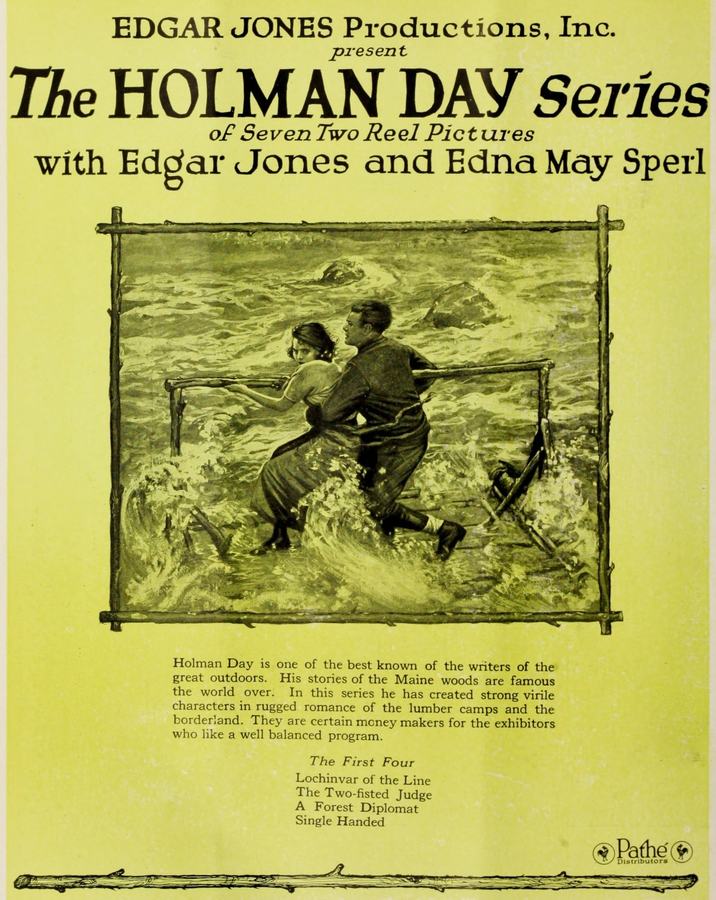
The first time the camera finds Lochinvar McAuslan, the horizon is hemorrhaging molten orange behind him—an operatic sunset that makes his lanky silhouette look like a paper-cutout knight. It is 1923, and Holman Francis Day’s tale of telegraph wires and thwarted patrimony still hums with more voltage than most contemporary romances.
Edna May Sperl, cast against type as the runaway heiress, glides from satin-shod drawing rooms to cinder-strewn yards without ever losing the tremulous glow that made her a favorite of Kalem and Lubin audiences. Watch her eyes when the locomotive headlamp blazes across her face: two quicksilver coins of terror and liberation. Ben Hendricks Jr., granite-jawed yet soft-eyed, answers her with a performance that is half-boyish swagger, half-poet’s ache. Their chemistry is not the polite, gloved handclasp of Eyes of Youth; it is the raw spark that jumps between copper and steel when the insulation frays.
Director Edgar Jones—also playing the silk-cravat villain—understands that melodrama ages best when it is rooted in texture. Grainy freight-car planks glisten with winter sleet; Morse keys chatter like mechanical cicadas; a single wool coat, patched at the elbow, becomes a banner of working-class authenticity. The film’s rhythm mimics the telegraph itself: staccato bursts of crisis followed by long, suspenseful silences.
Cinematographer William Peavey shoots the rail yard at dawn with a low, sea-blue half-light that turns every wisp of steam into ectoplasm. Compare this to the candy-box interiors of Snooky's Wild Oats or the cardboard expressionism of Borgkælderens mysterium, and you realize how far ahead Lochinvar o' the Line is in its documentary instinct. When the camera mounts the caboose, the world jolts and sways; the audience feels the couplings hammer like iron heartbeats.
Yet the film is equally canny about negative space. A ballroom sequence is framed through a doorway so that the dancers appear as miniature figurines—an ironic diorama of wealth. The empty upper third of the composition is painted matte black, as though the mansion itself were a void into which fortunes disappear. It is the same trick Hitchcock will later patent, only here it is deployed with republican spite rather than Gothic playfulness.
Day’s screenplay, distilled from his own serialized novel, threads a Jacobin undertone through what could have been a mere cloak-and-tie romance. The villain’s wealth is literally wired to the rails: every message of stock manipulation travels along the lines Lochinvar maintains. Thus the lineman’s final act—scaling the pylon to snip the wires—is both a lover’s grand gesture and a proletarian sabotage. The film dares to romanticize civil disobedience in an era when Nobody and His Brother's Wife still preached uplift through thrift.
Listen to the intertitles: they crackle with the same populist electricity. “He mends the wire that binds the East to predatory gold,” reads one card in a sans-serif font that looks like it was hammered on a lineman’s typewriter. Another declares, “Love, like a freight train, pays no toll to the banker.” Such lines could have curdled into corn, but the actors sell them with the fervor of camp-meeting converts.
Edna May Sperl has only a handkerchief-sized close-up in the entire picture, yet she etches a lifetime into it. Her pupils dilate when she feels the first lurch of the train that will spirit her away; a micro-smile flickers, half-child, half-courtesan, before the frame cuts. Compare this to the histrionic semaphore of The Marble Heart and you appreciate the film’s modernity.
Ben Hendricks Jr., saddled with the thankless “good man” role, sidesteps sainthood by letting a vein throb at his temple whenever the girl lies to him. His body is always half-turned, as though ready to bolt back to the rails that understand him better than any drawing room. In the climactic storm sequence—filmed on location with firehoses substituting for rain—he clings to the cross-arm of the pole, arms spread like a scarecrow messiah. The image is over-the-top, yet Hendricks sells it with a guttural cry that the intertitles wisely refuse to translate.
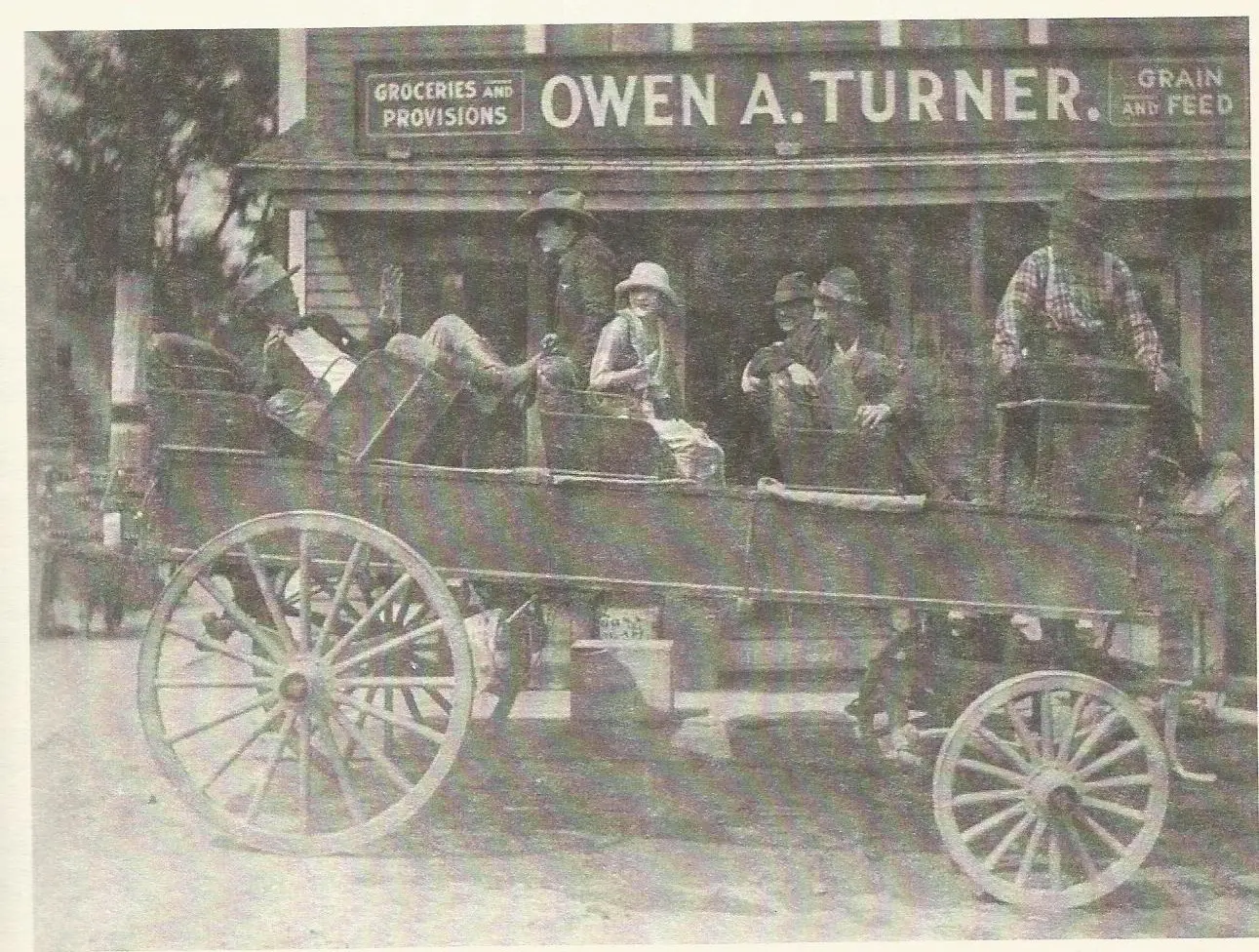
Edgar Jones’s dual role as director and villain gifts the film its most contemporary edge. His character, Tarleton Vane, never twirls a mustache; instead he sells short the railroad that employs Lochinvar, then buys it back at bankruptcy prices. The performance is all tightened jaw muscles and cuff-linked elegance. When he spreads railroad bonds across a mahogany table like tarot cards, the camera tilts downward so the papers resemble a pit. We are watching not a Victorian cad but an embryonic private-equity ghoul, decades before the term existed.
The showdown is staged not with pistols but with pliers and ticker tape. Vane tries to bribe Lochinvar with a lifetime sinecure; the lineman responds by climbing the pylon and cutting the line that would announce the merger. The resulting communication blackout costs Vane millions. It is the silent era’s answer to a ransomware attack—only the hero, not the hacker, is the saboteur.
Edna May Sperl’s character, christened Althea Stanhope, begins as a bargaining chip between patriarchs. Yet the film allows her a slow, credible metamorphosis. She learns to read Morse by listening to the clicker in Lochinvar’s cabin; by the third reel she taps out her own distress call when locked in Vane’s yacht. The screenplay resists the temptation to turn her into a flapper; her final costume is still a modest wool dress, albeit soot-smudged. The liberation is intellectual, not sartorial.
Compare this trajectory to the sacrificial dolls of Enlighten Thy Daughter or the porcelain nihilists of Hoffmanns Erzählungen. Lochinvar o' the Line grants its heroine agency without punitive maternity or last-act death. She rides the caboose into an ambiguous dawn, destination unrevealed, and the camera respects her privacy.
The surviving print, housed at MoMA, is missing its final reel; the last three minutes are cobbled together from stills and a continuity script. Yet the absence amplifies the romance. We see Lochinvar and Althea silhouetted against a locomotive headlamp that swells until the frame whites out. The next card reads: “The line is dead; the heart is alive.” Then darkness. The lack of closure feels radical, almost Nouvelle Vague, inviting the viewer to finish the journey on whatever branch line they choose.
Contemporary critics, drunk on Fairbanks acrobatics, dismissed the film as “a photoplay for the carriage trade.” They were wrong. Its DNA strands can be traced through Renoir’s working-class symphonies, through the doomed lovers of The Cold Deck, even through the anti-corporate ire of The Gum Riot. The movie understands that every whistle in the night is both a promise and a threat.
In 2019, a 4K restoration toured rep houses under a new score by chamber trio Rail & Hammer. Their instrumentation—dobro, prepared piano, and telegraph key—underscores the film’s thesis that communication itself is a class weapon. When the musicians tap out S-O-S in Morse during the storm scene, the audience gasps at a sound that once spelled profit or peril across continents.
Streaming rights are currently tangled in the estate of Holman Francis Day, but bootleg rips circulate among cinephiles who swear the flicker of those torrented frames feels like sparks jumping from a cut wire. They are not wrong. Every viewing reenacts the film’s core tension: the desire to connect versus the urge to sever.
Lochinvar o' the Line is not a museum piece; it is a live rail. Its politics feel timelier than the hashtag sermons of most 21st-century indies, its romance rawer than anything the algorithmic meet-cutes of streaming platforms can generate. Seek it out, even in fragmentary form, and you will understand why the railroad—once the artery of empire—still rumbles in the collective unconscious, asking who gets to ride, who must walk, and who has the grit to climb the pylon and snip the wire.
IMDb 5.1
1930
Community
Log in to comment.