DbcultAccessing Vault...
5.9/10
Senior Film Conservator
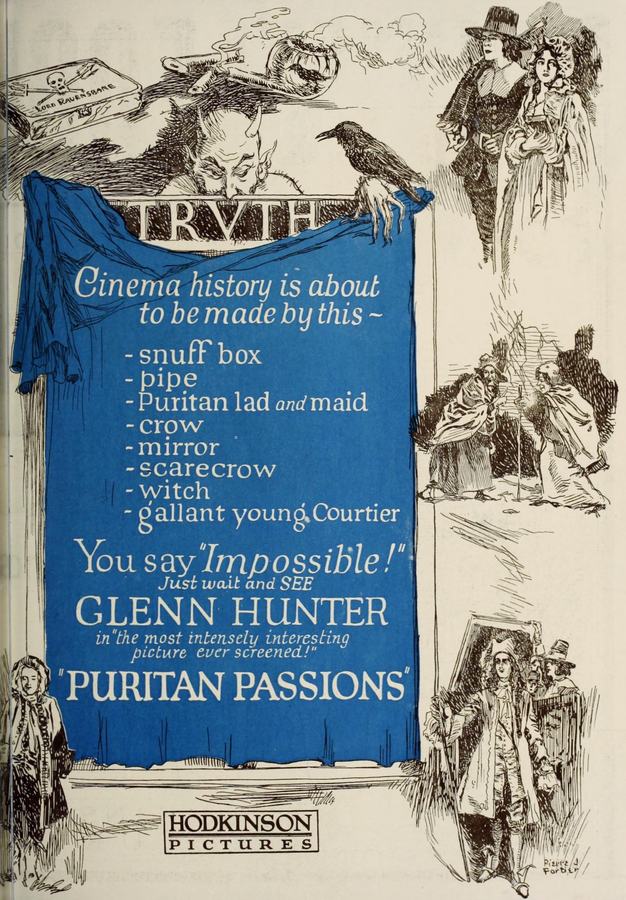
A definitive 5.9/10 rating for a film that redefined the boundaries of cult cinema. Puritan Passions remains a cornerstone of transgressive art.
In the pantheon of early American cinema, few artifacts shimmer with the peculiar, midnight luminescence of Puritan Passions (1923). Directed by Frank Tuttle and adapted from Percy MacKaye's play The Scarecrow—itself a derivative of Nathaniel Hawthorne’s cynical fable "Feathertop"—this film represents a sophisticated intersection of literary high-mindedness and the burgeoning visual vocabulary of the silent era. It is a work that refuses the simplistic morality of its contemporary melodramas, opting instead for a textured exploration of the human condition through the lens of the supernatural.
The gravitational center of this production is undoubtedly Osgood Perkins, whose portrayal of Dr. Nicholas (Satan) is a masterclass in sinister restraint. Unlike the pantomime villains often found in early horror, Perkins imbues the Prince of Darkness with a droll, urbanity that feels startlingly modern. He moves through the rigid, grayscale world of Salem like a predatory dandy, his every gesture a calculated insult to the pious facade of the community. In many ways, his performance echoes the fatalistic elegance found in Fritz Lang’s Destiny, where the supernatural is not merely a jump-scare but an ontological weight pressing down upon the protagonists.
Perkins’ chemistry with Glenn Hunter, who plays the scarecrow-turned-nobleman Lord Ravensbane, creates a fascinating dialectic between the creator and the created. Hunter’s performance is equally nuanced; he captures the jerky, uncoordinated movements of a creature made of burlap and corn husks while slowly infusing his character with a burgeoning sense of wonder. This transition is the film's emotional heartbeat, transforming what could have been a mere morality play into a profound meditation on the acquisition of personhood.
Visually, Puritan Passions is a feast of chiaroscuro. The cinematography utilizes the stark contrasts of the New England landscape to mirror the internal conflicts of its characters. The oppressive interiors of the Wingate mansion, filled with heavy oaks and flickering candlelight, contrast sharply with the ethereal, almost hallucinatory sequences where the scarecrow is brought to life. There is a tactile quality to the production design—the rustle of the straw, the puff of the pipe smoke that sustains Ravensbane’s life—that grounds the fantastical elements in a gritty reality.
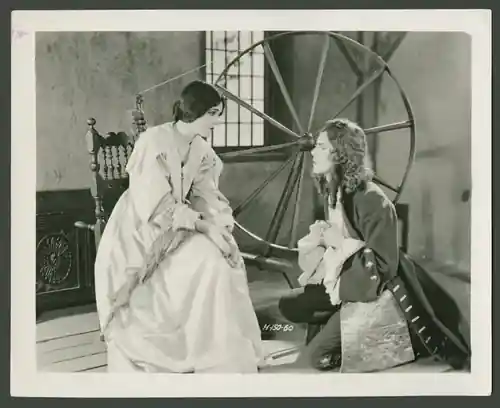
While many films of the period, such as Main Street, sought to critique American provincialism through social realism, Tuttle utilizes the Gothic tradition to dismantle the same targets. Salem is presented not as a bastion of virtue, but as a pressure cooker of repressed guilt and buried secrets. The hypocrisy of Gillead Wingate, played with a stolid, crumbling dignity by Thomas Chalmers, serves as the catalyst for the entire tragedy. His refusal to acknowledge his past sins is the true 'witchcraft' at play, far more damaging than any spell cast by Goody Rickby.
One of the most potent metaphors in the film is the 'Mirror of Truth.' In a society governed by appearances, the mirror serves as the ultimate arbiter of reality. When Ravensbane looks into it, he does not see the handsome lord the rest of the world perceives; he sees the hollow, pathetic construction of straw that he truly is. This moment of self-actualization is devastating. It elevates the film from a revenge plot to a philosophical inquiry: what defines the 'self'? Is it the perception of others, or the internal realization of one's own limitations?
This thematic depth is what separates Puritan Passions from more lighthearted fare of the era like The Love Bug or the slapstick antics of Seven Years Bad Luck. Even when compared to other tales of supernatural intervention, such as Man and His Angel, Tuttle’s work feels more intellectually rigorous. It doesn't offer easy redemptions. The scarecrow’s eventual sacrifice is not a triumph in the traditional sense; it is a somber acknowledgment that for him to truly 'be,' he must cease to exist within the framework of a lie.
A young Mary Astor, playing Rachel, provides the necessary counterpoint to the film's darker impulses. Her performance is characterized by a radiant sincerity that avoids the pitfalls of the 'damsel in distress' trope. Rachel is not merely a pawn in the game between Wingate and the Devil; she is the moral compass of the story. It is her genuine love for the 'man' she sees in Ravensbane that facilitates his transformation. Astor’s ability to convey complex emotional shifts through subtle facial expressions highlights why she became one of the most enduring stars of the era.
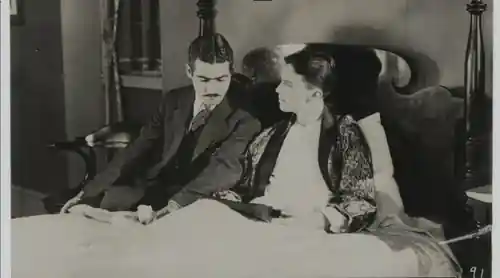
The film’s pacing is deliberate, allowing the tension to simmer as the wedding between Rachel and Ravensbane approaches. This buildup is reminiscent of the atmospheric dread found in The Spider, where the threat is often more psychological than physical. Tuttle understands that the true horror lies not in the devil’s appearance, but in the ease with which he manipulates human desires and fears.
When examining Puritan Passions within the broader landscape of 1920s cinema, its uniqueness becomes even more apparent. While The Idol of the North explored the ruggedness of the frontier and Suds offered a whimsical look at lower-class life, Tuttle’s film occupies a space of high-concept allegory. It shares a certain DNA with Ahasver, 1. Teil in its preoccupation with eternal figures and the passage of time, yet it remains distinctly American in its obsession with the Puritan legacy.
The film also avoids the sentimentality often found in stories of social climbing or mistaken identity, such as Poor Schmaltz. Instead, it leans into the grotesque. The imagery of the scarecrow smoking his pipe—the smoke acting as a literal life-force—is both haunting and absurd. It serves as a reminder of the fragility of our own identities. We are all, the film suggests, held together by the 'smoke' of our beliefs and the 'straw' of our social standings.
Frank Tuttle’s direction is remarkably assured for a film of this vintage. He utilizes cross-cutting to build suspense and employs a variety of camera angles to emphasize the shifting power dynamics between the characters. The scene where the scarecrow first stands up is a marvel of practical effects and clever editing, creating a sense of genuine unease. Unlike the more straightforward narrative style of The Honor of His House or the action-oriented In the Stretch, Puritan Passions prioritizes mood and symbolism.
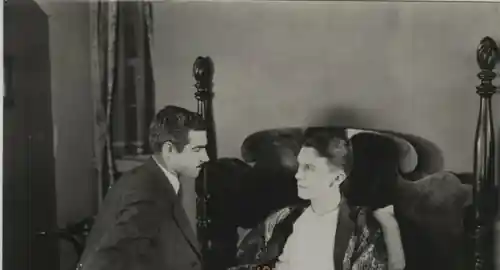
The screenplay by James Ashmore Creelman successfully translates the poetic language of MacKaye’s play into visual storytelling. It retains the sharp wit of the dialogue—conveyed through evocative intertitles—while allowing the actors' physicality to carry the emotional weight. The collaboration between the writers and the director results in a cohesive vision that feels both ancient and avant-garde.
Ultimately, Puritan Passions is a film about the cost of integrity. In a world where Satan is the most honest character because he at least admits to his nature, the scarecrow’s journey toward humanity becomes a radical act of rebellion. By choosing to die as a man rather than live as a puppet, Ravensbane achieves a nobility that the 'righteous' citizens of Salem can never touch. It is a haunting conclusion that lingers long after the final frame fades to black.
For scholars of the silent era or fans of Gothic fiction, this film is an essential watch. It bridges the gap between the expressionist horrors of Europe and the burgeoning psychological dramas of Hollywood. It reminds us that cinema, at its best, is a mirror that shows us not just who we are, but the straw-filled shadows we often try to hide. While it may not have the frantic energy of The Kid Is Clever or the mystery of The Mystery of the Fatal Pearl, its atmospheric depth and thematic complexity ensure its place as a cornerstone of early 20th-century art.
Note: This film remains a vital piece of the Nathaniel Hawthorne cinematic lineage, standing alongside the best adaptations of his work for its ability to capture the author’s inherent skepticism of human institutions.
IMDb —
1934
Community
Log in to comment.