DbcultAccessing Vault...
6.1/10
Senior Film Conservator
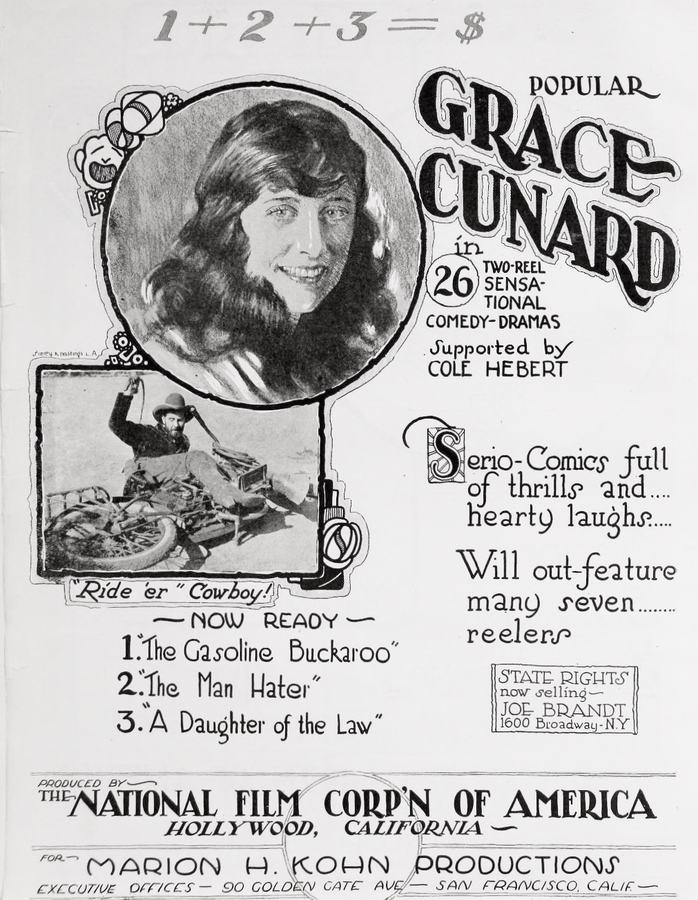
A definitive 6.1/10 rating for a film that redefined the boundaries of cult cinema. A Daughter of 'the Law' remains a cornerstone of transgressive art.
Moonshine vapors coil like ghost-ribbons through Appalachian ravines while a federal she-wolf in silk stockings trades her city perfume for gun-oil and pine.
The celluloid of A Daughter of 'the Law'— brittle as winter sycamore bark—survives only in fragmentary 35 mm cans at the Library of Congress, yet what fumes remain are potent enough to intoxicate any historian who dares inhale. Grace Cunard, triple-threat star-writer-producer, distills a narrative mash equal parts temperance pamphlet and erotic fever dream, then lets it ferment in the dark.
Comparisons? They flicker and die. Over Niagara Falls thrills with barrel-ride spectacle but never interrogates the moral circuitry of its heroine; Heritage luxuriates in ancestral guilt yet lacks the pheromonal crackle that arcs between Cunard’s undercover agent and Cole Hebert’s smoldering moonshiner. Meanwhile Maciste poliziotto flexes muscles for the fascist crowd, whereas Cunard flexes jurisdiction.
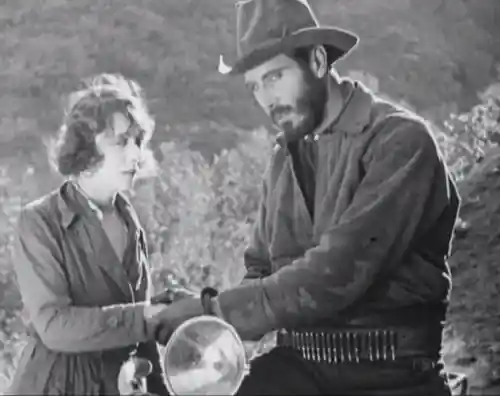
Shot on location in the Great Smoky foothills during late-summer 1920, the production smuggles authentic regional textures into every frame: split-oak barrels still dripping sorghum, cicada husks clinging to bark like parchment signatures, the sour-bread stink of sour mash. Cinematographer William Thornley—later to photograph The Firefly’s operetta moonlight—captures dawn mist as molten pewter, then swings his Debrie camera skyward so treetops become Gothic vaulting. The result is a backwoods sacrament: communion served in tin cups, hymnals soaked in alcohol.
Story beats arrive like freight cars on a mountain grade—slow, screeching, inevitable. Cunard’s character, listed only as “Ruth—Agent No. 47,” descends from a Pullman sleeper into hillbilly chaos armed with a census ledger and a smile sharp enough to slice ham. Her mission: infiltrate the stills governed by “Judge” Jebediah Cagle (Hebert), a self-appointed monarch who quotes Blackstone by firelight and pays his tithe to the revenuers in cold lead.
For modern viewers raised on digital vérité, the narrative economy feels almost haiku-like. A single iris-in on a copper coil equals ten pages of exposition; a match-cut from Ruth’s gloved hand closing a church hymnal to her bare palm caressing a copper worm condenser signals the sacred-profane dialectic that fuels the picture. When she finally witnesses the first drip of clear liquor—plip—into a Mason jar, the moment is treated like a Eucharistic elevation: the jar glows, backlit by magnesium flare, and for a heartbeat we’re unsure whether she’ll genuflect or vomit.
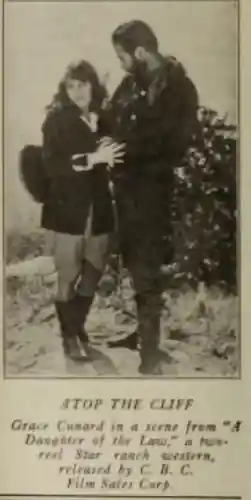
Gordon Griffith, the juvenile lead who once played Blue Jeans’ newsboy, here matures into a smitten ferryman guiding Ruth across the Hiwassee River under flickering carbide lamps. His character’s naiveté—he believes Ruth is a stranded schoolmarm—provides the film its moral fulcrum. When he discovers her badge, the betrayal registers not as melodramatic slap but as ontological wound: Eden shatters, the snake wore a federal ribbon.
Cunard’s acting philosophy—gesture minimized, eyes weaponized—anticipates Bresson’s “models.” Watch her pupils dilate when she smells mash; the lens creeps within inches, yet she refuses the silent-era hokum of eyebrow semaphore. Instead the internal civil war—duty vs. desire—plays out in micro-tremors along her clavicle, a battlefield mapped beneath lace.
Opposite her, Hebert’s Jebediah radiates the languid menace of a man who’s read Milton between target practice. His courtroom is a pine clearing; his gavel, a Kentucky rifle. In the climatic raid, he doesn’t roar—he whispers Scripture while cocking the hammer, as though each syllable of Leviticus were a round of .44-40. The chemistry between the two is less romantic than chemical: phosphorus meeting oxygen, inevitable flare.
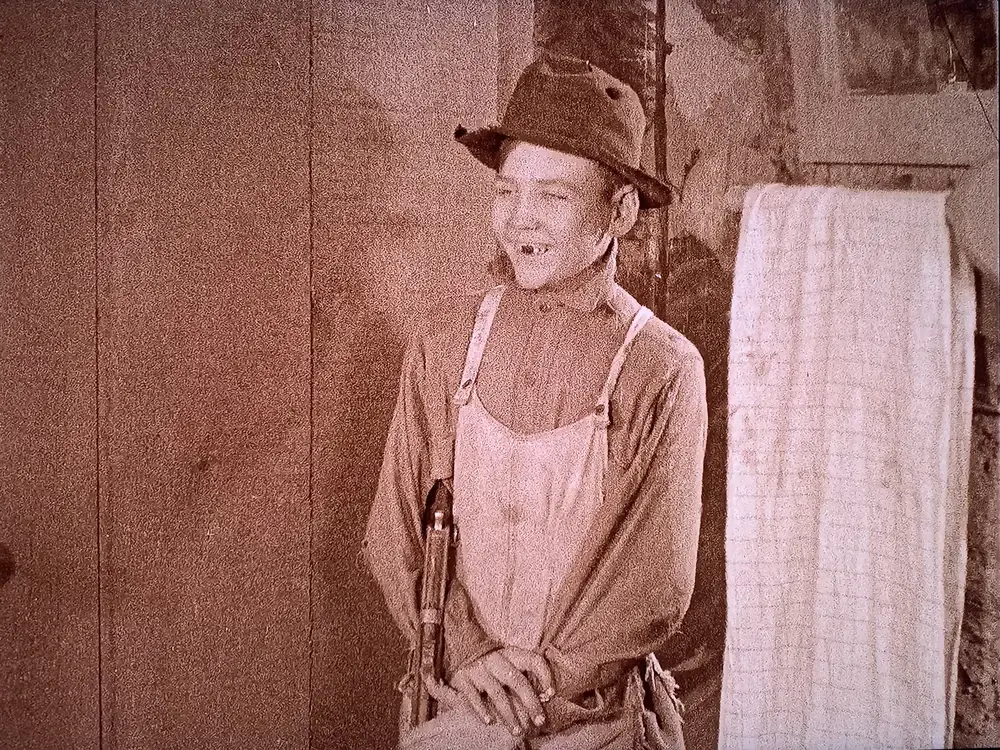
Child actor Griffith, meanwhile, serves as chorus and casualty. His final close-up—eyes reflecting torch-wielding revenuers against night sky—ranks alongside The Dawn of a Tomorrow’s dying matchgirl for unfiltered heartbreak.
Thornley’s lighting plots deserve a dissertation. Interiors: single kerosene lantern placed floor-level, faces carved from tenebrous umber. Exteriors: midday sun filtered through canvas diffuser, turning forest into cathedral glass. Note the repeated visual rhyme: stillhouse copper coils spiral clockwise; church steeple cross counter-clockwise—opposing helixes of salvation and damnation.
Intertitles—written by Cunard and Marion H. Kohn—forsake the usual card-shop ornamentation for stark sans-serif, white on black, like federal subpoenas. One reads simply: “The Law has no children, only consequences.” Fade to black, then the sound of distant thunder—actually barrels rolling down a ravine, but who cares? Metaphor has already trumped acoustics.
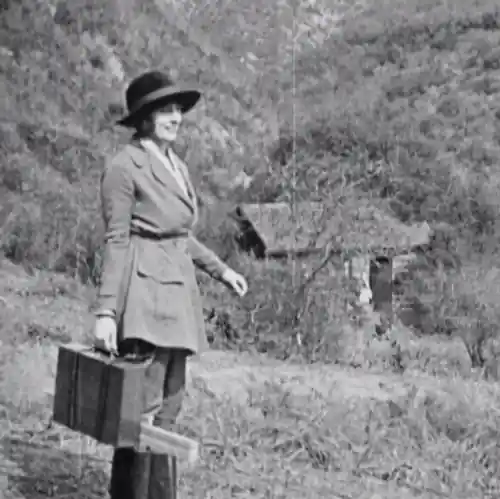
Surviving prints run 58 minutes—seven reels—yet the original Chicago censorship card lists 7,320 feet, suggesting two reels vanished. Excised footage allegedly depicted a nude silhouette behind a whisky barrel stave, plus a close-up of a revenuer’s boot crushing a fiddle. Even in truncated form, state boards in Pennsylvania and Kansas demanded further cuts, amputating the hymn-book montage for “sacrilege.” Thus the film exists like a Prohibition flask—half-full, dented, but still capable of burn.
Compare this mutilation to Flying Colors’ Technicolor extravagance, spared the censor’s scissors by virtue of flag-waving finale. History, drunk on irony, staggers again.
Though released during the infancy of radio, the studio circulated a suggested cue sheet: “At reel five, when Ruth tears her chemise to bandage Griffith’s bird-shot leg, strike up ‘Flow Gently, Sweet Afton’ in D-minor; allow strings to decay until only flute remains, like conscience whispering.” Modern restorations often pair the picture with Appalachian field recordings—banjo clawhammer, bones, mouth-bow—creating an aural palimpsest: 1921 visuals, 1930s Lomax audio, 2020s digital crackle.

Critics often slot A Daughter of 'the Law' alongside The Lone Wolf’s gentleman crook or In the Spider’s Grip’s serial queens, yet Ruth is neither femme fatale nor damsel. She bears federal authority but also the gendered burden of performance: to be convincing as schoolmarm she must unlearn her own swagger, to be effective as agent she must reclaim it. The film’s true cliffhanger is not whether the stills explode—of course they do—but whether a woman can exit the narrative without being devoured by either the Law she serves or the outlaws she seduces.
In the surviving final shot, Ruth rides a mule out of frame, hills smoldering behind her. The camera lingers on vacant road. No matrimonial embrace, no badge tossed into river. Just the echo of hooves and the unresolved chord of a woman who has tasted corn liquor and federal power alike, and finds both bitter, both sweet.
Verdict: Seek this film like a speakeasy—behind a false wall of history, down a staircase of film-grain, past the bouncer of academic neglect. What awaits is a shot of 100-proof cinema, throat-scorching, hallucinatory, illegal in three states. Drink deep.
IMDb —
1920
Community
Log in to comment.