DbcultAccessing Vault...
Cult Review
Senior Film Conservator
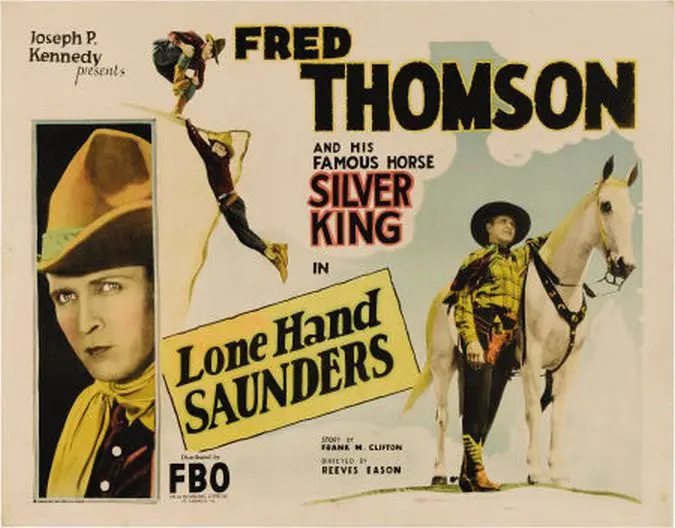
Is this film worth watching today? Short answer: Yes, but primarily as a fascinating artifact of how silent cinema blended disparate genres. It is a must-see for those interested in the athletic prowess of Fred Thomson, though modern audiences might find the heavy-handed melodrama of the 'medical vow' a bit hard to swallow.
This film is for enthusiasts of the 'Big Boy' Western era and those who appreciate the physical stunts of the 1920s. It is definitely not for viewers who require gritty realism or complex, morally gray antagonists.
1) This film works because Fred Thomson carries the absurd premise with genuine physical charisma and a screen presence that rivaled Tom Mix in his prime.
2) This film fails because the central conceit—a man refusing to use his right hand in the dangerous Old West—often feels more like a convenient plot device than a deeply explored psychological trauma.
3) You should watch it if you want to see one of the era's greatest cowboy stars perform stunts that put modern CGI to shame, all while navigating a plot that feels like a precursor to the modern medical procedural.
Lone Hand Saunders is not your typical 1920s horse opera. While contemporary films like The Texas Trail focused on more traditional frontier conflicts, this film attempts a daring pivot into psychological melodrama. The idea of a cowboy who is secretly a disgraced surgeon is, frankly, wild. It’s the kind of high-concept pitch that feels modern, yet it’s handled with the earnestness of the silent era.
Fred Thomson plays Saunders with a stoicism that is occasionally broken by moments of intense physical action. The scene where he rescues Buddy in the desert is a masterclass in silent era scale. The vastness of the Arizona landscape is used to emphasize Saunders' isolation. It isn't just a desert; it's a visual representation of his grief. The camera lingers on his idle right hand, tucked away like a shameful secret. It's effective. It's punchy. It works.
However, the villains, Buck (Frank Hagney) and Charlie (Albert Prisco), are as subtle as a sledgehammer. They are the archetypal 'black hat' villains who exist solely to kick dogs and frame heroes. In a film that tries to do something interesting with its protagonist's psyche, having such paper-thin antagonists feels like a missed opportunity. They lack the nuance found in other films of the period like The Cost.
For the casual viewer, Lone Hand Saunders might feel like a relic. But for the cinema historian, it is essential. It represents the peak of Fred Thomson’s career before his untimely death. The choreography of the final confrontation, where Saunders must finally use his right hand not to kill, but to save a life through surgery, is a brilliant subversion of the Western climax. Usually, the hero draws his gun; here, he draws a scalpel. That alone makes it worth the price of admission.
We cannot talk about this film without mentioning Silver King the Horse. In the 1920s, the hero's horse was often as big a draw as the hero himself. Silver King displays an intelligence and screen presence that often outshines the human cast. There is a specific moment during the stagecoach chase where the horse seems to anticipate the camera's needs, positioning itself perfectly for the stunt. It’s a reminder of a lost art form in animal training.
Compare this to the animal work in Rarin' to Go, and you see why Thomson and Silver King were such a formidable duo. The horse isn't just transportation; he's Saunders' only real friend for the first third of the film. Their bond is the emotional anchor that makes Saunders' eventual connection with Buddy and Alice feel earned rather than forced.
The visual language of the film is surprisingly sophisticated. Director Del Andrews uses deep focus to keep the looming threat of the posse visible in the background while Saunders is focused on Buddy in the foreground. This creates a persistent sense of dread. The lighting in the orphanage scenes is soft and inviting, contrasting sharply with the harsh, high-contrast shadows of the desert canyons where the robberies take place.
There is a brutal simplicity to the way the action is shot. No quick cuts. No shaky cam. Just wide shots of men and horses moving at breakneck speeds. It’s honest filmmaking. You see the dust. You feel the heat. When the stagecoach flips, you know a stuntman actually did it. That physical reality is something modern green-screen Westerns struggle to replicate.
Pros:
- Fred Thomson’s incredible physical performance.
- A unique plot that blends Western tropes with medical drama.
- Stunning location photography in the Arizona desert.
- Silver King is arguably the best animal actor of the era.
Cons:
- The 'vow' logic is stretched thin and becomes repetitive.
- Some pacing issues in the middle act involving the orphanage.
- The secondary characters are largely forgettable.
The most surprising observation about Lone Hand Saunders is how it treats disability. Buddy’s condition isn't just a plot point to make us pity him; it is the catalyst for Saunders' redemption. In many films of this era, like The Message of the Mouse, disability is often used purely for pathos. Here, it’s a technical challenge for the protagonist. The film suggests that Saunders' 'lone hand' is a disability of the mind, which can only be cured by addressing the physical disability of the boy.
It’s a bit heavy-handed, sure. But for 1926, it’s practically avant-garde. The movie argues that our past failures don't define our future utility. It’s a message that resonates, even if it’s delivered via a man in a cowboy hat and a very smart horse.
Lone Hand Saunders is a fascinating anomaly. It’s a Western that wants to be a tragedy, and a tragedy that can't help but be an action movie. While it doesn't reach the heights of silent masterpieces, it occupies a unique space in the genre's evolution. It’s a film about the weight of the past and the courage required to let go of a self-imposed prison. It works. But it’s flawed. Watch it for Thomson, stay for the horse, and forgive the melodrama. It’s a piece of history that still has a bit of kick in its gallop.
IMDb 5.6
1928
Community
Log in to comment.