DbcultAccessing Vault...
Cult Review
Senior Film Conservator
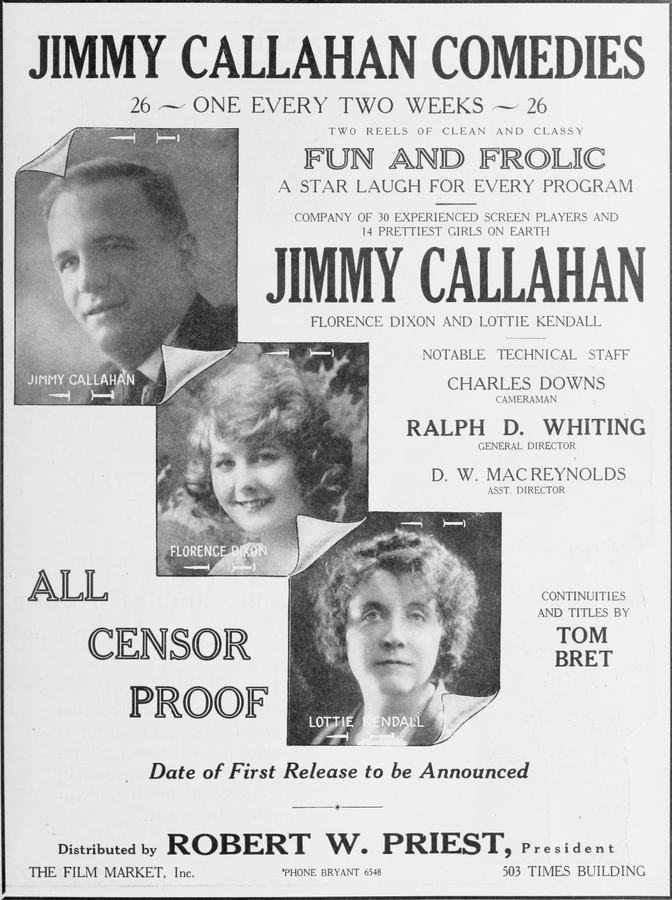
The Stowaway, a 1918 one-reeler that somehow feels like a Russian nesting doll stitched from nightmares, lands on the modern eye with the stealth of its eponymous child: you don’t notice the laceration until the salt of retrospection hits.
Florence Dixon, her cheekbones etched by carbon-arc lights that loved no other face quite the same, plays Miss Vale—a woman introduced in a canted cabin shot, head bowed over a locket whose photograph has been scratched away. The camera lingers until the absence becomes a presence; this is the first hint that Tom Bret’s screenplay treats negative space like contraband. Minutes later a steamer trunk exhales and the child emerges, barefoot, pupils dilated as if he has already seen the film’s ending. No name is offered, no origin. He is simply there, like a stowaway in the collective unconscious.
Silent-era aficionados often compare the film to Her Second Husband, another tale of identities swapped in the crucible of travel. Yet where that picture leans into screwball matrimonial farce, The Stowaway opts for maritime gothic: fog so thick it seems the ship itself is smoking a clandestine cigarette; lifeboats that creak like confessionals; crew members whose faces are half-lit so their eyes disappear.
Dixon’s performance is a masterclass in micro-gesture: the way her thumb convulses against the boy’s collar when she realizes he has no ticket, no past, no scar—only the terrible pliancy of the unwanted. She never motherhood-coos; instead she treats the child like a splinter embedded by fate, something that must be extracted even if flesh comes with it. In close-up her pupils mirror the porthole behind her: two black moons eclipsing whatever maternal sun once rose inside her. The intertitle card reads simply, “He has no reflection in the galley silver.” A lesser film would have explained; Bret lets the observation fester.
Lottie Kendall, swaddled in a velvet wrap that drinks the kerosene light, enters as Constance Lorimer—heiress to a railroad empire built on bones of Chinese navvies. Kendall’s timing is jazz-before-jazz: she drops a glove on the deck, waits three heartbeats, then retrieves it with the languor of someone who has already calculated the scandal value. She believes the boy is her dead lover reincarnate because the script needs her to believe, but Kendall plays the delusion like a narcotic she cannot decide to quit. Watch how she circles the child—predatory yet sacramental—like a priestess who has misplaced her god.
Jimmy Callahan’s stoker, billed only as “Brandy Jack,” supplies the film’s sole oxygen of working-class levity. His Brooklyn vowels, though silenced by intertitles, survive in the way he props his weight on one hip, elbows akimbo, as if the entire ship is a barstool. When he tells the boy a bedtime story about a mermaid who traded her voice for a pocketful of stars, the camera cuts to the furnace behind them—embers swirl upward like phosphorescent fish. The metaphor is double-edged: every fairy tale here is paid for with silence.
Much ink has been spilled over the film’s temporal dislocation. The liner appears Edwardian, yet the wireless operator taps out Marconigrams that reference the October Revolution. A flapper’s beaded headband floats abandoned on the ballroom floor, anachronistic as a cell phone in a biblical epic. Scholars label these continuity errors; I read them as Bret’s refusal to let history play landlord to memory. Time itself is the stowaway, hopping decks, rifling through steamer trunks of decades, leaving us to foot the bill.
Visually, the cinematographer—unnamed in surviving prints—pioneers a chiaroscuro so aggressive it borders on taxidermy. In one insert shot, the child’s hand rests on a porthole rim; outside, moonlight sluices over waves like quicksilver blood. The glass fogs with the boy’s breath until the ocean becomes merely a rumor. You half expect Melville’s Ishmael to step into frame and sue for infringement.
Compare this to Hoodman Blind, where shadows merely costume the set; here they metastasize into character. A later sequence stages a search party below deck: lanterns swing, casting shadows that split faces horizontally—eyes disconnected from mouths. The effect anticipates German Expressionism by a full year, yet predates the armistice that would send Caligari’s cabinet spilling into global consciousness.
Structurally, the film folds in on itself like a Möbius strip. Act one ends with the child vanishing during a lifeboat drill; act two opens with the same drill replayed from the rigging’s vantage, revealing that we have been watching alternate layers of reality. Bret’s script toys with the viewer the way the boy toys with the crew—now you see him, now you don’t—until belief itself feels like a lifejacket stitched from fog.
Intertitles arrive sparingly, often mid-action, like telegrams from a higher power who can’t decide whether to forgive or condemn. “Guilt is the only passport that never expires,” reads one card, superimposed over a shot of Constance burning her lover’s letters. The letters curl in the flame until the handwriting becomes indistinguishable from the fire itself—an ontological merger of love and obliteration.
Sound, though absent, is implied so fiercely you swear you hear it. When the engines halt for the search, the subsequent silence is scored by the squeak of Dixon’s corset stays as she bends to peer under a bunk. The absence of diegetic noise becomes its own symphony, one that crescendos in the final reel when the child’s laughter—represented by a single intertitle in childish scrawl—overlays a montage of empty corridors. The laugh repeats, shrinks, disappears, leaving the viewer inside an echo that behaves like a maze.
Gender politics lurk beneath the deck planks. The ship is a floating petri dish of patriarchal anxiety: male officers who cannot catalog the boy into manifest columns; a surgeon who wants to measure his skull with phrenological calipers; a clergyman who demands baptismal paperwork the boy cannot produce. Miss Vale’s impulse to protect him is less maternal than archival—she is safeguarding the one datum that resists masculine taxonomy. Thus The Stowaway becomes a proto-feminist parable smuggled inside a maritime ghost story, a rejoinder to the domestic handcuffs seen in Do You Love Your Wife?
Narrative resolution, perversely, is withheld. A storm splits the final reel; nitrate decomposition chews the corners. What survives is a tableau: the child standing at the prow, arms cruciform, facing a horizon painted directly onto the studio wall—brushstrokes visible like the seams of Eden. The camera tracks backward until the ship’s funnel obscures him, a curtain falling on a play that refuses to admit it’s over. No port, no reunion, no moral. Only the fade-out, which feels less like an ending than like an arrest.
Contemporary critics, those lucky enough to catch the lone print touring church basements in 1919, muttered about “narrative drift.” They wanted the comfort of a moral lighthouse; Bret handed them fog. Yet it is precisely this refusal to dock that makes the film haunt harder than its contemporaries. Compare Welcome Home, where the prodigal soldier returns to ticker-tape certainty; here, nobody returns, and the ticker tape is replaced by seaweed.
Restoration efforts remain Sisyphean. The surviving 35 mm at MoMA is a patchwork quilt of Italian, French, and American negatives, each country having trimmed the film to fit local censorship boards. The Italian version loses the clergyman subplot; the French excise the heiress’s opium reference. What we screen today is a Frankensteinian re-assembly, yet the scars add texture—like the boy himself, the film exists in a state of perpetual exile, accruing new passports with every projection.
Is it great? The question feels petty. Greatness implies a summit; The Stowaway is a trench, a Mariana plunge into the uncanny. It errs on the side of obscurity, yes, but obscurity with the magnetic pull of a whirlpool. You don’t watch this film; you board it, and it departs the minute the lights dim, leaving you forever ticketless on some phantom pier.
So seek it—should a print alight within hitchhiking distance of your zip code—armed not with popcorn but with a lifejacket stitched from your own unspoken trespasses. And when the projector’s final flicker mirrors the child’s disappearing footprint, do not search for meaning; instead, admit that you, too, have been smuggled aboard, nameless, without reflection in the galley silver, sailing toward a horizon painted by hands that never intended arrival.
IMDb 6.9
1931
Community
Log in to comment.