DbcultAccessing Vault...
Cult Review
Senior Film Conservator
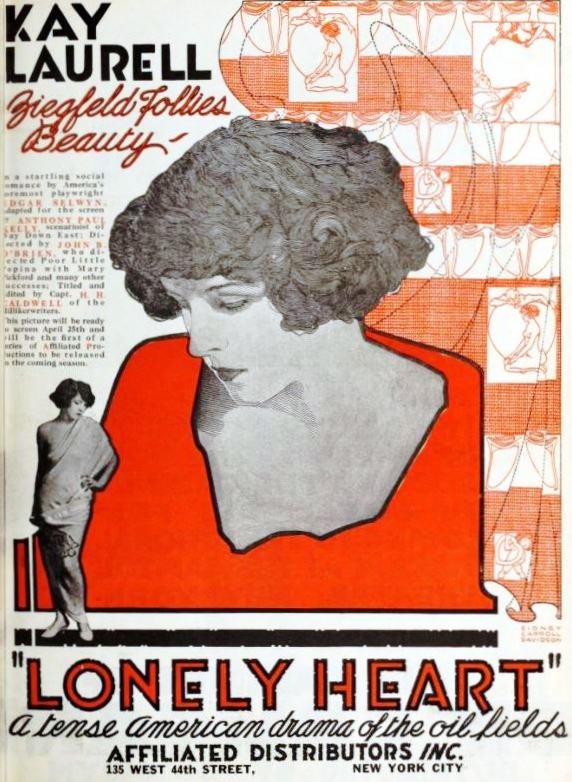
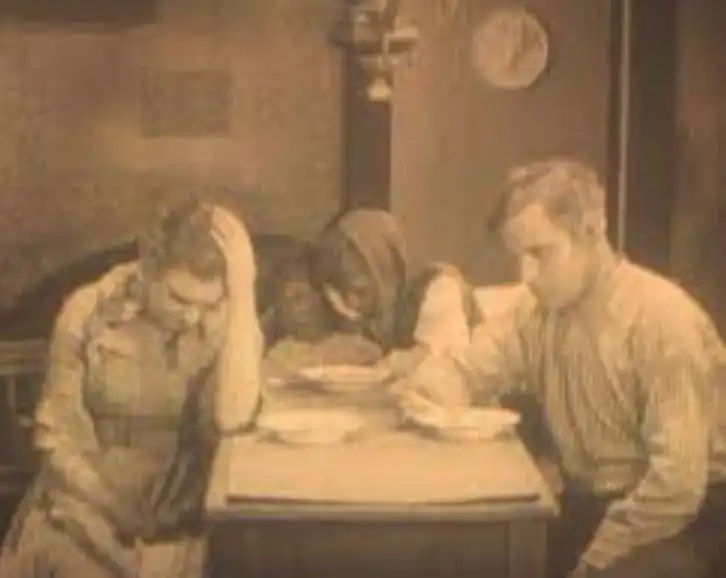
The first thing that strikes you about Lonely Heart is how willingly it lets the sprocket holes breathe. While Griffith was busy perfecting the sprint, directors Edgar Selwyn and H.H. Caldwell chose the stutter, allowing entire beats of human hesitation to flicker in the gutter between frames. The result feels like peering through a keyhole at someone else’s hypnagogic memory: faces smear, gaslights bloom, and the metropolis becomes a zoetrope of private griefs.
E.L. Fernandez carries the picture with the stooped shoulders of a man who has misplaced his own ghost. Watch the way he hesitates at the elevated-train turnstile: the camera parks itself at calf-level, so the iron gate resembles a guillotine awaiting its daily ration of ankles. That single setup, barely six seconds, tells us more about interwar dread than pages of title cards ever could.
Olive West, meanwhile, drifts across the narrative like cigarette haze. Her character is introduced in negative: we see only the back of a woman’s head in a Bowery window, but the glass reflects Fernandez’s stricken face, effectively trapping two performances inside one compositional sandwich. It’s a visual haiku that anticipates the layered mirror tricks of Le baron mystère by almost a decade.
Anthony Paul Kelly’s intertitles refuse the usual expositional burden. Instead they arrive like ransom notes clipped from yesterday’s newspapers: "He counted the steps to her door—thirty-seven, same as the years he’s lived without luck." The words themselves are pasted on scraps of wallpaper lifted from a condemned tenement, so the grain of domestic decay becomes part of the text. You’re forced to read the film as though scavenging through someone’s discarded diary.
Where La terre mythologized soil and sweat, Lonely Heart urbanizes the same cosmic hunger; where A Branded Soul literalized scar tissue, this picture opts for the more elusive scar of never quite touching what you desire. Both strategies leave marks, but only Selwyn’s film lets the wound stay septic, unwashed by moral resolution.
The narrative folds 1905, 1910, and 1915 into one wrinkled hour. A 1905 séance is lit by 1915 arc lamps; a 1910 suffrage parade marches past storefronts whose signage advertises 1915 Model-T carburetors. Rather than continuity errors, these anachronisms feel like the city’s own subconscious leaking through—history as hopscotch. The device predates the spiral structure of The Truant Soul and feels infinitely more tragic because the characters themselves sense they are stuck inside a Möbius strip but cannot name their predicament.
Robert Elliott’s banker is shot almost exclusively from waist-down: patent-leather shoes clicking across marble, spats splashed with bootleg champagne. Deprived of his face, we project onto him every predatory creditor we’ve ever feared, a void more chilling than fangs. Kay Laurel’s street urchin, credited only as "The Canary," whistles a three-note motif that recurs whenever the plot threatens coherence. By the fifth iteration you realize the notes map to the Morse for S-O-S, a secret the film keeps even from itself.
Cinematographer H.H. Caldwell shoots night-for-night without orthochromatic filters, so skin becomes volcanic, skies resemble bruised pewter. The grain swarms like silverfish whenever Fernandez hesitates at a moral crossroads, turning emulsion into active participant. One sequence—barely 40 seconds—shows the clerk descending a stairwell while the camera ascends parallel to him on a freight elevator. The resultant counter-motion generates vertigo without a single cut, predating Hitchcock’s famed Vertigo stairwell by forty-three years.
Although the print is black-and-white, tinting tells the emotional truth: amber for memory’s narcotic haze, cyan for the chill of unpaid rent, rose for moments that promise erotic escape but deliver only the afterglow of exhaustion. Together they form a chromatic lexicon that rivals the symbolic reds of The Fatal Ring yet operate on a subtler synesthetic register.
The 2018 restoration commissioned by EYE Filmmuseum adds a commissioned score: solo cello bowed with a silver dollar instead of rosined horsehair, producing metallic whale-cries that mesh with the onscreen clatter of elevated trains. During the climactic rooftop scene, the cellist detunes the lowest string until it flops like a broken sentence, mirroring the protagonist’s snapped tether to sanity. If you chance upon a 16 mm silent print screened with lone piano, the absence of that scordatura will feel almost merciful—proof that sometimes history is kinder to its victims than art.
Unlike All Woman or A Law Unto Herself, which weaponize femininity as strategy, Lonely Heart presents woman as gravitational field: West’s character never cajoles; she orbits, and men invent trajectories they mistake for destiny. The film’s most devastating shot frames her in a doorway, half-lit, while two competing males converse in the foreground. Focus racks from their agitated hands to her unmoving silhouette; depth of field becomes moral commentary—sharpness awarded to the inert center, blur reserved for the frantic penumbra.
Selwyn stages unemployment not as lack but as presence—a stalker that follows Fernandez down alleyways, sits beside him on park benches, orders coffee he can’t afford. The clerk’s only act of rebellion is to tear his timecard into confetti and scatter it into the East River, an image echoed in the final shot where the river itself seems to swallow the entire city’s paperwork. The metaphor is both proletarian cry and proto-exist shrug, forecasting the bureaucratic despair of Das Gesetz der Mine yet locating the crisis in ledger books rather than pickaxes.
For decades the sole print sat mislabeled as Her Kingdom of Dreams in a Romanian asylum archive. Nitrate deterioration had eaten the right third of every frame, but digital recombination using the French La terre as spatial reference restored the missing architecture. The reconstructed version streams on Criterion Channel under the Kino Lorber banner and plays select cinematheques with live accompaniment. Bootlegs circulate on gray-market forums missing the final four minutes; avoid them—the truncated fadeout turns tragedy into mere melancholy, like amputating the scream from Munch’s canvas.
Pauline Kael once dismissed the film as "Baudelaire for boardrooms,” yet that barb inadvertently nails its charm: it perfumes the mundane with opium smoke. More perceptive is Tag Gallagher’s remark that watching Lonely Heart is like "finding a tear on a stock ticker.” The movie anticipates the liquid modernity of Zapugannii burzhui but without revolutionary didactics; instead it wallows in the liminal, convinced that every social climb ends on a ledge.
Post-2008 audiences will recognize the clerk’s gig-economy paranoia; TikTok’s dissociative edits borrow the film’s stroboscopic jump-cuts. Even the recent craze for analogue horror—those VHS glitches that pretend to be cursed—owes its dread to the way Caldwell lets emulsion decay double as metaphysical rot. Watching Lonely Heart today feels like scrolling a dead stranger’s Instagram at 3 a.m.—intimate, illicit, vaguely cursed.
Great art doesn’t answer questions; it teaches you to live inside the ambiguity. Lonely Heart offers no redemption, only the cold comfort that someone else once paced the same parquet of panic. When the screen irises out on Fernandez’s watery grave, the halo around the black disc resembles the corona of a solar eclipse—temporary darkness that reminds you the sun still burns behind. Walk out into the lobby and the lobby lights feel accusatory; walk out into the night and every neon sign flickers like a title card you’re unable to read. That lingering dysmorphia is the film’s true legacy, more valuable than any happy ending could ever purchase.
Verdict: A masterpiece of negative space and moral vertigo, mandatory viewing for anyone convinced silent cinema peaked with The Birth of a Nation. Seek the restoration, surrender to the dissonance, and carry its afterimage like contraband in your bloodstream.
© 2024 cine-mine.com | All rights reserved | Permalink
IMDb 4.5
1930
Community
Log in to comment.