DbcultAccessing Vault...
Cult Review
Senior Film Conservator
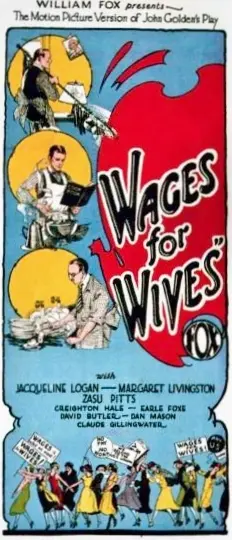
Wages for Wives is a classic comedy of manners from the early 20th century, directed by Kenneth B. Clarke and written by Guy Bolton and Kenneth B. Clarke. The film stars Creighton Hale, Claude Gillingwater, and Margaret Livingston, among others. It dives into the complex dynamics of early 20th-century marital and financial relationships, particularly from a woman's perspective.
Nell Bailey's Struggle for Financial Independence
The story begins with Nell Bailey, a character driven by a desire for financial independence. In a society where the economic burden of marriage often fell on women, Nell takes inspiration from her sister, Luella Logan, and her mother's experiences. These women, though in different circumstances, have shown that maintaining a balance in their marriages is crucial. Nell decides that she and her husband, Danny Kester, should split his earnings equally, a bold move for the time. This decision sets the stage for a comedic and dramatic journey.
Danny Kester's Refusal and the Strike
When Danny Kester refuses to honor the agreement, Nell takes a stand, initiating a strike that involves not only herself but also her sister and mother. This decision is not taken lightly, as it challenges the traditional roles and expectations of marriage. The three women, despite the difficulties, are determined to stick to their principles. They face a series of comedic situations as they navigate their new roles and the reactions of their husbands and society at large.
The Vamp and Complications
The addition of a vamp, or a manipulative woman, into the narrative adds another layer of complexity. This character, often found in classic comedies, represents the potential for drama and conflict. She complicates the situation, causing tension and further tests the resolve of Nell and the other women. However, the film skillfully balances the comedic elements with a touch of drama, ensuring that the narrative remains engaging and relatable.
Resolution and the Meeting of Minds
In the end, the film reaches a satisfying conclusion where both sides meet each other halfway. This resolution reflects the film's overarching theme of finding a balance between tradition and modernity. It highlights the power of women in asserting their rights and the importance of mutual respect in relationships. The film cleverly uses humor to explore serious themes, making it both entertaining and thought-provoking.
Comparisons and Context
For those interested in exploring similar themes, Fesseln and In the Knicker Time are worth watching. Both films delve into the complexities of early 20th-century relationships and societal norms. Similarly, Don't Tell Everything, King of the Circus, and As a Woman Sows offer insights into the challenges and triumphs of individuals navigating their social and marital roles.
Conclusion
Wages for Wives is a delightful exploration of gender roles, financial independence, and societal expectations. It is not just a comedy but a nuanced look at the complexities of early 20th-century life. The film's blend of humor and drama makes it a must-watch for those interested in classic cinema and the evolution of social norms. Whether you are a fan of early 20th-century films or simply looking for a compelling story, Wages for Wives offers a rich and engaging experience.
IMDb 4.8
1928
Community
Log in to comment.