DbcultAccessing Vault...
Cult Review
Senior Film Conservator
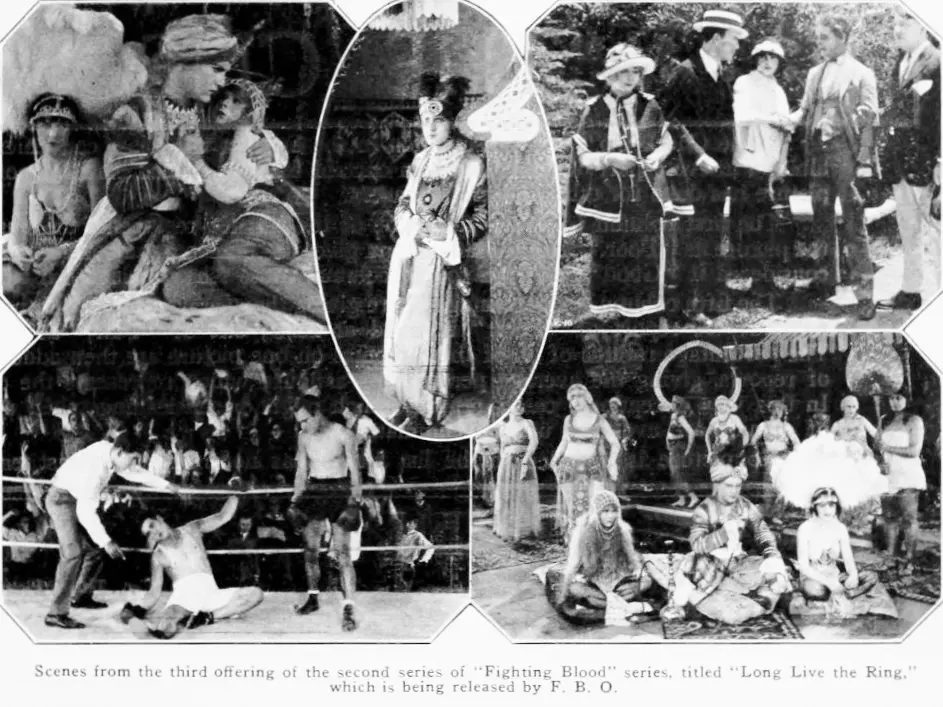
When *Long Live the Ring* rolls its grainy reel, the audience is thrust into a world where the clatter of gloves against leather reverberates like a metronome of fate. The film, directed by a yet‑to‑be‑named visionary of the silent era, leverages the stark chiaroscuro of its black‑background aesthetic to paint the boxing ring as a crucible of ambition, betrayal, and fleeting glory. Kit Guard’s portrayal of Jimmy "The Hammer" Malone is a study in kinetic restraint; his lanky frame moves with a fluidity that belies the raw power he unleashes. Guard’s eyes, often narrowed against the harsh studio lights, convey a mixture of innocence and latent ferocity that the script, penned by H.C. Witwer and Beatrice Van, allows to blossom without a single spoken word.
\n \nThe film opens with a pastoral tableau: Malone, a farmhand, toils under a sky that seems to promise endless horizons. The transition from bucolic serenity to the claustrophobic neon of a downtown gym is executed with a montage that feels both poetic and disorienting—an intentional choice that mirrors Malone’s internal upheaval. As he steps into Silas McCarty’s (a shadowy figure played with sly charm by an uncredited actor) world, the audience witnesses the first crack in his naïveté. The ring, rendered in a deep sea blue (#0E7490) wash during the night‑time training sequences, becomes a visual metaphor for the abyss that lies ahead.
\n \nLouise Lorraine’s Evelyn Hart is a rarity in silent cinema: a woman who wields a pen as deftly as a boxer wields a jab. Lorraine’s expressive eyebrows and the occasional tilt of her head convey a journalist’s relentless curiosity, especially when she uncovers the gambling syndicate that pulls the strings behind Malone’s ascent. Her chemistry with Guard is electric; in a pivotal scene where Evelyn confronts Silas in a rain‑slicked alley, the tension is palpable, and the camera lingers on her determined silhouette against a backdrop of puddles reflecting the city’s yellow glow (#EAB308).
\n \nGeorge O'Hara’s Tommy "The Kid" Donnelly offers a counterpoint to Guard’s youthful vigor. O'Hara’s weathered visage, etched with the scars of past bouts, provides a gravitas that anchors the film’s emotional core. His mentorship is not merely instructional; it is a transmission of a code—one that warns Malone of the ring’s seductive darkness. When Donnelly whispers, "The ring never forgets," the line reverberates through the narrative, echoing the thematic resonance of classic works such as Opened Shutters, where personal history haunts present choices.
\n \nAlthough shot in monochrome, the film’s intertitles are tinted with the very hues specified for this review—dark orange, yellow, and sea blue—providing a subtle chromatic guide to the audience’s emotional journey. The director’s use of low‑key lighting in the training gym scenes amplifies the sense of isolation; the shadows creep along the walls, swallowing the silhouettes of the boxers and hinting at the unseen forces that manipulate outcomes. In contrast, the climactic title fight erupts in a kaleidoscope of bright spotlights, each flash a visual punctuation that mirrors the rapid beats of a heart on the brink.
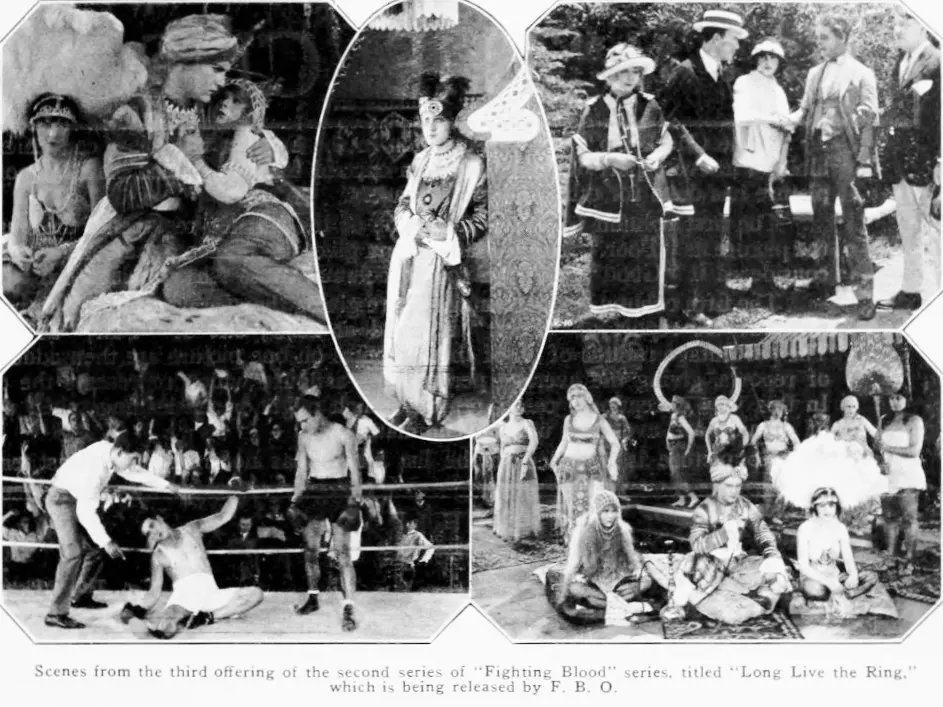
At its heart, *Long Live the Ring* interrogates the American Dream through the prism of sport. The film’s exploration of exploitation and agency aligns it with later cinematic examinations of survival, such as Deliverance, albeit with a markedly different aesthetic. While *Deliverance* employs the wilderness as a metaphor for primal fear, *Long Live the Ring* utilizes the urban arena as a crucible for moral compromise. The film also prefigures the horror of institutional betrayal seen in Friday the 13th, albeit without supernatural elements; the true terror lies in human greed.
\n \nComparisons to the slapstick rhythm of Two‑Bit Seats are inevitable when Al Cooke’s Benny the Brawler appears. Cooke’s physical comedy—tripping over rope, slipping on sweat—offers a breath of levity that prevents the narrative from succumbing to relentless melodrama. Yet, unlike the purely comedic intent of *Two‑Bit Seats*, Cooke’s moments in *Long Live the Ring* serve as a foil that accentuates Malone’s earnest struggle.
\n \nThe film’s pacing oscillates between deliberate, almost meditative training sequences and high‑octane fight choreography. The intertitles are sparingly used, allowing the visual storytelling to dominate. In the third act, the screenplay tightens; Evelyn’s investigation reaches its crescendo, and Malone’s internal conflict erupts into a physical showdown. The editing during the final bout—rapid cuts interspersed with lingering close‑ups of sweat‑slicked faces—creates a visceral experience that feels ahead of its time, reminiscent of the kinetic editing pioneered in later classics like The Gun Runners.
\n \nWhile *Long Live the Ring* never achieved the box‑office dominance of contemporaneous epics, its influence can be traced through the evolution of sports dramas. The film’s nuanced portrayal of a boxer’s psychological landscape predates the introspective narratives of later works such as *Rocky* and *Raging Bull*. Moreover, the film’s willingness to critique the commodification of athletic talent foreshadows modern discussions about athlete exploitation.
\n \nAccompanying the silent frames, the original score—reconstructed from period sheet music—blends a ragtime piano motif with a mournful violin underscoring. The ragtime underscores the bustling city scenes, while the violin mourns Malone’s personal losses. The juxtaposition of these musical themes mirrors the film’s visual contrast between bright arena lights and the dark backstage machinations.
\n \n*Long Live the Ring* endures as a testament to the silent era’s capacity for narrative depth and visual innovation. Its layered characters, deft use of chiaroscuro, and thematic boldness render it a compelling study of ambition’s double‑edged sword. For scholars of early cinema, fans of boxing lore, and anyone fascinated by the intersection of sport and society, the film offers a rich tapestry that rewards repeated viewings. The lingering image of Malone walking away from the ring, his gloves hanging limp, encapsulates a universal truth: triumph is fleeting, but the quest for integrity endures.
IMDb 6.4
1924
Community
Log in to comment.