DbcultAccessing Vault...
Cult Review
Senior Film Conservator
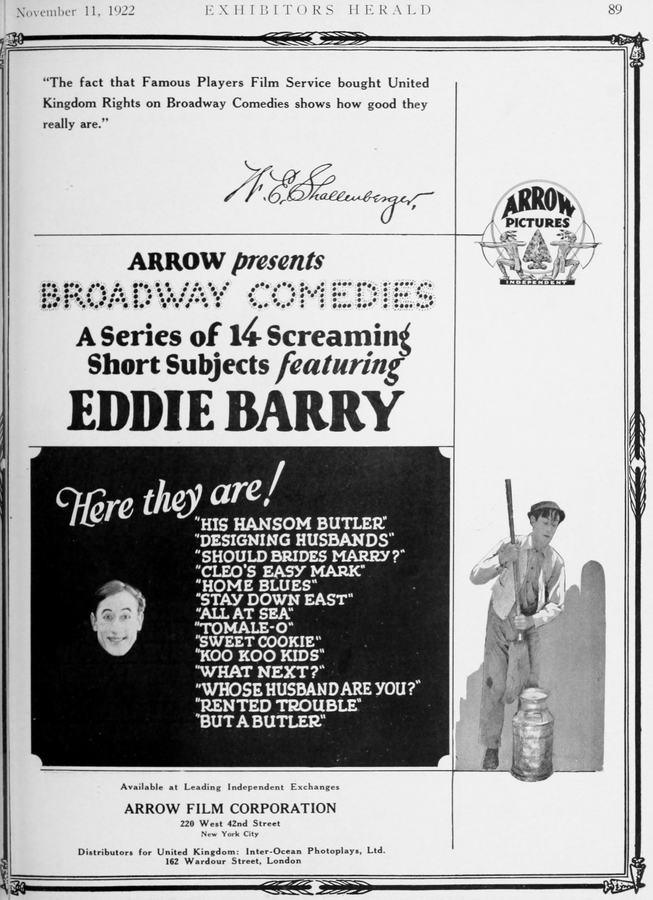
The silent era, often erroneously perceived as a monolithic precursor to the 'talkies,' was in fact a period of radical experimentation and aesthetic refinement. Within this fertile ground, Sweet Cookie stands as a testament to the Christie Film Company's ability to weave intricate social tapestries within the constraints of a short-form comedy. Unlike the existential dread found in The World, the Flesh and the Devil, this film opts for a lighter, more rhythmic approach to the human condition, yet it retains a sharp, almost surgical wit regarding the performative nature of domesticity.
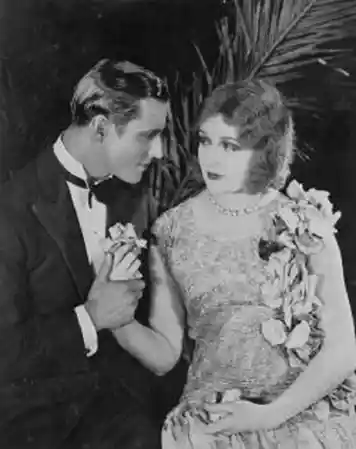
Vera Reynolds, an actress whose transition from the kinetic energy of Mack Sennett’s 'Bathing Beauties' to the dramatic gravitas of Cecil B. DeMille’s epics is well-documented, provides the film with its central gravitational force. In Sweet Cookie, her face is an instrument of profound versatility. She possesses a rare ability to communicate complex internal monologues through the subtlest shift in her ocular focus. While many of her peers relied on the exaggerated histrionics typical of the era—seen perhaps more overtly in Her Condoned Sin—Reynolds operates with a restraint that feels startlingly modern. Her comedic timing is not merely about the execution of a gag; it is about the anticipation of it, the 'breath' between the action and the reaction.
Her chemistry with Eddie Barry is palpable, creating a screen dynamic that rivals the sophisticated pairings found in New Love for Old. Barry, often the unsung hero of these Christie comedies, provides a sturdy, slightly bewildered foil to Reynolds' more mercurial energy. Together, they navigate the film’s central conceit—a series of escalating mishaps involving culinary ambition and social standing—with a fluidity that suggests a deep understanding of the vaudevillian roots of early cinema.
The 'cookie' of the title is more than a mere prop; it is the catalyst for a breakdown in communication that mirrors the larger social anxieties of the post-war decade. Much like the titular object in My Lady's Garter, the cookie serves as a MacGuffin that exposes the vulnerabilities and pretensions of the characters. The director utilizes a series of medium shots and tight close-ups to create a sense of intimacy that was often lacking in the more panoramic productions of the time, such as The Temple of Dusk.
The lighting in Sweet Cookie deserves special mention. While it lacks the moody, expressionistic chiaroscuro of Shadows, it employs a high-key brightness that emphasizes the artifice of the suburban setting. This 'whiteness' acts as a canvas upon which the characters' flaws are vividly projected. The editing, too, is remarkably brisk. There is a rhythmic quality to the cutting that feels almost musical, a precursor to the screwball comedies that would dominate the 1930s. It lacks the ponderous pacing sometimes found in Man's Desire, opting instead for a velocity that keeps the viewer perpetually engaged.
When examining Sweet Cookie alongside a film like Gigolette, one begins to see the divergence in how 'the feminine' was portrayed during this era. While Gigolette leans into the melodrama of the fallen woman, Sweet Cookie presents a woman who is very much in control of her own narrative, even when that narrative is spiraling into chaos. It shares more DNA with the playful subversion of Moon Madness than it does with the somber moralizing of Moths.
The film also touches upon themes of identity and performance that are explored more darkly in The Clown. In Sweet Cookie, the 'performance' is that of the perfect housewife, a role that Reynolds' character finds increasingly difficult to maintain. This subtext of domestic dissatisfaction, though played for laughs, provides a layer of depth that elevates the film above mere fluff. It captures a specific American zeitgeist—the tension between the traditional values of the past and the burgeoning independence of the modern 'flapper' archetype.
Technically, the film is a marvel of efficiency. The set design, while modest, is utilized to its fullest extent. The kitchen becomes a stage for a series of near-misses and physical comedy beats that require pinpoint precision. Unlike the expansive outdoor settings of The Loaded Door or the rugged terrain of The Heights of Hazard, the confined space here serves to heighten the comedic tension. Every door, every cupboard, and every utensil is a potential obstacle or a comedic tool.
The cinematography by the Christie regulars demonstrates a keen eye for framing. Notice the way the camera captures the subtle changes in the environment—the rising smoke, the spilled flour—elements that act as visual metaphors for the protagonist's disintegrating control. This level of detail is reminiscent of the meticulous visual world-building in Die Japanerin, albeit in a vastly different genre. Even in its most frantic moments, the film never loses its sense of visual balance, ensuring that the audience is always aware of the spatial relationships between the characters.
One must also consider the intertitles, which in Sweet Cookie are used with a refreshing economy. Rather than over-explaining the plot, they serve as punchlines or as brief emotional anchors. This allows the visual narrative to breathe, trusting the audience to interpret the nuances of the performances. This is a stark contrast to the heavy-handed titling often found in films like Eye of the Night, which can sometimes stifle the organic flow of the imagery.
In Sweet Cookie, the silence is not an absence of sound but a presence in its own right. It is a space for the viewer to participate in the construction of meaning. The film’s ability to evoke laughter, empathy, and social commentary without a single spoken word is a reminder of the unique power of the silent medium—a power that is often diluted by the sensory overload of contemporary cinema.
Revisiting Sweet Cookie today, one is struck by how little the fundamental anxieties of social performance have changed. We still curate our 'domestic bliss' for an audience, though today that audience is found on social media rather than at a neighborhood bridge game. The film’s exploration of the gap between appearance and reality remains as relevant as ever. It is a charming, witty, and surprisingly insightful piece of work that deserves a place in the pantheon of great silent comedies.
While it may not have the epic scale of some of its contemporaries, its smallness is its strength. It is a miniature painted with the finest of brushes, a celluloid artifact that continues to sparkle with intelligence and charm. For those looking to understand the evolution of film comedy, or for those simply seeking a masterclass in silent acting, Sweet Cookie is an essential watch. It reminds us that sometimes, the most profound truths are found in the most trivial of places—even in something as simple as a cookie.

IMDb —
1927
Community
Log in to comment.