DbcultAccessing Vault...
Cult Review
Senior Film Conservator
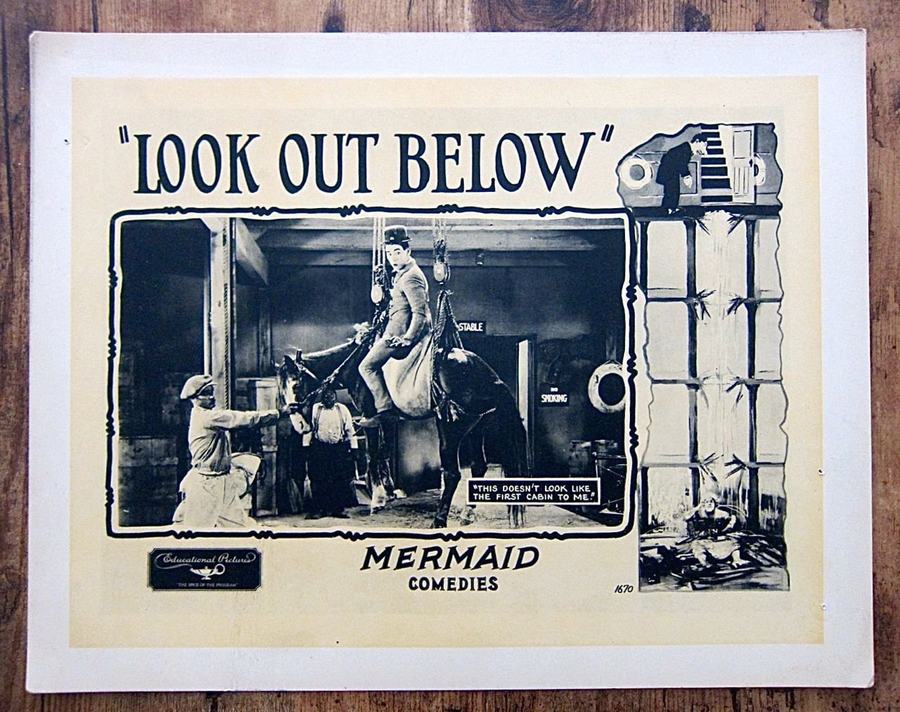
Stepping back into the nascent days of cinematic storytelling, the 1922 production of Look Out Below! emerges not merely as a relic of its time, but as a surprisingly robust piece of early filmmaking that, despite the passage of a century, still manages to captivate with its blend of melodrama, burgeoning feminism, and nail-biting suspense. In an era often characterized by broad gestures and nascent techniques, this film distinguishes itself through a narrative ambition that mirrors the very skyscrapers it depicts, reaching for emotional and dramatic heights that were, for its period, quite daring. It’s a fascinating glimpse into the nascent visual language of cinema, where every flicker of emotion, every grand gesture, had to communicate volumes without the luxury of spoken dialogue.
The film’s central conceit, revolving around a young woman’s struggle to preserve her family’s legacy against formidable odds, resonates with a timeless quality. Elinor Lynn, as Elara Vance, delivers a performance that transcends the often-stilted conventions of silent acting. Her portrayal imbues Elara with a palpable blend of vulnerability and steely determination, a nuanced depiction that makes her character’s journey from grieving daughter to resilient entrepreneur genuinely compelling. Lynn’s expressive eyes and subtle shifts in demeanor convey a depth of character rarely seen in heroines of the period, who were frequently relegated to damsel-in-distress archetypes. She is not merely reacting to events; she is actively shaping them, a refreshing departure that hints at the evolving roles of women both on and off the silver screen.
Lige Conley, in the role of Barnaby 'Barney' Butterfield, provides much of the film’s comedic relief and, ultimately, its emotional anchor. His character, a structural engineer plagued by a debilitating fear of heights, is a masterstroke of ironic characterization. Conley’s physical comedy is impeccable, eliciting genuine laughter without resorting to mere slapstick. Yet, beneath the surface of his comedic bluster, he crafts a character whose internal struggle is surprisingly poignant. The arc of Barney, from clumsy acrophobe to reluctant hero, is handled with a delicate touch, allowing his transformation to feel earned rather than abrupt. This balance of humor and heartfelt character development is a testament to Conley’s skill and the foresight of the film’s uncredited writers, who understood that even in a silent film, character complexity could elevate the material beyond simple escapism.
Don Barclay’s Silas Grimshaw is a wonderfully hissable villain, embodying the avarice and unscrupulous ambition that often fueled silent era antagonists. Barclay doesn’t merely play Grimshaw as evil; he portrays him with a sneering, calculating malevolence that makes his schemes all the more insidious. His physical presence, often lurking in the shadows or smirking from a safe distance, effectively conveys the constant threat Elara faces. The dynamic between Lynn’s spirited resolve, Conley’s endearing awkwardness, and Barclay’s menacing villainy forms the dramatic core of Look Out Below!, creating a compelling triangle of forces that propels the narrative forward with relentless energy.
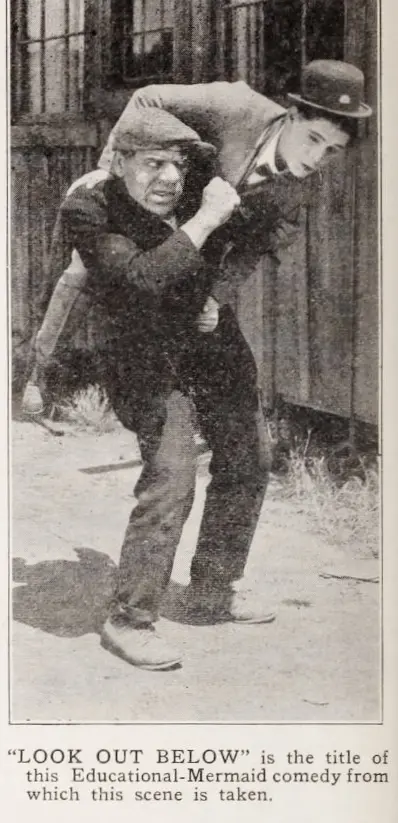
The plot, while perhaps appearing straightforward by modern standards, is ingeniously constructed for its time, weaving together elements of corporate espionage, romantic comedy, and high-stakes thriller. The visual storytelling, often relying on clever intercutting and well-composed shots, ensures that the audience is always aware of the precariousness of Elara’s situation, both financially and physically. The looming skyscraper itself becomes a character, a towering symbol of aspiration and danger, its unfinished skeleton a constant reminder of the fragility of human endeavor. This architectural backdrop provides a magnificent stage for the drama, allowing for truly breathtaking sequences that leverage the inherent vertigo-inducing potential of heights.
One cannot discuss Look Out Below! without acknowledging its remarkable technical achievements for 1922. The cinematography, though lacking the sophisticated camera movements of later eras, employs clever angles and carefully framed shots to maximize dramatic impact. The use of miniatures and matte paintings, seamlessly integrated with live-action footage, creates the illusion of dizzying heights and perilous drops, a testament to the ingenuity of early special effects artists. The climactic sequence, in particular, where the steel beam teeters precariously, is a masterclass in silent film suspense, building tension through rapid cuts and close-ups of the characters’ desperate struggles. The visual language here is so potent that one can almost hear the creaking metal and the frantic gasps, a testament to the film's immersive power.
The thematic undercurrents of the film are equally compelling. It explores the burgeoning role of women in the early 20th century, challenging traditional gender expectations. Elara Vance is not content to be a passive observer; she actively fights for her place in a male-dominated world, demonstrating both business acumen and physical courage. This narrative thread positions Look Out Below! as a fascinating companion piece to other films of the era that grappled with female agency, such as Women's Weapons or The Better Woman, both of which explored the complexities of female strength in societal contexts. While those films might have focused more on domestic or social spheres, Look Out Below! boldly places its heroine in the traditionally masculine realm of heavy industry, making her triumphs all the more significant.
Furthermore, the film delves into the perennial themes of ambition and the moral compromises often made in its pursuit. Grimshaw’s ruthless pursuit of wealth stands in stark contrast to Elara’s principled fight for her heritage. This moral dichotomy is presented without heavy-handed sermonizing, allowing the audience to draw their own conclusions about the ethical landscape of early capitalism. The film also subtly touches upon the human relationship with progress and modernity, symbolized by the skyscraper itself. It’s a monument to human ingenuity, yet also a site of immense danger, a precarious balance that mirrors the broader societal anxieties of the time.

The pacing of Look Out Below! is remarkably brisk for a silent feature, a testament to the director's understanding of visual rhythm. The narrative never sags, constantly introducing new complications and escalating the stakes. This relentless forward momentum keeps the audience engaged, a crucial element in silent cinema where the absence of dialogue could sometimes lead to lulls. The intertitles are used sparingly and effectively, providing just enough information to advance the plot without interrupting the visual flow. This judicious use of text ensures that the film remains a primarily visual experience, allowing the actors’ performances and the cinematic imagery to tell the story.
In terms of character relationships, the burgeoning romance between Elara and Barney is handled with a charming awkwardness that feels authentic. Their partnership, born out of necessity and forged in the crucible of shared peril, develops organically. It’s not a whirlwind, instant passion, but a gradual recognition of mutual respect and admiration. Barney’s eventual overcoming of his acrophobia, spurred by his desire to protect Elara, is a classic heroic trope, but it’s executed with such sincerity that it feels fresh and emotionally resonant. This emotional journey elevates the film beyond a simple action-adventure, giving it a heart that beats strongly beneath the daring stunts.
Comparing Look Out Below! to other films of its era provides further context to its merits. While a film like The Fuel of Life might have focused on the more dramatic, perhaps even tragic, consequences of societal pressures, Look Out Below! leans into a more optimistic, albeit hard-won, resolution. Its blend of suspense and romance could draw parallels with the adventurous spirit found in Alias Mike Moran, though with a distinctly industrial backdrop. The clever plotting and unraveling of a villain's scheme might echo the intricacy of The Curious Conduct of Judge Legarde, but with a more overt physical danger rather than purely legalistic intrigue.
The film’s portrayal of industrial danger is particularly striking. In an age before stringent safety regulations, the construction site is depicted as a genuinely hazardous environment, a place where a single misstep or malicious act could lead to disaster. This realism, even within the melodramatic framework, adds another layer of tension to the narrative. The stakes feel incredibly high because the consequences of failure are so vividly portrayed. This visceral sense of peril is something that even modern blockbusters sometimes struggle to achieve, making Look Out Below! a surprisingly effective thriller.
The resolution, where the falling beam improbably lands to complete the structure, is a moment of pure cinematic magic, a delightful suspension of disbelief that perfectly encapsulates the hopeful spirit of the era. It’s a triumphant conclusion that, while perhaps a touch fantastical, feels earned after the arduous trials faced by Elara and Barney. It’s a symbolic victory, not just for the characters, but for the very idea of progress and resilience against adversity. This optimistic ending, characteristic of many films from the period, leaves the audience with a sense of satisfaction and upliftment, reinforcing the idea that ingenuity and courage can overcome even the most daunting challenges.
In conclusion, Look Out Below! is far more than a historical curiosity. It is a vibrant, engaging film that showcases the burgeoning artistry of silent cinema. Its compelling plot, strong performances, and innovative technical aspects combine to create an experience that remains remarkably fresh and entertaining. It’s a testament to the enduring power of visual storytelling and a reminder that even in the earliest days of film, creators were pushing boundaries and crafting narratives that resonated deeply with audiences. For anyone interested in the evolution of cinema, or simply seeking a thrilling and heartwarming story, this 1922 gem is an absolute must-see, a towering achievement that deserves renewed attention and appreciation.
IMDb 5.7
1929
Community
Log in to comment.