DbcultAccessing Vault...
5.2/10
Senior Film Conservator
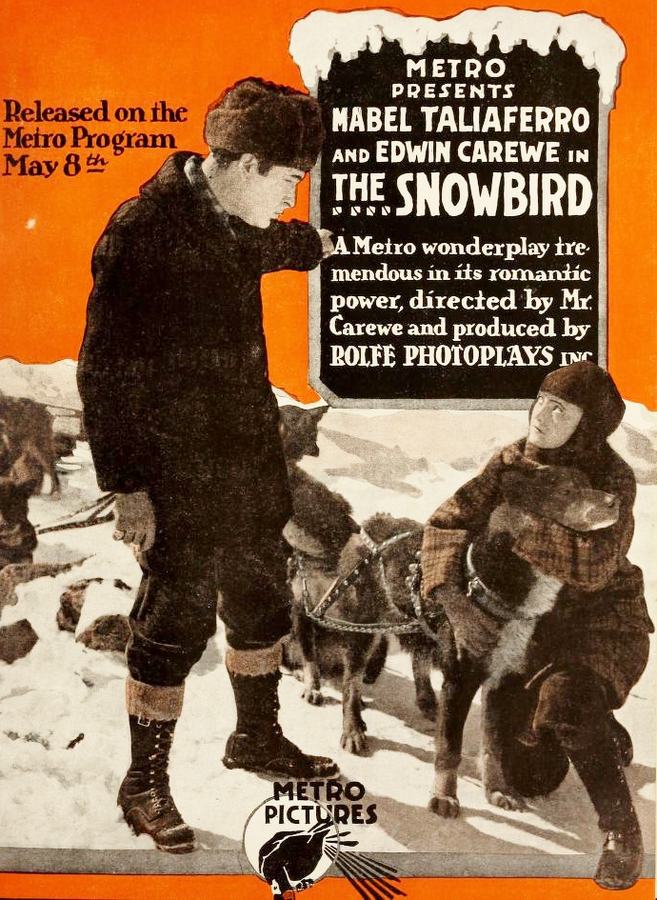
A definitive 5.2/10 rating for a film that redefined the boundaries of cult cinema. The Snowbird remains a cornerstone of transgressive art.
Stepping back into the early twentieth century, the silent film era often presented narratives with an unvarnished intensity, a directness that, despite the lack of spoken dialogue, resonated deeply with audiences. The Snowbird, a cinematic creation from 1916, is a prime example of this powerful storytelling, weaving a complex tapestry of property disputes, societal expectations, and the raw, transformative power of the wilderness. It's a film that, even a century later, invites us to ponder themes of justice, personal agency, and the intricate dance between civilization's constraints and nature's liberating embrace. Far from a simplistic melodrama, this picture delves into the psychological undercurrents of its characters, pitting ambition against integrity, and societal decorum against elemental passion. It's a journey into a bygone cinematic landscape, yet its emotional core feels remarkably contemporary, a testament to its narrative craftsmanship.
At the heart of The Snowbird's intricate plot lies a critical piece of parchment: a deed. John Wheeler, a man whose industrial prowess as a traction magnate belies a precarious financial standing, finds himself compelled to liquidate a vast timber tract nestled in the remote Hudson Bay district. This property, jointly held with Henri Corteau, becomes the focal point of an escalating crisis when the original deed, lodged in the Magistrate's office at Chalet, is tragically obliterated by fire. This act of fate, seemingly random, ignites a chain reaction of human avarice and moral compromise. Bruce Mitchell, a wealthy young man of society, enters the fray, ostensibly as a savior, agreeing to acquire the property. However, his motivations are far from altruistic; they are inextricably linked to his covetous pursuit of Lois Wheeler, John's vivacious and independently minded daughter. Mitchell's infatuation, rather than being a tender sentiment, quickly devolves into a tool of leverage, a means to exert control over both Lois and her beleaguered father. The narrative deftly establishes this foundation of transactional relationships, setting the stage for a confrontation between the purity of personal conviction and the corrupting influence of material gain.
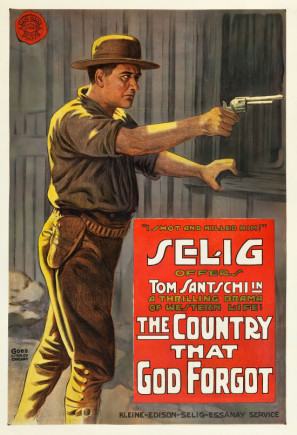
The death of Henri Corteau further complicates matters, leaving his son, Jean, as the sole inheritor and unwitting guardian of the only remaining copy of the crucial deed. When Magistrate Le Blanc, aware of the intended transfer, requests Jean's copy, hoping to recreate the lost document, Jean's refusal marks a pivotal turning point. His declaration of intent to retain the land for himself, borne perhaps of a deep-seated connection to his heritage or a nascent distrust of external authorities, throws Wheeler's predicament into stark relief. Mitchell, sensing an advantage, presses Wheeler for the deed, and upon learning of Jean's obstinacy, unleashes a torrent of threats, accusing Wheeler of fraud. It's a moment pregnant with tension, a clear illustration of how legal technicalities can be twisted into instruments of personal vendetta. Lois, an accidental eavesdropper to this harrowing exchange, becomes privy to Mitchell's cynical ultimatum: her hand in marriage in exchange for her father's exoneration. This proposal, steeped in coercion and devoid of genuine affection, ignites within Lois a fierce determination to prove her father's innocence and reclaim her own destiny. Her decision to journey north, a perilous undertaking for a woman of her social standing, echoes the adventurous spirit seen in other films of the era featuring strong female protagonists, perhaps even more daringly than the heroines in Peggy, the Will O' the Wisp, who navigate their own societal challenges.
Lois's journey into the untamed north is not merely a physical relocation but a profound psychological metamorphosis. Her initial attempt to confront Jean Corteau is met with his steadfast refusal, his declaration that he 'will not have any dealings with women' underscoring his isolated, perhaps misogynistic, existence. Undeterred, Lois adopts the audacious strategy of disguise, donning boy's clothes and embarking on a dog sled expedition with a guide, Pierre, to Jean's remote forest cabin. This act of gender-bending, a trope that often appeared in early cinema to grant female characters greater agency in patriarchal settings (though perhaps less overtly comedic than in some parts of Lime Kiln Club Field Day, which explored social boundaries), is a powerful statement of Lois's resolve. The perilous nature of her quest is immediately underscored by Pierre's attempted assault, a sudden moment of danger that forces Lois to seek refuge in Jean's cabin, collapsing at his threshold like a 'wounded snowbird' – a resonant image that gives the film its evocative title. Her fabricated story of being lost from a lumber camp allows her entry into Jean's world, a world where he, in his own words, has 'always wanted a boy companion and helper.' This initial deception, born of necessity, sets the stage for a delicate dance of hidden identities and burgeoning understanding.
What unfolds is a fascinating study of character evolution. Jean, initially portrayed as brutal and primitive, gradually reveals layers of a gentle nature under Lois's unwitting influence. The stark contrast between his rough exterior and his capacity for kindness is beautifully rendered, a testament to the film's nuanced character development. The inevitable discovery of Lois's true gender, her 'fair falls out from under her cap,' is handled with a blend of Jean's anger and a surprising acceptance. He consents to her remaining, even fetching his late mother's clothes for her, a gesture that speaks volumes about his softening resolve and perhaps a burgeoning attraction. It is during this moment of dressing that Lois's primary objective resurfaces: she finds the coveted deed hidden behind a small mirror. This discovery introduces a new layer of ethical complexity, as her original mission now clashes with the nascent bond forming between her and Jean. Her subsequent attempt to ply Jean with drink, hoping to facilitate her escape with the deed, underscores her internal conflict, a struggle between duty and a burgeoning, unexpected affection. Yet, Jean, far from succumbing to drunken oblivion, becomes captivated by her, revealing his intention to 'save her father' – a declaration that shatters Lois's preconceived notions and deepens her moral quandary. When he reaches for the deed and finds it missing, Lois's betraying manner forces her confession, leaving their fragile connection hanging by a thread.
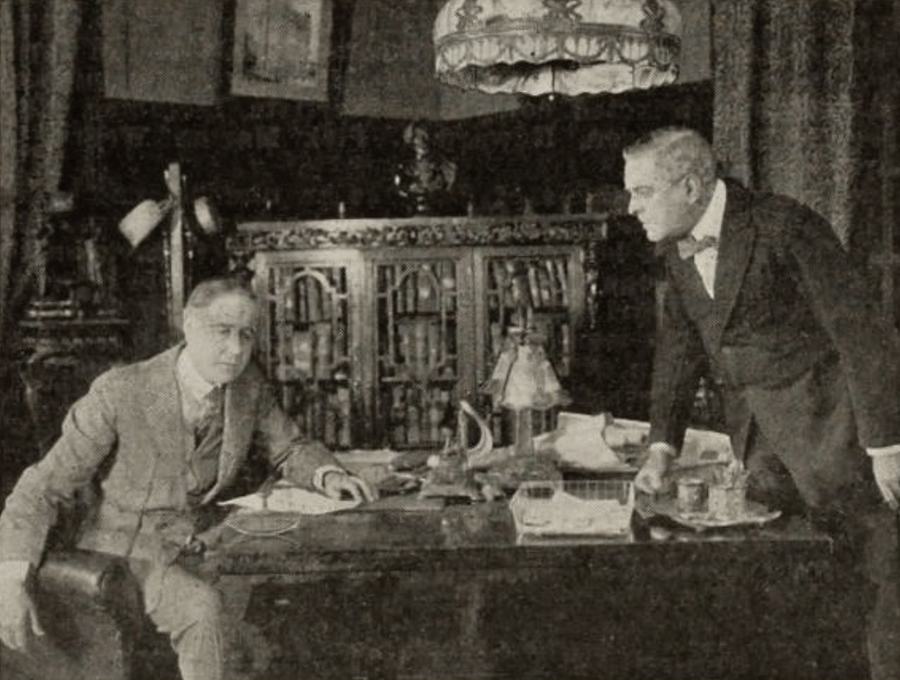
The arrival of Mitchell and Wheeler in the northland, driven by their search for Lois, precipitates the narrative's explosive climax. Pierre, the opportunistic guide, reveals Lois's whereabouts, fueling Mitchell's jealous rage. What follows is a brutal confrontation at Jean's cabin, a visceral clash between the civilized pretender and the untamed frontiersman. Mitchell's sarcastic accusation of a 'common liaison' between Lois and Jean serves as the spark, igniting Jean's protective fury. Their ensuing fight, depicted with a raw intensity characteristic of silent film action sequences, leaves both men seriously wounded, a testament to the high stakes of their conflict. Mitchell, staggering out into the unforgiving snow, meets a dramatic end, falling to his death from a cliff edge – a stark, poetic justice delivered by the very wilderness he sought to exploit. This moment, while cathartic, leaves Lois with a profound choice. With Jean unconscious and helpless, the stolen deed in her possession, the path to freedom and her father's salvation lies open. Her initial instinct to flee, to fulfill her original mission, is a powerful pull. However, a vision of Jean, alone and vulnerable, intervenes. This internal struggle, rendered without dialogue, relies entirely on Mabel Taliaferro's expressive performance, allowing the audience to witness her moral compass swing. It's a moment that elevates The Snowbird beyond a simple adventure tale, imbuing it with a genuine exploration of human empathy and the transformative power of love, reminiscent of the emotional depth found in films like The Flower of Faith, albeit in a more rugged setting.
Lois's decision to return to Jean, to nurse him back to health, marks her complete transformation. She sheds the last vestiges of her urban, societal conditioning, embracing a life dictated by genuine affection and the rugged demands of the north. Together, they aid Wheeler, and their initial plan to marry and settle in New York speaks to a lingering pull of the familiar, a conventional happy ending. Yet, the film's ultimate resolution transcends such predictable tropes. The 'call of the north,' the magnetic pull of the wilderness where their love was forged in the crucible of adversity, proves irresistible. Their return to this untamed landscape, to the life that gave birth to their profound connection, is a powerful statement about the nature of true belonging and the authenticity of a love that defies societal expectations. It suggests that their happiness, their true selves, could only flourish away from the artifices of civilization, in the raw, honest embrace of nature and each other. This conclusion, far from being a simple romantic denouement, serves as an affirmation of the profound impact of environment on character and destiny. It’s a narrative choice that distinguishes The Snowbird, giving it a resonant, almost philosophical, closure that lingers long after the final frames.
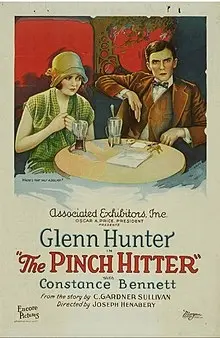
The performances in The Snowbird are crucial to its lasting appeal. Mabel Taliaferro, as Lois Wheeler, delivers a portrayal of remarkable depth, conveying defiance, vulnerability, determination, and burgeoning love through gesture and expression alone. Her ability to navigate the complex emotional landscape of her character, from society girl to wilderness woman, is a masterclass in silent film acting. Edwin Carewe, as Jean Corteau, masterfully embodies the 'brutal and primitive' exterior that slowly gives way to a gentle, protective core, making his transformation believable and moving. Warren Cook's Bruce Mitchell is suitably villainous, a caricature of urban greed that provides a stark contrast to the more nuanced heroes. The direction, by Frederick A. Thomson, skillfully uses the vast, snow-laden landscapes of the north as more than just a backdrop; it becomes an active character, shaping the destinies and revealing the true natures of those who inhabit it. The harsh beauty of the environment underscores the struggle for survival, both physical and emotional, giving the film a palpable sense of atmosphere. The use of intertitles, though a necessity of the era, is handled with an economy and poetic flair that enhances the narrative rather than merely explaining it, often echoing the lyrical quality of the film's title itself. Comparing it to other dramatic offerings of the time, such as The Key to Yesterday or even the more overtly suspenseful The Hindu Nemesis, The Snowbird stands out for its blend of frontier adventure with a deep dive into character psychology and moral choice.
Moreover, the film's exploration of gender roles, particularly through Lois's disguise and her eventual embrace of a non-traditional life, offers a fascinating glimpse into the evolving societal dialogues of the early 20th century. Lois is not merely a damsel in distress; she is an active agent in her own rescue and in shaping her own future, a proto-feminist figure whose strength is drawn from both her intellect and her capacity for empathy. Her journey from the confines of societal expectation to the freedom of the wilderness mirrors a broader cultural shift, even if the cinematic portrayal is still framed within the romantic conventions of its time. The themes of property, justice, and the inherent conflict between human law and natural law are also explored with considerable nuance, making The Snowbird more than just a period piece. It's a meditation on what truly constitutes ownership and belonging, not just of land, but of one's self and one's heart. Its narrative complexity and emotional resonance suggest a maturity in silent filmmaking that often goes unacknowledged, proving that even without synchronized sound, the power of visual storytelling and compelling character arcs could captivate and provoke thought.
In an era often characterized by rapid technological advancement and social upheaval, The Snowbird stands as a testament to the enduring power of classic narratives. Its blend of high-stakes drama, romantic entanglement, and the rugged beauty of the Canadian frontier creates a compelling cinematic experience. While it may not possess the same widespread recognition as some of its contemporaries, its intricate plot, robust character development, and evocative setting make it a film well worth revisiting for aficionados of early cinema and anyone interested in the foundational narratives that shaped the art form. It reminds us that the human heart, in all its complexity, remains a timeless subject, and that love, when stripped of artifice and forged in the crucible of genuine experience, can indeed find its truest expression in the wild, untamed corners of the world. The journey of Lois and Jean, from adversarial strangers to soulmates bound by the very land they fought over, is a powerful reminder of nature's capacity to strip away veneers and reveal authentic connections. Much like the intense human dramas of films such as Where Love Leads, but with a unique frontier spirit, The Snowbird offers a compelling glimpse into a past where silent screens spoke volumes.
IMDb 5.4
1933
Community
Log in to comment.