DbcultAccessing Vault...
5.4/10
Senior Film Conservator
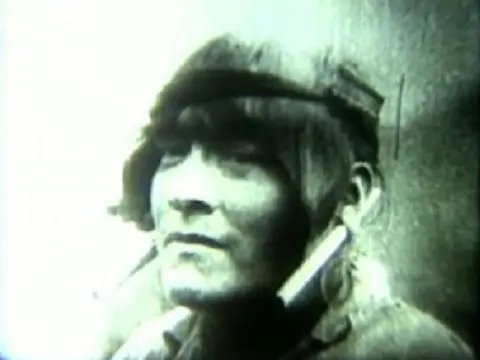
A definitive 5.4/10 rating for a film that redefined the boundaries of cult cinema. Los Invencibles Shuaras del alto Amazonas remains a cornerstone of transgressive art.
Is Los Invencibles Shuaras del alto Amazonas worth watching today? Short answer: yes, but with significant caveats. This isn't a film designed for casual viewing; it's a profound historical document that demands a specific kind of engagement, making it essential for historians, anthropologists, and cinephiles interested in the origins of documentary filmmaking, but likely impenetrable for those seeking modern entertainment.
The film works as a time capsule, a rare window into a culture through the lens of early 20th-century ethnography. However, its lack of conventional narrative and modern production values means it will not resonate with audiences accustomed to contemporary storytelling or high-fidelity visuals.
For contemporary audiences, approaching Los Invencibles Shuaras del alto Amazonas requires a fundamental shift in perspective. This isn’t a narrative film with protagonists, conflicts, or resolutions. Instead, it’s a silent, observational piece, likely one of the earliest cinematic records of the Shuar people. Its value lies not in its entertainment factor, but in its historical and anthropological significance.
If you are a student of film history, an ethnographer, or simply someone deeply curious about early 20th-century attempts to document indigenous cultures, then this film is an invaluable resource. It offers a raw, unfiltered look at daily life, free from the often-manipulative editing or dramatic scoring of later documentaries. It provides a unique opportunity to witness the world through the eyes of a filmmaker from a bygone era, capturing moments that would otherwise be lost to time.
However, for the average viewer seeking a compelling story or a visually dynamic experience, Los Invencibles Shuaras del alto Amazonas will prove challenging. Its slow pace, silent format, and often static camera work can feel tedious to an unprepared audience. It demands patience and an active intellectual engagement rather than passive consumption.
In the nascent days of cinema, before elaborate studios and sophisticated storytelling became the norm, there was a profound fascination with capturing the real world. Los Invencibles Shuaras del alto Amazonas emerges from this era, a testament to the pioneering spirit of early filmmakers like Carlos Crespi. His endeavor wasn't about crafting a fictional tale but about documenting a reality, a world distant and distinct from his own.
The film's title itself evokes a sense of awe and respect for the Shuar people, labeling them 'invincible.' This immediately sets a tone, suggesting Crespi's intent was not merely to observe but to celebrate their resilience and unique way of life. It places the film firmly in the tradition of early ethnographic studies, where the camera became a tool for exploration and, ideally, understanding.
One must remember the context: a time without synchronized sound, color film, or portable cameras. Filmmaking in the Amazon would have been an arduous, monumental task. Every frame captured represented immense effort, making each surviving moment a precious artifact. This context elevates the film beyond mere footage; it becomes a historical document of the filmmaking process itself, as much as it is a record of the Shuar.
Carlos Crespi, credited as both writer and cast, was clearly the driving force behind this project. While 'directing' in the modern sense might not apply to such an early ethnographic piece, Crespi's choices in what to film, how long to hold a shot, and the general focus of his lens constitute his directorial vision. He opted for an observational style, allowing the daily routines of the Shuar to unfold with minimal apparent intervention.
His vision, as inferred from the film's content, was to create a factual record. We see this in the sustained shots of activities like the intricate weaving of a basket, the communal preparation of a meal, or the methodical construction of a dwelling. These moments are not dramatized; they are presented as they are, a testament to Crespi's apparent desire for authenticity.
However, it's crucial to acknowledge the inherent biases of any ethnographic work, especially from this era. Crespi, as an outsider, inevitably brought his own cultural lens to the subject. While his intent might have been pure documentation, the very act of choosing what to film and what to exclude shapes the narrative, however subtle. This isn't a critique of Crespi's integrity, but an essential modern understanding of early documentary's limitations.
"The 'invincibility' in the title isn't just a descriptor of the Shuar people; it's also a subtle nod to the enduring power of early cinema to preserve moments that defy time."
The term 'cast' for the Shuar people in this film is an interesting, perhaps anachronistic, choice. They are not 'performing' in the theatrical sense; rather, they are simply existing, engaging in their daily lives. Their 'performances' are their authentic selves, captured in moments of labor, community, and repose. This distinction is vital for appreciating the film's unique character.
Watching the Shuar people engage in their routines – perhaps a group fishing by the river, children playing near a hut, or elders engaged in discussion – offers a profound sense of their unfiltered presence. There's an absence of self-consciousness that often plagues modern documentaries, largely because the subjects were likely less aware of the long-term implications of being filmed, or simply less accustomed to the camera's gaze.
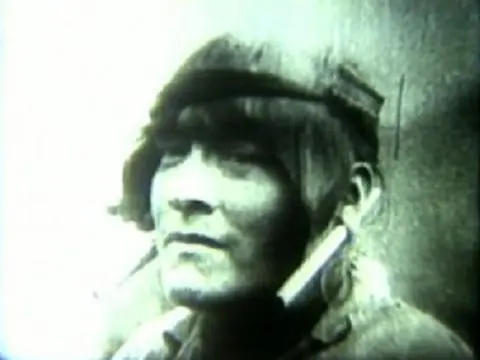
This unvarnished presence is arguably the film's greatest strength. Unlike a staged narrative, what we witness feels genuinely observed. The 'acting' is simply living, and in that, there’s a raw power. It forces the viewer to confront the reality of their existence without the comfort of a fictional buffer. This makes the film a stark contrast to more overt narrative features of the era, such as The Magnificent Brute or Tangled Lives, which relied on dramatic portrayals.
Given the technical limitations of its time, the cinematography of Los Invencibles Shuaras del alto Amazonas is remarkably functional and, at times, surprisingly artful. The camera, likely heavy and cumbersome, often remains static, framing scenes with a straightforward, almost painterly composition. We might see wide shots encompassing the lush Amazonian landscape, providing context for the Shuar villages, or closer, medium shots focusing on specific activities.
The tone is one of respectful observation. There's no overt sensationalism or exoticism, which is commendable for a film of this period. Instead, Crespi’s camera seems to approach its subjects with a quiet dignity, aiming to record rather than interpret. The light, natural and unfiltered, plays a crucial role, illuminating the textures of their homes, the patterns on their clothing, and the expressions on their faces.
Consider a hypothetical scene: the sun dappling through the dense canopy, highlighting the steam rising from a cooking pot, or the shimmer on a river as a canoe passes. These would have been moments of pure, unfiltered beauty, captured with a simplicity that modern, highly-produced films often struggle to replicate. The lack of artificial lighting or elaborate camera movements lends an authentic, almost spiritual quality to the visuals, allowing the environment and its inhabitants to speak for themselves.
The pacing of Los Invencibles Shuaras del alto Amazonas is undeniably slow by contemporary standards. It mirrors the rhythm of daily life it seeks to portray, which for the Shuar in the Amazon, would have been dictated by nature and tradition, not by the hurried pulse of industrialized society. Scenes unfold in extended takes, allowing the viewer to truly immerse themselves in the activity being depicted.
This deliberate pacing serves a profound purpose. It forces patience, encouraging a contemplative viewing experience. Rather than rushing through events, Crespi invites us to observe, to study, to absorb the details of a world operating on a different clock. A sequence showing the meticulous process of crafting a clay pot, from raw material to finished product, might take several minutes, reflecting the actual time and effort involved.
For those accustomed to rapid cuts and constant narrative progression, this can be a hurdle. Yet, it’s precisely this unhurried pace that grants the film its authenticity and its power as a historical document. It doesn't entertain in the conventional sense; it educates through observation, demanding a different kind of engagement than a film like On the Night Stage, which relies on dramatic tension.
As a silent film, Los Invencibles Shuaras del alto Amazonas's auditory experience is defined by its absence. This silence, however, is not a void; it’s an invitation. Viewers are left to imagine the sounds of the Amazon: the chirping of insects, the calls of exotic birds, the rustling of leaves, the murmur of human voices, the splash of water, the rhythmic thud of tools. This imaginative engagement becomes part of the film's immersive quality.
The lack of a recorded soundtrack also means there's no musical score to guide emotional responses or manipulate perception. This absence paradoxically enhances the film's raw, documentary feel, placing the burden of interpretation entirely on the visual information. Any musical accompaniment would have been live, played by an organist or small orchestra in the cinema, adding another layer of historical interpretation that is now largely lost.
This silence allows the 'visual narrative' to stand unadulterated. It forces a focus on the body language, the environmental details, and the sheer visual information presented, which is a powerful, if challenging, way to consume cinema. It’s a stark reminder of how much we rely on sound cues in modern filmmaking, and how much can be conveyed without them.
The cultural impact of a film like Los Invencibles Shuaras del alto Amazonas, though perhaps limited in its initial widespread release, is immeasurable in its preservation value. It stands as one of the earliest cinematic records of the Shuar people, offering a window into their lives before significant external influences potentially altered their traditions.
Its legacy lies in its contribution to ethnographic film, pioneering a genre that would later evolve into sophisticated documentary filmmaking. Crespi's work, alongside others from this era, laid the groundwork for how we attempt to understand and represent diverse cultures through the moving image. It's a crucial piece in the mosaic of early cinema, illustrating the medium's capacity not just for entertainment, but for cultural documentation and historical archiving.
This film, despite its age and technical simplicity, continues to spark discussions around representation, the ethics of observation, and the role of the filmmaker as a cultural intermediary. It invites us to consider how much has changed, and how much has perhaps remained resilient, in the communities it depicts. It’s a powerful, if quiet, argument for the enduring significance of early cinematic endeavors.
Los Invencibles Shuaras del alto Amazonas is less a film to be 'enjoyed' in the traditional sense and more a cinematic artifact to be studied and appreciated for its immense historical weight. It works. But it’s flawed. Its true value lies not in its ability to entertain, but in its capacity to transport us to a different time and place, offering a rare, unvarnished look at a culture through the primitive, yet powerful, lens of early cinema.
While it demands significant patience and a specific mindset, for those willing to engage with it on its own terms, Crespi's work provides an invaluable, often poignant, window into a world that has largely changed. It’s a testament to the enduring power of the moving image as a tool for preservation, a silent echo from a past that continues to resonate with profound cultural significance. Don't expect a thrilling plot like Pursued, but rather a quiet, observational journey into history.
Community
Log in to comment.