DbcultAccessing Vault...
Cult Review
Senior Film Conservator
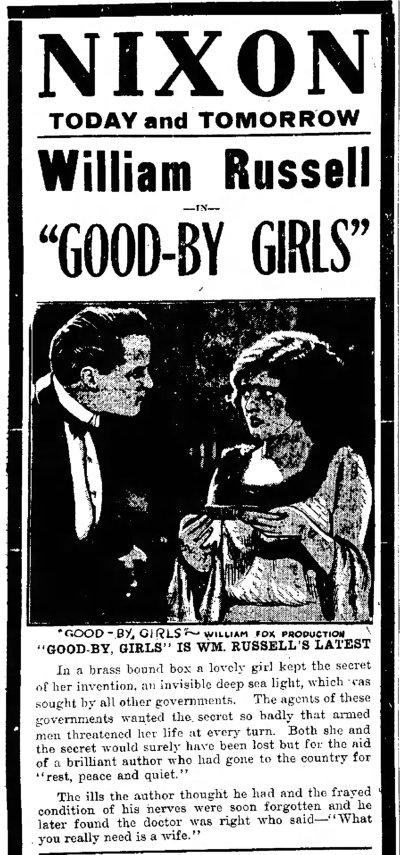
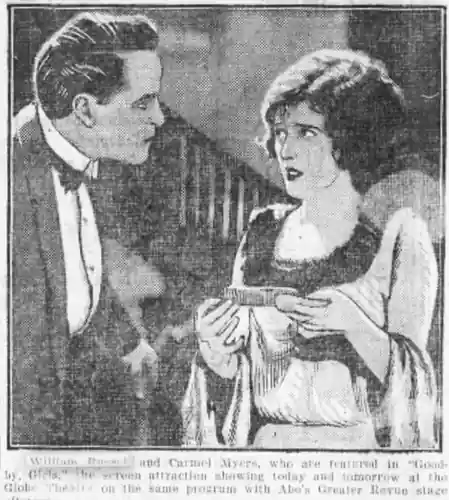
When the dust of the Roaring Twenties settles, a handful of forgotten celluloid treasures emerge, offering contemporary audiences a glimpse into a cinematic era defined by visual storytelling and emotive nuance. Among these, Goodbye Girls—directed by the understated yet perceptive William Russell—stands out as a study in tension, invention, and the transformative power of love. The film’s narrative, anchored by Carmel Myers’s luminous portrayal of Florence Brown, intertwines the perilous allure of scientific discovery with the timeless quest for companionship.
At its core, the plot is deceptively simple: a country girl harbors a revolutionary invention, and a city‑born author becomes entangled in her world. Yet, beneath this surface lies a sophisticated commentary on the geopolitical anxieties of the post‑World War I era. The invisible deep‑sea light—concealed within a brass box—functions as a metaphor for knowledge that, while illuminating, also threatens to destabilize established power structures. Governments, depicted as shadowy operatives, converge upon the bucolic setting, their motives cloaked in the same darkness that the invention seeks to dispel.
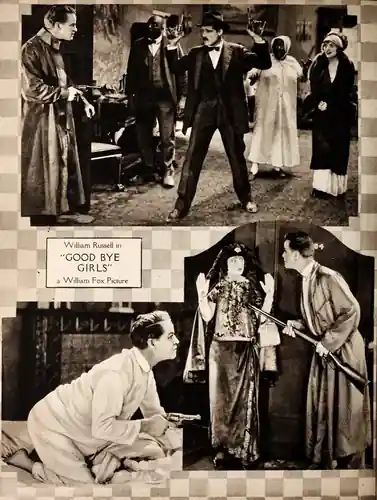
Florence’s character defies the stereotypical damsel in distress. She is both inventor and guardian, wielding intellect as her shield. Her resolve mirrors the burgeoning feminist consciousness of the 1920s, a period when women were asserting agency in public and private spheres. The film’s subtle feminist undertones are amplified by Myers’s expressive performance, which balances vulnerability with steely determination.
William McPhee, portrayed by William Russell, arrives in the countryside as a weary chronicler of romantic escapades, a man whose pen has chronicled the exploits of countless women. His retreat to the rural landscape is framed as a therapeutic pilgrimage, a narrative device that allows the audience to witness his metamorphosis. The film’s screenplay, crafted by Joseph F. Poland and George Foxhall, cleverly subverts the archetype of the roguish author; McPhee’s evolution from self‑absorbed observer to self‑sacrificing lover is both gradual and credible.
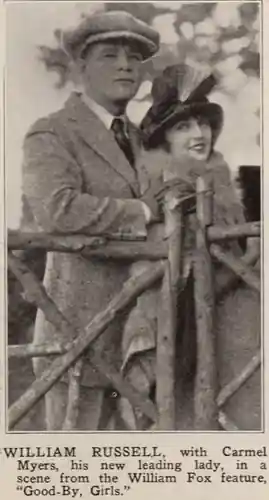
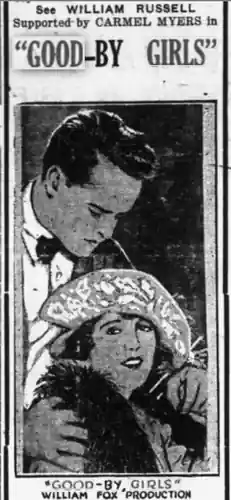
The chemistry between Russell and Myers is palpable, their interactions suffused with a tension that oscillates between flirtatious banter and earnest confession. This dynamic is reminiscent of the interplay found in The Ballet Girl, where romance is interwoven with personal ambition. In Goodbye Girls, the romance does not eclipse the central conflict; instead, it enriches the stakes, making the threat to Florence’s invention all the more personal.
The title itself alludes to the film’s most daring visual experiment: the representation of an invisible light. While the technology of the era could not render true invisibility, the cinematographer employs a series of chiaroscuro techniques—deep shadows contrasted with sudden bursts of bright, almost ethereal illumination—to suggest the presence of an unseen force. These visual cues echo the aesthetic strategies used in The Black Chancellor, where darkness is both a literal and symbolic antagonist.
The brass box, a recurring motif, is filmed in close‑up, its metallic sheen catching the limited light and thereby becoming a focal point of desire and dread. The box’s design, simple yet enigmatic, serves as a visual anchor for the audience, reminding viewers of the tangible stakes amid the intangible threats.
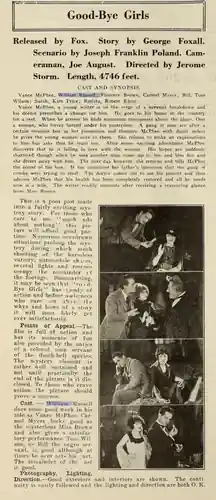
Beyond the leads, the supporting ensemble delivers nuanced performances that flesh out the film’s world. Robert Klein’s portrayal of the relentless government agent exudes a cold efficiency, his steely gaze a constant reminder of the ever‑present danger. Kate Price provides comic relief as the nosy neighbor, her timing impeccable, reminiscent of the levity found in Fool's Gold. Tom Wilson’s role as the local doctor, who advises McPhee to seek a wife, is both pragmatic and prophetic, underscoring the film’s thematic emphasis on partnership over solitude.
The film’s pacing is deliberate; each act unfolds with a measured rhythm that allows tension to accumulate. The climactic chase sequence—set against a storm‑riven night—exemplifies the director’s command of suspense. The use of rapid intercutting, combined with the aforementioned lighting tricks, creates a visceral sense of urgency that still feels fresh to modern viewers.
When situating Goodbye Girls within its historical milieu, parallels emerge with other silent era dramas that grapple with scientific marvels and espionage. The narrative’s focus on a secret invention mirrors the intrigue of The Seekers, while the rural setting juxtaposed with international conspiracies recalls the tension in Rupert of Hentzau. These intertextual resonances enrich the viewing experience, inviting scholars to explore the film’s dialogue with its contemporaries.
Although Goodbye Girls did not achieve blockbuster status upon its initial release, its rediscovery in recent archival restorations has sparked renewed academic interest. The film’s exploration of gender dynamics, scientific ethics, and the perils of unchecked nationalism resonates with current discourses. Moreover, its visual ingenuity—particularly the representation of an invisible phenomenon—has been cited in several film studies curricula as a pioneering example of abstract storytelling.
The film also serves as a testament to Carmel Myers’s versatile talent. While often remembered for her roles in melodramas, Myers’s performance here showcases a rare blend of intellectual vigor and emotional depth, cementing her status as a forerunner of strong female protagonists in early cinema.
In sum, Goodbye Girls offers a compelling blend of romance, intrigue, and visual experimentation that transcends its silent format. Its layered narrative invites repeated viewings, each revealing new subtleties in character motivation and thematic nuance. For cinephiles seeking a film that balances historical significance with timeless storytelling, this 1925 drama stands as a luminous beacon—much like the invisible light it so reverently protects.

IMDb —
1924
Community
Log in to comment.