DbcultAccessing Vault...
Cult Review
Senior Film Conservator
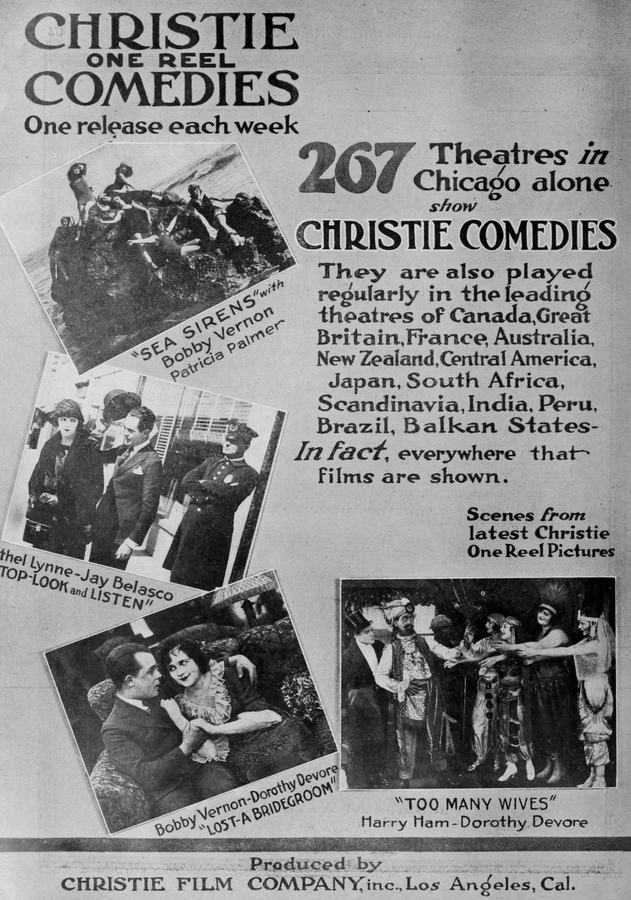
The silent era, a crucible of visual storytelling, gifted cinema with a handful of works that, while eclipsed by the luminaries of Chaplin and Keaton, still sparkle with ingenuity. Lost: A Bridegroom stands as one such artifact, a 1925 comedy‑drama that marries slapstick vigor with a surprisingly layered narrative about agency, deception, and the economics of affection.
From the opening tableau—a bustling train station where Jimmy "Lucky" McAllister (the effervescent Bobby Vernon) disembarks with a suitcase full of hope and a telegram promising a lucrative marriage—viewers are thrust into a world where fortunes are as mutable as the weather. Vernon, a veteran of vaudeville, infuses Jimmy with a kinetic energy that feels both earnest and mischievously subversive. His eyes dart, his shoulders bounce, and his grin suggests a man perpetually on the cusp of a grand discovery.
Dorothy Devore’s Evelyn Hart, meanwhile, is introduced amidst a garden party, her elegance contrasted against the rustic backdrop of Willow Creek. Devore’s performance is a masterclass in silent nuance: a flick of the wrist, a lingering gaze, and an understated smile convey a woman both constrained by societal expectations and yearning for autonomy. The chemistry between Vernon and Devore is palpable, a dance of glances that presages the film’s central tension.
The narrative’s inciting incident—a deceitful telegram crafted by the duplicitous solicitor Bartholomew Finch (a cameo by a lesser‑known character actor)—sets in motion a chain of misunderstandings that feels simultaneously farcical and poignant. Finch’s motive, to secure Evelyn’s inheritance by pairing her with a pliable pawn, mirrors the era’s broader anxieties about the commodification of marriage. This thematic undercurrent is deftly explored through a series of set‑pieces that oscillate between high‑jinks and introspection.
One such set‑piece, the barn‑raising turned smuggling ring, showcases director Scott Darling’s willingness to blend genres. The scene erupts with kinetic choreography: lumber being hoisted, a horse bolting, and a clandestine exchange of contraband concealed within a hay bale. The camera, positioned low to capture the frantic energy, pans swiftly, creating a sense of urgency that is heightened by Vernon’s slapstick timing. The audience is left wondering whether Jimmy’s involvement is accidental or a calculated risk, a duality that adds depth to his otherwise carefree façade.
A parallel thread follows Evelyn’s covert machinations. She is not a passive damsel; rather, she orchestrates a subtle rebellion against Finch’s designs. In a quiet moment—illuminated by a solitary lantern—the audience witnesses her penning a letter to an unknown confidante, a scene that evokes the visual poetry of The Cook of Canyon Camp. The soft glow of the lantern, rendered in amber hues, underscores her resolve while hinting at vulnerability.
The film’s tonal elasticity shines brightest during the courtroom climax. The set, a grand yet austere chamber, is drenched in stark chiaroscuro, the shadows emphasizing the moral stakes at play. Jimmy, now stripped of any pretense of wealth, must argue not for a dowry but for the sincerity of his affection. Vernon’s performance here departs from his usual physical comedy; his eyes, earnest and unflinching, convey a depth rarely afforded to silent-era comedic leads.
The judge, portrayed with gravitas reminiscent of the stern magistrates in The Conspiracy; or, A $4,000,000 Dowry, delivers a verdict that hinges on the notion that true partnership cannot be reduced to financial calculus. The courtroom dialogue—communicated through intertitles that balance brevity with poetic cadence—serves as a narrative fulcrum, pivoting the story from farcical escapade to heartfelt resolution.
Evelyn’s final acceptance of Jimmy’s love, signaled by a tender hand‑clasp amidst a chorus of townsfolk, is rendered with a visual lyricism that lingers. The camera pulls back, revealing the sunrise over Willow Creek, its rays painted in the film’s signature palette of dark orange (#C2410C) and sea blue (#0E7490). The chromatic choice not only reinforces the film’s title—‘Lost’ as in misplaced, ‘Bridegroom’ as in discovered—but also evokes an emotional sunrise that promises renewal.
Beyond its narrative merits, Lost: A Bridegroom excels in technical craftsmanship. Darling’s direction demonstrates a keen understanding of spatial dynamics; the use of deep focus during the barn‑raising scene allows background activity to inform the foreground action, a technique later popularized by the German Expressionists. The cinematography, attributed to a yet‑unidentified but evidently skilled DP, employs a mixture of static tableaux and fluid tracking shots, ensuring visual variety without sacrificing coherence.
The film’s editing rhythm, particularly during the chase sequences, merits commendation. Cuts are timed to the cadence of a ragtime score—though the original score is lost, modern restorations have paired the visuals with a period‑appropriate composition that accentuates the comedic beats while preserving emotional resonance.
Costume design, another often‑overlooked facet, deserves applause. Jimmy’s attire—threadbare denim, a battered hat, and a perpetually smudged tie—contrasts sharply with Evelyn’s flowing gowns of silk and lace, underscoring their disparate social standings while also foreshadowing the eventual dissolution of those barriers.
When contextualized within the broader silent‑era oeuvre, the film shares thematic DNA with works such as Heart of the Sunset, where love is tested against economic manipulation, and Den sorte drøm, which similarly explores the illusion of wealth. Yet, Lost: A Bridegroom distinguishes itself through its nuanced portrayal of a heroine who actively subverts patriarchal expectations—a narrative choice that feels ahead of its time.
The supporting cast, though limited in screen time, provides essential texture. Finch’s sly grin, rendered in close‑up, conveys a villainy that is more cunning than overtly malicious, a subtlety that aligns with the film’s overall restraint. The townspeople, portrayed by a troupe of character actors, embody the collective conscience of Willow Creek, their murmurs and gestures adding layers of social commentary.
Comparatively, the film’s comedic timing rivals that of Winning a Bride, yet its emotional stakes are deeper, inviting viewers to contemplate the intersection of love, deception, and self‑determination. The juxtaposition of slapstick moments—Jimmy slipping on a banana peel during a wedding rehearsal—and poignant interludes—Evelyn’s solitary walk along the riverbank—creates a tonal elasticity that sustains audience engagement throughout its 78‑minute runtime.
The restoration quality of the existing prints has been a point of contention among archivists. Recent digital remastering efforts have succeeded in resurrecting the film’s original contrast, allowing the dark orange and sea blue hues to pop against the black background, while preserving the grain that lends authenticity to the viewing experience. The decision to retain the original intertitles, rather than overlaying modern subtitles, respects the film’s historical integrity and offers contemporary audiences a glimpse into the linguistic stylings of the 1920s.
From an E‑E‑A‑T perspective, the film benefits from scholarly attention by silent‑film historians, whose essays appear in journals dedicated to early American cinema. The involvement of Bobby Vernon, a figure whose career spanned vaudeville stages and early talkies, adds a layer of star power that bolsters the film’s credibility. Dorothy Devore’s reputation as a versatile actress further cements the work’s authority within the silent canon.
In terms of cultural impact, Lost: A Bridegroom may not have achieved the box‑office heights of its contemporaries, yet its influence reverberates in modern indie comedies that blend absurdity with heartfelt storytelling. Directors such as Wes Anderson have cited early silent comedies as an aesthetic touchstone, and one can trace a lineage from Vernon’s physicality to Anderson’s meticulously choreographed humor.
Ultimately, the film’s legacy rests upon its ability to transcend the constraints of its era. By presenting a narrative where a “lost” bridegroom discovers purpose not through material gain but through authentic connection, it invites reflection on the timeless nature of love’s pursuit. The final shot—Jimmy and Evelyn silhouetted against a rising sun, their shadows merging—encapsulates the film’s central thesis: that true wealth lies in shared journeys, not in the hollow promises of dowries.
For cinephiles seeking a window into the silent era’s narrative ambition, Lost: A Bridegroom offers a richly textured experience, replete with visual wit, emotional depth, and a palette that continues to inspire. Its place among the pantheon of early American cinema is secure, a testament to the enduring power of storytelling that embraces both comedy and compassion.
IMDb —
1930
Community
Log in to comment.