DbcultAccessing Vault...
Cult Review
Senior Film Conservator
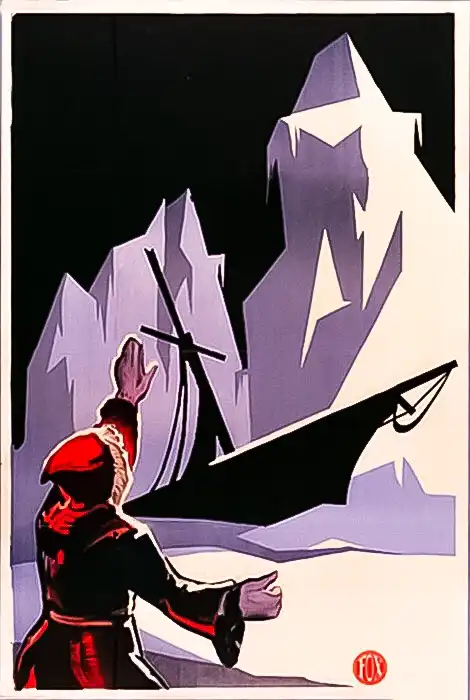
So, is Lost in the Arctic worth your time today? Look, if you’re hoping for a gripping narrative or anything resembling modern documentary filmmaking, you’ll probably be utterly bewildered, maybe even a little bored. This is for the real history buffs, the folks fascinated by early cinema, or anyone who just wants to see what 'toughing it out' truly looked like a hundred years ago. It’s a curiosity, a historical document, and often, a test of patience. Anyone expecting a sleek, polished experience should definitely look elsewhere.
Right from the start, the film just throws you into it. There are these quick title cards, sometimes a bit overwritten, telling you about the H.A. and Sidney Snow expedition. They’re off to find the Stefánsson Expedition, which, for anyone not up on their early 20th-century polar history, was a pretty big deal. But the urgency of this mission? It quickly gets, well, lost in the shuffle.
The sheer coldness of the landscape is probably the most consistent character here. Even through the grainy, flickering black and white, you feel it. There are shots of endless ice, snowdrifts piled high, and the wind whipping across barren plains. It’s stark, beautiful in a terrifying way, and honestly, a bit monotonous after a while. One particular shot, early on, just lingers on a vast, flat expanse of ice. It’s almost meditative, but also, you’re thinking, 'Okay, I get it. It’s cold.' The silence, of course, amplifies this desolation.
And the dogs. My god, the dogs. They’re the real unsung heroes of this whole affair. You see them struggling, pulling massive loads, collapsing in the snow. Their exhaustion is palpable. There’s one sequence where a dog team is trying to pull a sled up a particularly steep incline, and you can practically feel the strain. One dog, in particular, just looks utterly defeated, staring off into the distance, and it’s probably the most genuine 'performance' in the whole film. The bond between the explorers and these animals is clear, even if it’s shown through sheer necessity rather than overt affection.
Philo McCullough, who was a known actor at the time, is listed in the cast. And you can see him trying to 'act' in a few places. His reactions to certain events sometimes feel a little too theatrical, a bit staged for the camera. It’s a weird blend of documentary and silent film melodrama. He’ll stare dramatically into the middle distance, or gesture broadly at a vast ice field, and you almost feel the film itself nudging you, 'See? This is important!' But it mostly just feels a little... off. This isn't The Phantom Bullet, you know? The environment is the star, not the human drama.
The pacing is, to put it mildly, leisurely. It’s not just the long, lingering shots of ice. There are segments that feel like they go on about 30 seconds too long, showing the same action from slightly different angles. Setting up a tent. Chopping ice. Eating. All necessary, all part of the expedition, but without any sense of narrative drive, it just slows everything to a crawl. You find yourself checking to see how much time is left. It’s a document of endurance, both for the explorers and the viewer.
Then there are the interactions with the indigenous people. These moments are fascinating, but they’re presented through a very specific, early 20th-century lens. The camera observes them with a mixture of curiosity and, frankly, a bit of exoticism. You see their incredible ingenuity, their knowledge of the land, their hunting techniques. There’s a scene where they’re demonstrating how to build an igloo, and it’s genuinely impressive. But the explorers remain somewhat detached, the camera positioning itself as an outsider. It doesn’t feel like a deep cultural exchange, more like an observation from a distance.
The 'search' for Stefánsson almost becomes secondary to the daily life of the expedition. The film spends so much time on the journey itself – the travel, the hunting for food, the constant battle against the elements – that the stated goal gets pushed to the background. It’s less a thrilling quest and more a chronicle of persistent, often mundane, survival. You almost forget what they’re even looking for until another intertitle pops up to remind you.
There are these small, almost blink-and-you-miss-it details that stick with you. The way the explorers’ breath freezes in the air. The crude, but functional, equipment. One shot of a cooking pot over a small fire, and you can almost smell the smoke and the desperate warmth. These tiny moments, unpolished and fleeting, are where the film truly feels authentic.
And the ending? It doesn’t really have one, not in the way we expect today. The search for Stefánsson kind of just... peters out. There’s no big reveal, no dramatic reunion. The film simply concludes, leaving you with the impression that life in the Arctic, even for an expedition, is less about grand conclusions and more about the ongoing grind. It’s a testament to a bygone era of filmmaking and exploration, messy and imperfect, but undeniably real.

IMDb 5.7
1924
Community
Log in to comment.