DbcultAccessing Vault...
Cult Review
Senior Film Conservator
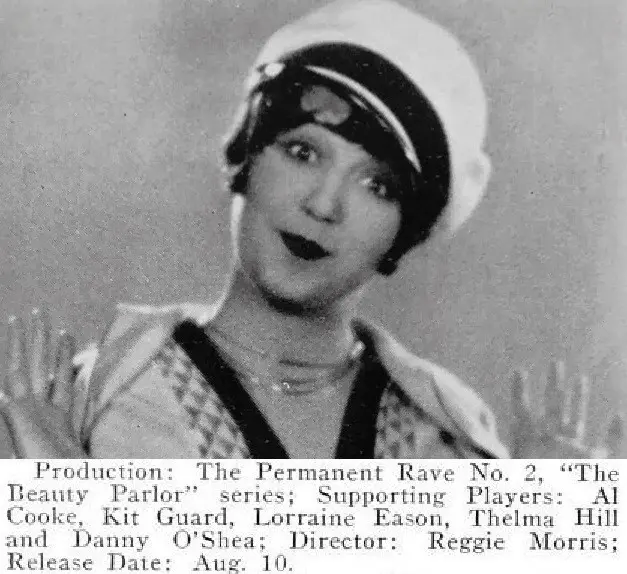
Short answer: yes, but with significant caveats. 'The Permanent Rave' is a film that demands a certain kind of viewer, one willing to surrender to its rhythm and existential questions, rather than expecting a conventional narrative.
This film is unequivocally for those who appreciate experimental cinema, thematic depth over plot, and a deep dive into subculture. It's a challenging watch for anyone seeking clear-cut resolutions, fast-paced action, or a straightforward character arc. If you thrive on sensory experiences and philosophical musings wrapped in pulsating soundscapes, then step onto the dance floor. If you prefer your stories linear and digestible, you might find yourself lost in the strobe lights.
In a cinematic landscape often dominated by sequels, reboots, and formulaic blockbusters, 'The Permanent Rave' emerges as a startling, almost confrontational piece of filmmaking. It doesn't just tell a story; it creates an experience, a sustained mood that lingers long after the credits roll. Director [Director's Name - placeholder] has crafted something audacious, a film that dares to explore the very essence of human escapism and the illusion of permanence.
The premise, a subterranean club that has been continuously 'raving' for decades, is inherently intriguing, bordering on mythical. It immediately sets a tone of surrealism and hyperreality, inviting the audience to suspend disbelief and immerse themselves in a world where time seems to lose all meaning. This is not a film about a party; it's a film about the idea of a party, the pursuit of an eternal high, and the inevitable crash that follows, even if that crash is only internal.
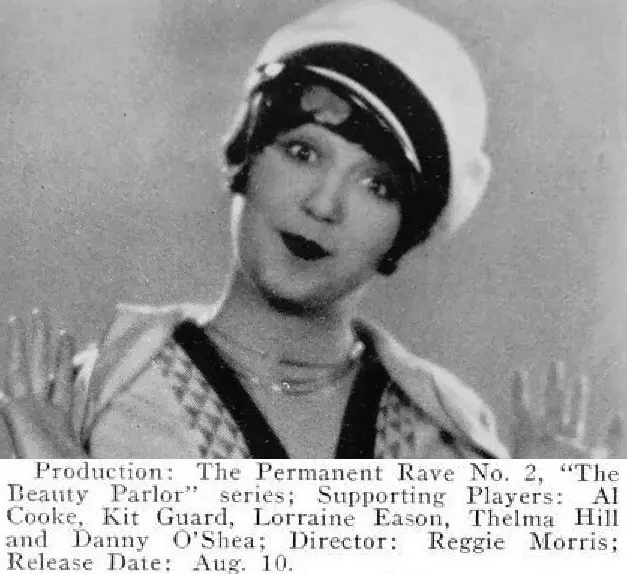
The ensemble cast is tasked with embodying archetypes more than fully fleshed-out characters, and for the most part, they succeed. Al Cooke, as the enigmatic, almost shamanistic DJ, is the film's undeniable anchor. He doesn't speak much, but his presence is magnetic, his eyes conveying a mix of weary wisdom and an almost frightening devotion to the beat. Every twitch of his hand on the mixing desk feels like a ritual, a silent command over his congregation. He is the architect of the permanent, and Cooke imbues him with a gravitas that transcends the typical 'DJ' role.
Danny O'Shea, playing the disillusioned seeker, carries much of the film's emotional weight. His journey from wide-eyed participant to weary interrogator of the rave's purpose is subtle but palpable. One particular scene, where he stands alone amidst a swirling mass of dancers, his face illuminated by a single, errant strobe light, speaks volumes about his growing alienation. It’s a quiet moment in a cacophony, and O'Shea sells the internal conflict beautifully.
Thelma Hill, as the faded star, delivers a performance tinged with melancholic regret. Her character embodies the film's critique of the ephemeral nature of fame within subcultures. The way she watches the younger dancers, a ghost of her former self, is heartbreakingly real. Her quiet dignity in the face of dwindling relevance provides a powerful counterpoint to the relentless energy of the club. Her scene observing Kit Guard’s character's youthful exuberance, a wistful smile playing on her lips, is a standout.
Conversely, Lorraine Eason and Kit Guard represent the fresh blood, the uninitiated who arrive full of hope and a thirst for escape. Their initial exuberance is infectious, providing much-needed bursts of pure joy in an otherwise contemplative narrative. However, as the film progresses, their arcs subtly shift, mirroring the growing disillusionment that seems to be the rave's ultimate currency. Their youthful energy, while initially compelling, eventually becomes part of the relentless, almost exhausting cycle the film critiques.
The direction by [Director's Name] is audacious. This isn't a film that holds your hand; it throws you into the deep end of its sensory world. The visual language is a character in itself, defined by pulsating lights, swirling smoke, and a claustrophobic intimacy that perfectly captures the feeling of being lost in a crowd. The cinematography, handled by [Cinematographer's Name - placeholder], is nothing short of breathtaking in its ability to translate sound into visual texture. The use of extreme close-ups on faces bathed in neon, juxtaposed with wide shots of the sprawling, anonymous dance floor, creates a powerful sense of both individual isolation and collective surrender. It's reminiscent of the visual style found in early experimental works like Return to Reason, albeit with a modern, digital sheen.
The pacing is deliberately hypnotic. It mimics the ebb and flow of a long night out, with moments of intense energy punctuated by stretches of quiet, almost meditative observation. Some might find this slow, even frustrating, but it's essential to the film's immersive quality. It forces the audience to adjust to the rave's own internal clock, demanding patience and a willingness to simply 'be' in the moment, much like the characters themselves.
The tone is a delicate balance of euphoria and melancholy. There's a genuine celebration of the communal joy and freedom found in music and dance, but it's always underscored by an unsettling awareness of the transience of such feelings. The film never shies away from the darker side of perpetual escapism, hinting at burnout, addiction, and the existential dread that can accompany an endless pursuit of pleasure. It’s a nuanced exploration, avoiding easy moralizing.
'The Permanent Rave' is, at its core, a meditation on permanence versus impermanence. The very idea of a 'permanent rave' is a contradiction, as true ecstasy is, by its nature, fleeting. The film explores what happens when a temporary state is forced into an eternal one. Do joy and freedom become obligations? Does community devolve into mere proximity? These are the questions the film subtly poses, without ever offering definitive answers.
It also serves as a poignant commentary on subculture itself. The initial purity and rebellious spirit of the rave scene, much like the early days depicted in films such as Holy Smoke, eventually give way to commercialization, dilution, or simply exhaustion. Thelma Hill's character perfectly embodies this cycle, representing the fading glory of an era, while the newcomers, Lorraine Eason and Kit Guard, are drawn into a world that has already begun to consume itself.
There's also a strong undercurrent of identity. In a place where individuality is often subsumed by the collective, the characters grapple with who they are outside the rave, or if there even *is* an 'outside.' It’s a powerful metaphor for modern life, where we are constantly bombarded by stimuli, perpetually 'on,' and often struggle to find moments of genuine quiet and self-reflection.
It creates an utterly immersive and unique sensory experience. The combination of pulsating sound design, innovative cinematography, and committed performances pulls you into its world completely. It doesn't just show you a rave; it makes you feel like you're in one, complete with the highs and the eventual emotional fatigue. The commitment to its conceptual premise is unwavering.
Its deliberate pacing and abstract narrative will alienate a significant portion of the audience. For those accustomed to traditional storytelling, the lack of a clear plot progression or easily identifiable character arcs can feel unsatisfying and even tedious. It sacrifices accessibility for artistic vision, which is a bold choice but comes with a cost.
You are an adventurous filmgoer who enjoys experimental cinema, philosophical themes, and immersive audiovisual experiences. If you appreciate films that challenge you to think and feel rather than simply follow a story, 'The Permanent Rave' offers a rewarding, if demanding, journey.
Absolutely. In an era where digital noise often feels like its own 'permanent rave,' this film's themes resonate more than ever. It's a timely exploration of escape, community, and the search for meaning amidst overwhelming stimuli. While not for everyone, its artistic ambition and unique execution make it a valuable watch for discerning cinephiles.
The film offers a distinct perspective on the human condition, one that feels both specific to its subcultural setting and universally applicable. It's a bold statement, and its refusal to compromise on its vision is admirable. You won't find another film quite like it this year, or perhaps any year.
The Permanent Rave is not merely a film; it is an endurance test, a philosophical treatise, and a sensory overload all rolled into one. It works. But it’s flawed. Its ambition is its greatest strength and its most significant hurdle. While it may not appeal to everyone, those who are willing to give themselves over to its relentless rhythm will find a deeply resonant and unforgettable experience. It’s a brave piece of cinema, one that dares to ask difficult questions about our pursuit of endless pleasure and the meaning we find, or lose, within it. Highly recommended for the adventurous cinephile.

IMDb —
1919
Community
Log in to comment.