DbcultAccessing Vault...
Cult Review
Senior Film Conservator
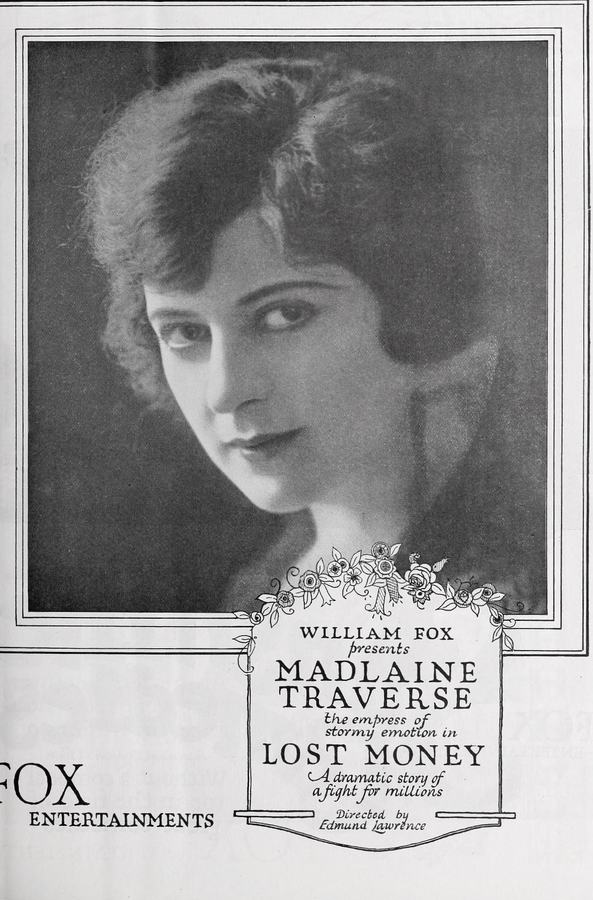
Step back into an era when cinema was still finding its voice, yet already possessed an undeniable power to transport audiences to distant lands and immerse them in narratives of epic scope. 'Lost Money,' a dramatic offering from 1921, stands as a testament to this nascent artistry, weaving a complex tapestry of ambition, betrayal, and profound personal transformation against the breathtaking, yet perilous, canvas of South Africa's diamond fields. This isn't merely a story; it's a grand spectacle of human nature laid bare, where the glittering promise of wealth clashes violently with the enduring virtues of honor and sacrifice.
The film, penned by Denison Clift, plunges us headfirst into a world where fortunes are made and lost in the blink of an eye, and where the stark realities of colonial life intertwine with deeply personal dramas. It’s a narrative that, while rooted in the conventions of its time, still resonates with timeless themes of moral compromise and the arduous path to redemption. For aficionados of classic cinema, 'Lost Money' offers a fascinating glimpse into the storytelling techniques and dramatic sensibilities that captivated audiences a century ago, proving that some narratives, like the human heart itself, remain eternally complex and compelling.
Our journey begins with Judith Atherstone, portrayed with a delicate blend of innocence and burgeoning resilience by Madlaine Traverse. Her arrival in South Africa is marked by an almost idyllic ignorance of the precarious financial precipice upon which her father, Atherstone Sr. (George A. McDaniel), teeters. He is a man caught in the cruel jaws of circumstance, his once-thriving diamond fields now yielding little more than dust and despair. The weight of providing for his daughter, coupled with the gnawing shame of his impending ruin, drives him towards a desperation that will ultimately compromise his integrity.
This initial setup masterfully establishes the dramatic tension: an unsuspecting ingénue stepping into a world fraught with hidden dangers, both natural and human. Atherstone Sr.'s internal conflict is palpable; a man who genuinely loves his daughter, yet finds himself increasingly cornered by the harsh economic realities of the veld. His character arc is a poignant exploration of how good intentions can be corrupted by overwhelming pressure, transforming a respectable figure into one capable of profound deceit. The stage is thus set for a moral quandary that will entangle not only father and daughter but also the lives of those around them, forever altering their destinies in the unforgiving landscape of South Africa.
The narrative's true turning point is heralded by the introduction of Ox Lanyon, a character of formidable integrity and wealth, brought to life with understated strength by Edwin B. Tilton. Lanyon, a magnanimous neighbor, embodies the rugged honor often associated with the frontier spirit. In a gesture of profound trust, he entrusts his burgeoning diamond fields to Atherstone Sr. before heroically venturing into the treacherous heart of a Zulu uprising, intent on rescuing imperiled prospectors. This act of selflessness, however, inadvertently paves the way for the unfolding tragedy.
The Zulu uprising itself serves as more than just a plot device; it underscores the volatile and unpredictable nature of the colonial setting, where danger lurks beyond the immediate human dramas. It’s a stark reminder of the broader historical and cultural tensions that permeated the region. Lanyon’s departure, under the cloud of such peril, creates the perfect vacuum for moral decay to fester. The trust he places in Atherstone Sr. becomes a heavy burden, one that the desperate man is tragically ill-equipped to bear, especially with the insidious influence of others.
With Ox Lanyon presumed lost amidst the chaos of the uprising, a dark opportunity presents itself, one that Atherstone Sr., under the manipulative sway of his engineer, Caton Cooper (Henry Hebert), cannot resist. Cooper, driven by an unrequited and possessive love for Judith, sees Lanyon's presumed demise as a means to both secure Judith's affections and elevate his own standing. He actively encourages Atherstone Sr. to exploit Lanyon's entrusted wealth, transforming a desperate man's weakness into a calculated act of larceny.
The moral descent of these two characters is chillingly portrayed. Atherstone Sr., once driven by paternal devotion, now finds himself entangled in a web of his own making, lavishly spending Lanyon's fortune to maintain a façade of luxury for Judith. This act of betrayal is not merely financial; it represents a profound corruption of trust and a deliberate obfuscation of truth from the very person he claims to protect. Cooper, meanwhile, is the embodiment of a darker ambition, his love for Judith twisted into a tool for manipulation, revealing a character ultimately defined by self-interest and cowardice.
The comfortable, albeit ill-gotten, idyll enjoyed by Atherstone Sr. and Judith is shattered by the unexpected and dramatic return of Ox Lanyon. His survival, against all odds, introduces a powerful force of reckoning into the narrative. Lanyon, a man of unwavering principles, demands the return of his fortune, setting the stage for a brutal confrontation. This scene is a masterclass in early cinematic tension, pitting brute strength and moral righteousness against the cunning of deceit. Despite being physically bested by Lanyon, Atherstone Sr. and Cooper, through some twisted contrivance, manage to retain the stolen wealth, leaving Lanyon stripped of his property but not his resolve.
Enraged by this injustice and driven by a possessive desire for Judith, Lanyon embarks on a desperate, almost primal act of vengeance: he abducts Judith and takes her into the unforgiving, sun-scorched expanse of the desert. This segment of the film is perhaps its most profound. The desert, with its vast emptiness and relentless hostility, becomes a stark crucible, stripping away all pretenses and comforts. Here, near the precipice of death, Lanyon's true character shines through. His selfless act of yielding the last, precious drops of water he finds to Judith, despite his own desperate thirst, is a moment of profound sacrifice. It is in this harrowing environment, facing the ultimate test of survival, that Judith experiences an epiphany, realizing the depth of Lanyon's love and the nobility of his spirit. This transformation, from a sheltered ingenue to a woman capable of profound understanding and love, is the emotional core of the film.
The shared ordeal in the desert fundamentally alters Judith’s perception, forging a bond of love and respect between her and Lanyon that transcends their initial, fraught interactions. Her realization of his sacrifice and his genuine character marks a pivotal shift in her allegiances and affections. Their eventual rescue, a moment of relief after intense suspense, immediately thrusts them back into the ongoing drama. Upon encountering Cooper, still consumed by his possessive desire for Judith and his animosity towards Lanyon, Judith demonstrates a newfound shrewdness and courage.
In a swift, strategic move to protect Lanyon from Cooper's fury, Judith declares that they are married. This declaration, while born of necessity, is also an affirmation of her burgeoning love and her commitment to Lanyon. It's a powerful moment of agency for Judith, showcasing her growth from a passive recipient of circumstances to an active participant in shaping her own destiny. This dramatic twist not only resolves the immediate threat but also sets the stage for the narrative's final, climactic confrontations, where true character will be revealed under the most extreme pressure.
The narrative swiftly moves to its dramatic conclusion, back at Judith's ailing father's house. Here, the true colors of Caton Cooper are brutally exposed. During an attack by 'Kaffirs' – a term reflecting the historical context and racial attitudes of the era – Cooper succumbs to abject cowardice, abandoning Judith and her father in their moment of greatest need. His ignominious death, a direct consequence of his fear, serves as a stark moral judgment on his character, providing a satisfying, if grim, resolution to his villainy.
It is Ox Lanyon who once again rides to the rescue, arriving with soldiers to quell the revolt and restore order. This final act solidifies his role as the unwavering hero, a man of action and honor. In a display of profound magnanimity, Lanyon forgives Atherstone Sr. for his earlier betrayal, recognizing perhaps the desperation that drove him. This act of forgiveness underscores Lanyon's moral superiority and his capacity for compassion. The film culminates in the rightful union of Ox and Judith, a marriage forged not in convenience or deceit, but in shared hardship, sacrifice, and genuine love. It is a powerful affirmation of enduring values amidst the chaos of human ambition and the wildness of the frontier.
The strength of 'Lost Money' lies not only in its compelling narrative but also in the committed performances of its lead actors. Madlaine Traverse, as Judith Atherstone, delivers a nuanced portrayal of a woman's transformation from sheltered innocence to resilient strength. Her emotional journey, particularly during the harrowing desert sequence, is convincingly rendered, making her ultimate choice of Lanyon feel earned and authentic. Edwin B. Tilton's Ox Lanyon is a pillar of strength and moral fortitude. He imbues the character with a quiet dignity and an unwavering sense of justice, making his acts of heroism and sacrifice all the more impactful. Tilton embodies the stoic, honorable frontiersman archetype with compelling conviction.
George A. McDaniel as Atherstone Sr. navigates the difficult terrain of a desperate father driven to unethical means. His performance captures the internal conflict and eventual remorse, lending a tragic dimension to his character. Henry Hebert's Caton Cooper is the perfect foil, a manipulative and ultimately cowardly figure whose unrequited love twists into something sinister. The cast, under the direction inferred by Denison Clift's script, manages to convey the high stakes and deep emotional currents of the story, a testament to the power of early cinematic acting.
Denison Clift's screenplay for 'Lost Money' is a remarkable piece of early 20th-century dramatic writing. Clift, known for his prolific contributions to cinema during this period, demonstrates a keen understanding of narrative pacing and character development. The plot, while adhering to the melodramatic conventions of the era, is far from simplistic. It delves into complex moral quandaries, exploring the corrupting influence of greed, the redemptive power of sacrifice, and the transformative nature of love. The gradual unraveling of Atherstone Sr.'s integrity, Cooper's insidious manipulation, and Judith's profound personal growth are all meticulously charted.
Clift's ability to weave together personal drama with the larger-than-life backdrop of a South African diamond rush and a Zulu uprising speaks to a sophisticated approach to storytelling. The script ensures that each major plot point serves to propel the characters towards their inevitable fates, culminating in a resolution that, while perhaps idealistic, feels emotionally earned. The dialogue, though often conveyed through intertitles in silent cinema, likely possessed a sharp dramatic edge, driving the emotional intensity forward. For those interested in the evolution of screenwriting, studying Clift's work, especially in films like 'Lost Money,' offers invaluable insight into the foundations of cinematic narrative structure.
'Lost Money' is rich with thematic depth, exploring timeless human struggles against a vivid, often brutal, backdrop. At its core, the film is a stark examination of the corrosive power of greed and the ethical compromises it engenders. Atherstone Sr.'s desperate acts highlight how financial ruin can warp moral judgment, while Cooper's machinations demonstrate how avarice can be intertwined with personal ambition and twisted affection. This theme of moral descent under pressure is a recurring motif in cinema, echoing the financial and social anxieties of the early 20th century, much like the urban dramas of the period such as A Wall Street Tragedy, which also delved into the moral downfalls fueled by the ruthless pursuit of wealth.
Conversely, the film champions the redemptive power of sacrifice, most poignantly demonstrated by Ox Lanyon's selfless act in the desert. His willingness to give his last drops of water to Judith is not just a gesture of love but a profound statement on the value of human life and compassion over self-preservation. This act of altruism becomes the catalyst for Judith's transformation, proving that true wealth lies not in diamonds but in character. The untamed South African wilderness itself acts as a powerful thematic element, a harsh judge that strips away artifice and reveals true character, much like the rugged landscapes in films such as The Land of Long Shadows or The Breaker, where characters are tested to their limits by unforgiving environments.
The evolving nature of love is another central theme. From Cooper's possessive and destructive infatuation to Judith's gradual realization of genuine affection for Lanyon, the film illustrates the different facets of romantic attachment. It suggests that true love is forged in shared adversity and mutual respect, rather than born of manipulation or superficial charm. The resolution, with Lanyon's magnanimous forgiveness of Atherstone Sr., speaks to the theme of restorative justice and the capacity for grace, even in the face of profound betrayal. These enduring themes ensure that 'Lost Money' remains a compelling watch, offering insights into human nature that transcend its historical context.
'Lost Money' stands as a fascinating artifact of early 20th-century cinema, a robust melodrama that encapsulates many of the storytelling conventions and thematic preoccupations of its time. It offers a window into an era when film was still discovering its unique grammar, yet already capable of crafting narratives of sweeping scope and intense emotional resonance. The film's use of exotic locales, its clear-cut moral dichotomies, and its dramatic arcs of betrayal, suffering, and ultimate redemption were all hallmarks of popular entertainment during this formative period of moviemaking.
While some elements, such as the portrayal of indigenous populations through terms like 'Kaffirs,' must be viewed through the lens of historical context and understood as products of their time, the core human drama remains potent. The film's exploration of greed, the transformative power of sacrifice, and the enduring nature of true love are universal themes that continue to resonate. For modern audiences, 'Lost Money' is more than just a historical curiosity; it's an engaging adventure that reminds us of the foundations upon which contemporary cinema was built. It’s a testament to the enduring power of a well-told story, proving that even a century later, the human heart's capacity for both corruption and nobility remains a captivating subject for the silver screen.
In its grand gestures and intimate moments, 'Lost Money' solidifies its place as a significant, if often overlooked, piece of cinematic history. It invites viewers to appreciate the artistry of a bygone era, where dramatic tension was paramount and the journey of character was meticulously unfolded. This film is a compelling reminder that the roots of modern storytelling are deeply embedded in these pioneering works, offering a rich tapestry of human experience against the dazzling, dangerous backdrop of the South African veld.
IMDb 6.4
1932
Community
Log in to comment.