DbcultAccessing Vault...
4.4/10
Senior Film Conservator
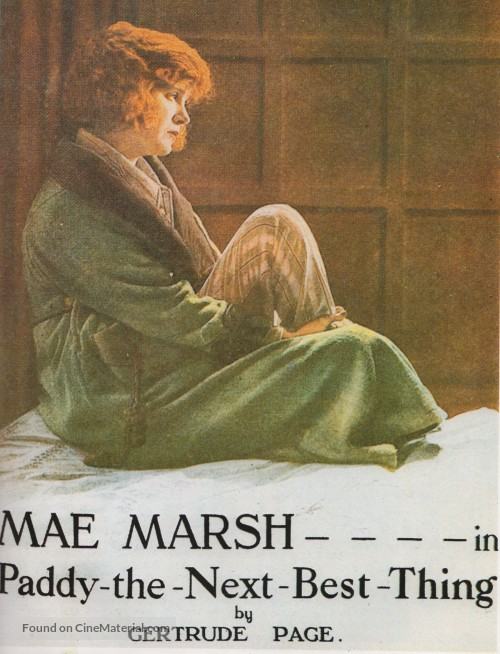
A definitive 4.4/10 rating for a film that redefined the boundaries of cult cinema. Paddy the Next Best Thing remains a cornerstone of transgressive art.
Stepping into the world of Paddy the Next Best Thing is akin to unearthing a beautifully preserved relic of cinematic storytelling, a narrative that, despite its vintage, resonates with an enduring human truth: the heart's unpredictable compass. This cinematic offering, penned by the collaborative talents of Eliot Stannard, Herbert Wilcox, and Wilfred Noy from Gertrude Page's original vision, plunges us into an Irish landscape where fidelity, duty, and an unexpected spark of passion clash with delightful and often heartbreaking consequences. It’s a film that, at its core, explores the quiet heroism of self-sacrifice and the undeniable magnetism of authenticity, even when cloaked in the guise of 'second best.'
The premise, deceptively simple, unfurls with a rich tapestry of emotional nuance. We are introduced to two sisters, one conventionally beautiful and poised, the other, Paddy, played with an invigorating lack of artifice by Lilian Douglas, possessing a vibrant, almost wild charm that defies societal expectations. Douglas’s portrayal of Paddy is nothing short of captivating; she imbues the character with an earthy grace and a mischievous twinkle that makes her instantly endearing. Her spirit is untamed, her wit sharp, and her heart, as we soon discover, capable of immense generosity and profound yearning. It’s a performance that anchors the film, making Paddy not merely a character but a force of nature.
The arrival of a suitor, a man of standing and charm, into their rural idyll sets the central conflict in motion. Initially, his attentions are directed towards Paddy’s sister, a seemingly logical match dictated by the societal conventions of the era. Yet, as the narrative progresses, a subtle but undeniable shift occurs. George K. Arthur, in the role of the suitor, navigates this delicate dance of shifting affections with commendable subtlety. His character’s initial, almost perfunctory interest gives way to a genuine, growing fascination with Paddy. It’s a testament to the script’s insight and the actors’ chemistry that this evolving dynamic feels organic and earned, rather than a mere plot contrivance. The film doesn't rush this transition, allowing the audience to witness the gradual erosion of initial perceptions and the blossoming of a more profound connection, one rooted in shared laughter and an unspoken understanding.
What truly elevates Paddy the Next Best Thing beyond a mere romantic entanglement is its deep dive into the psychological complexities of its characters. Paddy, with an almost heartbreaking selflessness, actively endeavors to facilitate the romance between her sister and the man who, she keenly senses, is increasingly drawn to her. This act of conscious suppression of her own desires, this quiet sacrifice for the perceived happiness of another, forms the emotional core of the film. It's a theme explored in various forms across cinematic history, from the grand operatic gestures of Zigeunerprinsessen, where societal barriers often dictate romantic fate, to the more intimate, domestic sacrifices seen in stories like As Man Made Her, where personal desires are often shaped and constrained by external pressures. Here, however, the conflict is internal, a battle waged within Paddy's own generous spirit.
The supporting cast, though perhaps less central, contributes significantly to the film's rich texture. Marie Wright and Mildred Evelyn, as key figures in Paddy's world, provide the necessary grounding and emotional counterpoints. Darby Foster, Marie Ault, and Mae Marsh, among others, fill out the ensemble with performances that add depth and a sense of community to the Irish setting. Even minor roles, such as those played by Nina Boucicault and Tom Coventry, contribute to the film's overall authenticity, painting a vivid portrait of a particular time and place where social decorum often dictated the path of love.
The screenplay, a collaborative effort, deserves commendation for its nuanced approach to a familiar narrative trope. Rather than resorting to melodrama, it opts for a more subtle unfolding of emotions, allowing the unspoken glances, hesitant gestures, and poignant silences to convey the characters' inner turmoil. This approach grants the audience a deeper empathy for Paddy’s predicament, making her eventual choices all the more impactful. The narrative avoids simplistic resolutions, instead embracing the messy, unpredictable nature of human affection. It’s a refreshing departure from the more straightforward romantic comedies or dramas of the period, hinting at a more complex understanding of the human heart that would be further explored in later cinematic works. The film's strength lies in its ability to take a seemingly straightforward love triangle and infuse it with genuine emotional weight, making us question the very definition of 'best' and 'next best' when it comes to matters of the heart.
The film’s exploration of societal expectations versus individual desire is particularly compelling. In an era where a woman’s worth was often measured by her ability to secure a 'good match,' Paddy’s unconventional appeal challenges these norms. Her spirited independence, far from being a deterrent, becomes her most alluring quality. This theme, of an individual’s true self clashing with prescribed roles, is a timeless one, echoing in films as diverse as Mrs. Slacker, which perhaps playfully examines the subversion of domestic expectations, and even in the more dramatic arcs like The Turn in the Road, where characters must make pivotal decisions that redefine their futures. Paddy’s journey is one of quiet rebellion, not against explicit rules, but against the subtle dictates of expectation that would have her fade into the background. She is, in essence, a proto-feminist figure, not through grand speeches, but through the sheer force of her authentic being.
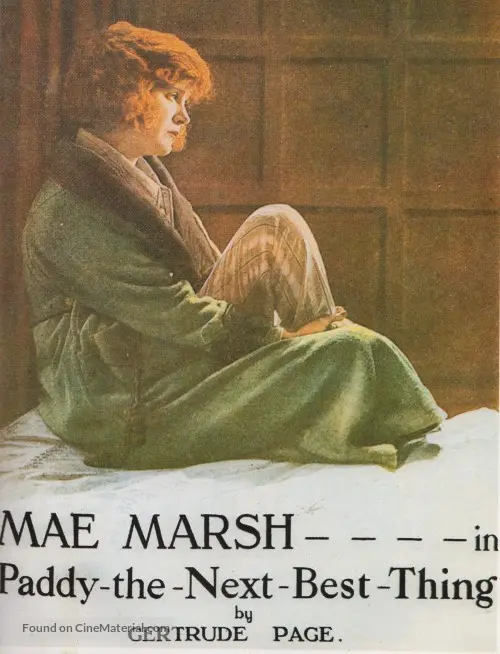
The pacing of Paddy the Next Best Thing is deliberate, allowing the emotional beats to land with maximum impact. There are moments of lighthearted charm, particularly in the interactions between Paddy and the suitor, which are punctuated by an underlying current of unspoken tension. The film avoids overt melodrama, preferring instead to let the characters’ internal struggles play out through their expressions and subtle actions. This understated approach makes the eventual emotional crescendo all the more powerful. It’s a masterclass in how to build dramatic tension without relying on sensationalism, a technique that many contemporary filmmakers could learn from. The beauty of this film lies in its quiet power, its ability to draw you into the intimate world of its characters and make you feel every flicker of hope and every pang of despair.
In comparing it to other works of its period, Paddy the Next Best Thing stands out for its emotional depth and character-driven narrative. While films like Get-Rich-Quick Wallingford might offer a more outwardly ambitious or adventurous plot, Paddy’s story finds its grandeur in the complexities of the human heart. Similarly, while a film such as Beautifully Trimmed might focus on superficial aesthetics, Paddy delves into the intrinsic beauty of character. The film doesn't shy away from depicting the internal 'worlds apart' of its characters, a theme also explored more explicitly in Worlds Apart, where differing perspectives or social standings create poignant divides. Here, the divide is often within Paddy herself, between what she feels and what she believes she must do.
The direction, while perhaps not overtly flashy by modern standards, is effective in capturing the pastoral beauty of the Irish setting and the intimate dynamics between the characters. The visual storytelling complements the narrative, allowing the lush landscapes to serve as a backdrop to the unfolding emotional drama. There’s a certain poetic quality to the cinematography, even in its simplicity, that enhances the film’s romantic undertones without ever becoming saccharine. The sense of place is palpable, a character in itself, influencing the characters' lives and choices. The rugged charm of the countryside mirrors Paddy’s own untamed spirit, creating a harmonious blend of setting and character.
One cannot discuss Paddy the Next Best Thing without acknowledging the profound impact of its central dilemma. The question of whether true love can flourish when one party is initially perceived as a consolation prize, or 'the next best thing,' is handled with remarkable sensitivity. It challenges the audience to consider the nature of attraction and the sometimes-circuitous routes our hearts take to find their true companion. This thematic richness is what grants the film its lasting power, allowing it to transcend its era and speak to universal human experiences. It’s a story that asks us to look beyond superficialities and embrace the unexpected, a lesson that remains perennially relevant.
The film also touches upon the idea of pivotal moments, the 'one moment, please' that can irrevocably alter a life's trajectory, much like the decision points explored in One Moment, Please. For Paddy, these moments are often internal, battles of will and desire fought within the confines of her own conscience. Her decision to step aside, to push the man she loves towards her sister, is a turning point that defines her character and elevates the narrative beyond a simple love story. It’s a profound exploration of altruism, and the often-painful consequences of putting others' happiness before one's own. The film doesn't shy away from the emotional cost of such decisions, allowing the audience to feel the weight of Paddy's sacrifice.
In a cinematic landscape often dominated by grand narratives or overt spectacles, Paddy the Next Best Thing offers a refreshing intimacy. It's a film that finds its drama in the quiet corners of the human heart, in the unspoken desires and the subtle shifts of allegiance. It reminds us that some of the most compelling stories are not about heroes and villains, but about ordinary people navigating the extraordinary complexities of love and family. The film’s quiet strength lies in its ability to make us deeply invested in the fate of its characters, to root for Paddy, even as she makes choices that seem to contradict her own happiness. This emotional investment is a testament to the power of the storytelling and the nuanced performances.
Ultimately, Paddy the Next Best Thing is a charming, emotionally rich film that deserves to be rediscovered. It’s a testament to the enduring power of classic storytelling, where character and emotion take precedence over fleeting trends. Lilian Douglas delivers a performance that is both spirited and deeply moving, making Paddy a memorable figure in the annals of early cinema. The film's examination of love, loyalty, and the unexpected ways in which true connection asserts itself remains as relevant today as it was upon its initial release. It’s a gentle reminder that sometimes, the 'next best thing' turns out to be the very best thing after all, a sentiment that resonates with the same quiet wisdom found in tales of unexpected heroism like Pufi - Hogyan lett ünnepelt hös egy jámbor pesti férjböl?, where unlikely individuals rise to meet challenges in surprising ways. The film is not just a historical artifact; it is a living, breathing narrative that continues to speak to the human condition, offering insights into the timeless dance of desire and duty. Its quiet charm and profound emotional resonance ensure its place as a minor classic, a film that continues to tug at the heartstrings and provoke thought about the true nature of love and sacrifice.
IMDb 5.3
1925
Community
Log in to comment.