DbcultAccessing Vault...
Cult Review
Senior Film Conservator
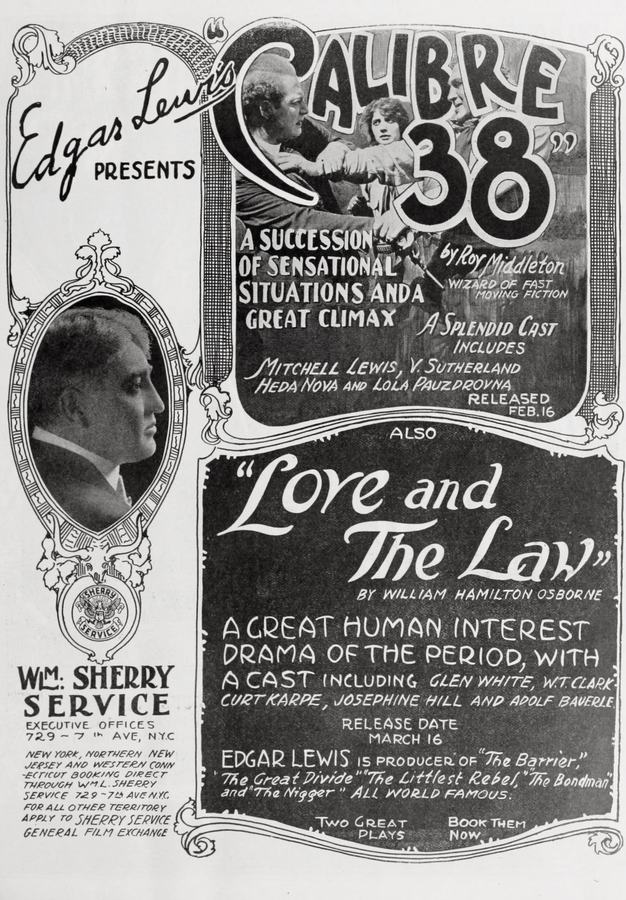
When Arnold Storrer steps onto the screen as Karl “Curly” Casterline, the audience is immediately thrust into a world where personal honor collides with the sweeping tides of global conflict. The film, Love and the Law, unfolds like a meticulously staged tableau, each frame saturated with the stark chiaroscuro of a nation at war. Curly’s journey from a disgraced city cop to a farm‑bound sentinel is more than a narrative device; it is a meditation on the elasticity of loyalty when the very fabric of society is being rewoven.
The bucolic Midwest, rendered in sepia‑toned cinematography, serves as an unlikely battlefield. Adolf Bauerle’s farm, with its weather‑worn barns and endless rows of golden wheat, becomes a crucible where the domestic and the geopolitical intermingle. The director’s choice to juxtapose the serenity of the fields against the looming threat of sabotage mirrors the broader anxieties of a nation grappling with unseen enemies on its own soil.
In this context, Curly’s attraction to Mina (portrayed with a blend of innocence and steel by Ruth Roland) feels both inevitable and symbolic. Their budding romance is not merely a subplot; it is a narrative fulcrum that balances the film’s thematic scales between love, duty, and the ever‑present specter of betrayal.
The revelation that Bauerle and his shadowy associate Kurz are plotting to annihilate a troop train is delivered with a deftness that recalls the suspense of The Devil's Bondwoman. The script, penned by William Hamilton Osborne, layers clues like a masterful puzzle: hushed conversations behind the barn, cryptic maps tucked into a farmer’s ledger, and the ever‑present clang of metal against metal.
Curly’s investigative arc escalates into a kinetic showdown under a moonlit sky. The cinematography captures each gunshot with a crispness that makes the audience feel the echo in their own chests. When Curly eliminates the conspirators, the film does not simply celebrate triumph; it underscores the moral cost of violence, a nuance often glossed over in contemporaneous war dramas.
Enter Sheriff Herman Lindig, portrayed by Paul Ker with a menacing gravitas that rivals the antagonists of The Witching Hour. Lindig’s abuse of authority transforms the narrative from a straightforward rescue mission into a critique of institutional decay. His decision to imprison Curly, despite the hero’s undeniable evidence, is a chilling reminder that justice can be weaponized by those who wield power.
The courtroom scenes are a masterclass in dialogue-driven tension. Each accusation hurled at Curly is met with a calm, almost stoic, rebuttal, showcasing Storrer’s capacity to convey inner turmoil without resorting to melodrama. The governor’s eventual explanation—that Curly’s incarceration was a calculated ploy to expose German propaganda—adds a layer of political intrigue that elevates the film beyond a simple action piece.
At its core, Love and the Law interrogates the mechanisms of propaganda. The film’s release during a period of heightened xenophobia makes its commentary on German-American relations both timely and daring. The governor’s speech, delivered with a resonant baritone, serves as a narrative anchor, reminding viewers that the battle for hearts and minds is as critical as any physical confrontation.
Curly’s eventual pardon and subsequent commission as a state officer symbolize a reclamation of agency. His marriage to Mina is not merely a romantic denouement; it is a visual affirmation that personal bonds can survive, and indeed thrive, amidst societal upheaval.
When placed alongside other period pieces such as The Eternal Sin or The Messenger, Love and the Law distinguishes itself through its unflinching portrayal of domestic espionage. While The Summer Girl offers a lighter, romanticized view of wartime courtship, Love and the Law delves into the gritty reality of betrayal within one’s own community.
Moreover, the film’s structural pacing mirrors the relentless urgency found in Around the Clock with the Marines, yet it retains a lyrical quality reminiscent of the more introspective The Heart of Lady Alaine. This hybridization of styles underscores the director’s ambition to craft a work that is both thrilling and thought‑provoking.
Arnold Storrer’s embodiment of Curly is a study in restrained intensity. He navigates the character’s internal conflict—between a yearning for redemption and the weight of institutional betrayal—with a subtlety that belies the film’s otherwise melodramatic moments. Ruth Roland’s Mina radiates a quiet fortitude; her eyes convey a spectrum of emotions, from hopeful optimism to steely resolve, without the need for verbose exposition.
Supporting actors such as Arthur Bauer (as Adolf) and Tom Williams (as Kurz) deliver performances that, while occasionally bordering on caricature, nonetheless enrich the narrative tapestry. Their interactions with Curly are charged with an undercurrent of tension that never fully dissipates, keeping the audience perpetually on edge.
The visual palette of the film leans heavily on stark contrasts: the inky night sky against the flickering lanterns of the farm, the muted browns of the earth juxtaposed with the brilliant flash of gunfire. The production design meticulously recreates the era’s agrarian aesthetic, from the weathered wooden fences to the rusted tools scattered across the fields.
One particularly arresting sequence is the train showdown. The camera tracks the locomotive’s approach with a rhythmic precision that mirrors the heartbeat of the audience. When the saboteurs are neutralized, the resulting silence is palpable, broken only by the distant whistle of the train—a sound that reverberates with both relief and lingering dread.
The film’s score, composed by an uncredited yet talented orchestrator, weaves a somber violin motif throughout Curly’s moments of introspection, while brass fanfares herald the climactic action scenes. The auditory design cleverly employs diegetic sounds—horses’ hooves, wind rustling through wheat—to ground the viewer in the film’s tangible reality.
From a structural standpoint, the screenplay adheres to a classic three‑act model, yet it subverts expectations by interlacing legal drama with espionage thriller. The first act establishes Curly’s fall from grace; the second act escalates the stakes with the sabotage plot; the final act resolves both the personal and political threads in a manner that feels earned rather than contrived.
Notably, the film resists the temptation to simplify its antagonists. Adolf and Kurz are not mere villains; they are portrayed as individuals convinced of a higher cause, a nuance that aligns them with the morally ambiguous characters found in Jack Spurlock, Prodigal. This complexity enriches the viewing experience, prompting audiences to contemplate the thin line separating patriotism from fanaticism.
Although Love and the Law did not achieve blockbuster status upon its release, its thematic resonance has endured. Film scholars cite it as an early exemplar of American cinema confronting the home‑front threat of espionage, predating the more overt propaganda pieces of the 1940s. Its nuanced portrayal of a wrongfully accused hero who ultimately triumphs over institutional corruption continues to inspire contemporary storytellers.
The film’s influence can be traced in later works such as The Witch, where the interplay of superstition, authority, and individual agency mirrors the dynamics explored in Curly’s saga.
In sum, Love and the Law is a richly layered artifact that deftly balances action, romance, and political commentary. Its strengths lie in a compelling central performance, an intricately woven plot, and a visual style that remains striking decades later. While certain secondary characters flirt with melodramatic excess, the film’s core narrative remains taut, emotionally resonant, and intellectually stimulating.
For aficionados of classic cinema seeking a film that transcends its era, offering both historical insight and timeless storytelling, Love and the Law stands as a testament to the power of cinema to interrogate, inspire, and ultimately, to celebrate the indomitable human spirit.
IMDb —
1920
Community
Log in to comment.