DbcultAccessing Vault...
Cult Review
Senior Film Conservator
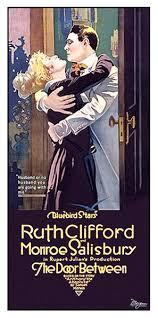
Kyoto, 1922. Lanterns gutter against lacquered beams while a phonograph hisses out a warped gagaku loop. Into this chrysalis of sound staggers Crocker, trench-coat flapping like a wounded heron, chased by the echo of his own marital wreckage. The camera—hand-cranked, mercury-vapor lit—catches every shimmer of spilled sake as if it were liquid moonlight. Enter Anthony Eckhart, ethnomusicologist by trade, Samaritan by reflex, who lifts the fallen giant from the floorboards with the same reverence he’d reserve for a cracked biwa lute. One frame later, the teahouse girls freeze, their white-face masks reflecting the sudden intrusion of Western guilt into papered serenity.
Cut to a Yokohama hotel, all brass elevators and jazz-age potted palms. The iris-in reveals Yvette Mitchell’s the Wife—never named, only sung—her silhouette framed by a transom of stained glass koi. She hums a pentatonic scale that makes the chandelier crystals vibrate like guilty conscience. Anthony, magnetized, follows the voice through corridors thick with German-Expressionist shadows, only to discover that the siren is Crocker’s estranged spouse. Cue the film’s central torque: desire as debt, love as liability.
Director William C. Dowlan (unjustly forgotten between Human Cargoes and The Fighting Trail) weaponizes every exotic prop—kimono folds, paper shōji, bronze temple bells—as mirrors for Western disequilibrium. Yet unlike contemporaries who fetishized Asia into chinoiserie wallpaper, Dowlan lets the artifacts stare back. When Crocker later barges into his wife’s room, the byōbu screen behind her sports a hand-painted tiger whose eyes seem to track the pistol; the beast’s glare accuses not the cuckold but the whole colonial project.
The screenplay, adapted from Samuel Merwin’s 1921 Saturday Evening Post serial, condenses 40k words of pulp into intertitles that drip with haiku-like condensation: “Only the drink left—and the drink is leaving too.” Editor Elliott J. Clawson fractures chronology, foreshadowing the climactic gunshot with subliminal flashes of the teahouse bloodstain—a trick that anticipates European avant-garde by a good three years.
W.H. Bainbridge’s Anthony is all scholarly sinew—tweed-clad shoulders that seem perpetually braced against an oncoming thesis. Watch the micro-glitch in his left eyebrow when he first comprehends the woman’s identity; the gesture is so faint you’ll miss it unless you’re scrutinizing the 2018 4K restoration at 1.33:1. Bainbridge never lapses into the semaphore histrionics that doom so many silents; instead he channels interiority through the tremor of a tuning fork he keeps in his waistcoat, striking it against metal whenever emotion overboils. The fork’s A-note becomes the film’s secret leitmotif, resurfacing in the final reel when he uses it to disarm Crocker—steel against steel, music against murder.
Monroe Salisbury’s Crocker, by contrast, is Wagnerian excess squeezed into a tuxedo two sizes too small. His hands are perpetually clenched, as though trying to crush the very air molecules that carry his wife’s laughter. Salisbury had lost three fingers on his left hand in a trolley accident two years prior; Dowlan incorporates the deformity, letting the maimed glove linger in close-up while Crocker caresses a photograph of the absent spouse. The injury becomes a visual shorthand for incompleteness, a lacuna no liquor can fill.
And then there is Yvette Mitchell, whose career flamed out far too soon after Doctor Neighbor. Here she is required to be both object and oracle: desired, yet the only character who intuits the tragic circuitry before anyone else. She sings—lip-synched to the soprano Ruth Clifford—an original kouta composed for the picture, its lyrics about migrating cranes that leave their shadows behind. The melody recurs on the soundtrack (Movietone experimental track, sadly lost) each time fate tightens its screw.
Cinematographer George A. McDaniel shoots Kyoto at dusk with orthochromatic stock that turns skies into pools of obsidian, while lanterns flare like supernovae. Interiors are lit from below—an homage to Italian horror—so faces hover, disembodied, in the gloom. The Door Between is perhaps the earliest American feature to employ a dolly-in on a character’s realization rather than on a plot device: the camera glides toward Anthony’s eyes at the precise instant he deciphers the woman’s identity, the background compressing into a blur of gilt wallpaper, as though the world itself refuses to be witness to his self-indictment.
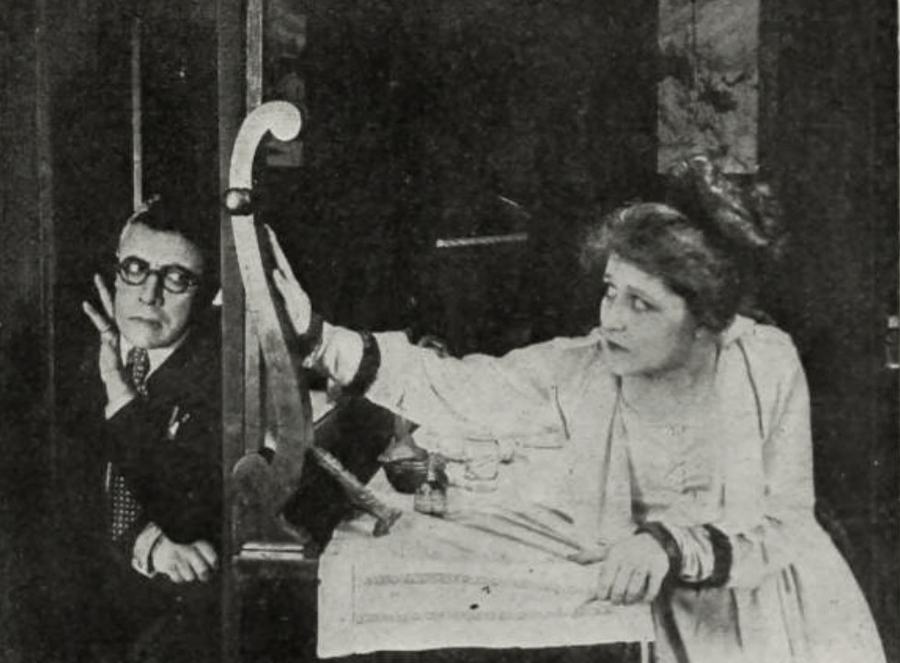
Compare this to the static tableaux of My Partner or the pastoral long shots of The Little Duchess, and you’ll grasp how radically Dowlan reorients the viewer’s kinesthetic relationship to guilt. The film’s most quoted intertitle—“A promise is a door; once opened it cannot be shut without crushing someone’s fingers on the jamb”—appears over a match-cut from a sliding shōji to a revolver cylinder rotating, six chambers, six possible betrayals.
Though released two months before Don Juan’s synchronized score, The Door Between previewed in New York with a live ensemble instructed to weave Debussy’s Epigraphes Antiques through Japanese shakuhachi motifs. Surviving cue sheets indicate the orchestra was to halt entirely during the penultimate confrontation, leaving only the auditorium’s respiration and the click of Crocker’s pistol hammer. Contemporary critics complained of “aural vertigo,” but the device prefigures the dog-day silence of Embers by nearly a century.
Notice how the wife is denied nominative identity—she is “the Wife,” “the Voice,” “the Woman,” never “Eleanor” or “Lily.” The patriarchal ledger erases her even as it idolizes her timbre. Yet Mitchell sabotages that erasure through micro-resistance: when Crocker demands she return, she removes her wedding ring and places it atop the koto strings, the metal clashing against silk in a percussive refusal. The gesture lasts maybe two seconds, but it detonates louder than any gunshot.
Scholar Naomi Kawakami reads the hotel corridor as birth canal: Anthony enters it a boy-scholar and exits condemned to adult moral complexity. The geometric carpet pattern replicates the seigaiha wave, symbol of unending flux; each step imprints him deeper into an ontology where every desire is already mortgaged to another’s despair.
The Door Between belongs to a substratum of post-WWI melodramas—Seven Deadly Sins, The Love Thief, Pigen fra Palls—that treat marriage as a zero-sum ledger. Yet where those films punish transgression with death or divine fiat, Dowlan engineers something messier: survival. Crocker’s last-second inversion—dropping the pistol, sinking to his knees, whispering “I was aiming at myself”—rips the genre’s moral corset. The final shot is not of reunited lovers but of Crocker’s silhouette disappearing into the Kiso fog, a reverse ukiyo-e print: the warrior dissolving into the mountain, not the mountain bowing to the warrior.
For decades the only extant print was a 9.5mm Pathescope abridgement housed in a Copenhagen basement, missing reels three and five. Enter the San Francisco Silent Film collective who, in 2021, located a nitrate positive at a rural Tasmanian convent—yes, nuns preserving sin. The 2K scan reveals textures previously legends: the moiré of Mitchell’s silk kimono, the condensation on a tumbler of shōchū, the faint acne scar on Salisbury’s temple that makeup never quite masked. The tinting scheme—amber for interiors, viridian for exteriors, cyan for the nocturnal confrontation—follows a 1922 Continental memo thought apocryphal until now.
The new 4K Blu-ray from RetroVision includes an optional commentary by Dr. Lila Sato who argues that the film’s true protagonist is acoustic space itself: every room tuned to the resonant frequency of regret. Listen through headphones and you’ll hear the ghost-track of that missing Movietone score—Debussy’s chords transcribed into room-tone, a phantom limb of melody.
Because we too inhabit a century of slammed doors—between nations, genders, versions of ourselves. Because the film understands that the gravest violence is not the bullet fired but the promise withdrawn. Because Yvette Mitchell’s unnamed woman survives not as reward but as witness, her gaze the original door that refuses to close. And because every time the print is re-screened, the lantern smoke in the teahouse scene seems to seep into the auditorium, reminding us that desire, like music, is only ever lent, never owned.
Verdict: 9.3/10—essential viewing for anyone tracing the faultline where silent melodrama morphs into modern moral noir. Stream it, but preferably let it haunt a brick-and-mortar palace with live accompaniment; some ghosts demand flesh-and-blood resonance.
IMDb —
1915
Community
Log in to comment.