DbcultAccessing Vault...
5.6/10
Senior Film Conservator
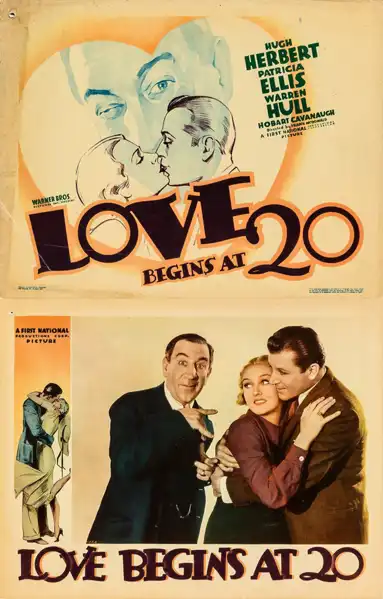
A definitive 5.6/10 rating for a film that redefined the boundaries of cult cinema. Love Begins at 20 remains a cornerstone of transgressive art.
Alright, 'Love Begins at 20' from way back when. Is it a must-see today? Probably not for everyone, let’s be real. If you’re into the quirks of old Hollywood comedies, especially those domestic squabbles from the 30s, you might get a kick out of it. But if you need snappy modern dialogue or plots that don’t feel a bit dusty, you’ll likely find it a chore. 🕰️
The whole deal here is Horatio Gillingwater, played by Arthur Aylesworth. He’s stuck under his wife’s thumb. They really make that clear. Like, really clear. His whole posture, the way he just shrinks sometimes. You feel it.
Then he starts drinking. It’s not exactly a slow burn. And suddenly, he’s got a backbone. It’s this wild shift, almost too quick to believe, but that’s the kind of movie it is. The change in him is almost instant, a flip of a switch, which is pretty funny in its own way.
He starts 'wearing the family pants,' as they say in the film. This means he’s suddenly bossing people around, making decisions. It’s a big change for him, visually even, the way he holds himself. There’s a scene where he just stands up to someone, and the camera just holds on him for a beat too long. You almost feel the crew cheering him on. It’s a little charming, even if it feels a bit much.
His daughter, Lois, has this romance with Jerry Wayne. And Horatio, in his new, bolder state, decides to help them out. This part feels like the movie’s actual heart. Less about the husband's sudden transformation and more about getting these young folks together. It’s sweet.
You watch him try to scheme for them, and it’s surprisingly earnest. He’s still clumsy, but with confidence now. One particular moment, he tries to set up a 'chance' meeting, and it goes completely sideways, but he just keeps going. That’s the fun of it.
Hugh Herbert is in this, too. He has that distinctive nervous giggle, you know? That sort of hee-hee-hee. He pops up and just adds this layer of slightly unhinged energy. It’s hard to ignore him when he’s on screen, for better or worse. He’s just *there*.
The sets are pretty standard for the time, not grand, but you get a real sense of that era. The living room especially feels lived-in, if a bit stagey. You can almost smell the old furniture polish. And the costumes are exactly what you’d expect from the mid-30s.
I kept noticing how often people just stand around and *talk*. No frantic cuts or anything. It’s a slower pace, for sure. 🐌 The movie just lets scenes breathe, sometimes a little *too* much. You wait for things to happen. And the dialogue sometimes feels like it’s trying a bit too hard to be witty, then other times it's just very plainspoken. A bit uneven, really.
The movie *wants* you to root for Horatio, even when he’s being a bit of a jerk with his newfound power. It’s an interesting balance they try to strike. You want him to succeed, but you also kinda wish he’d dial back the swagger sometimes.
There's this one shot, I think it's when Horatio first stands up to his wife. She just stares at him, mouth slightly agape. It's a classic reaction. You’ve seen it a thousand times, but it still works for a quick laugh here. The way her eyes widen just a little. It’s the small stuff.
So, it’s a snapshot. A glimpse into a certain kind of storytelling from a different time. It’s not going to blow anyone away with its originality now. It’s a simple story, told simply. Not for everybody, definitely, but it has its moments. And for a quick peek at how they did domestic comedy back then, it’s okay.
Didja notice?
IMDb —
1920
Community
Log in to comment.