DbcultAccessing Vault...
Cult Review
Senior Film Conservator
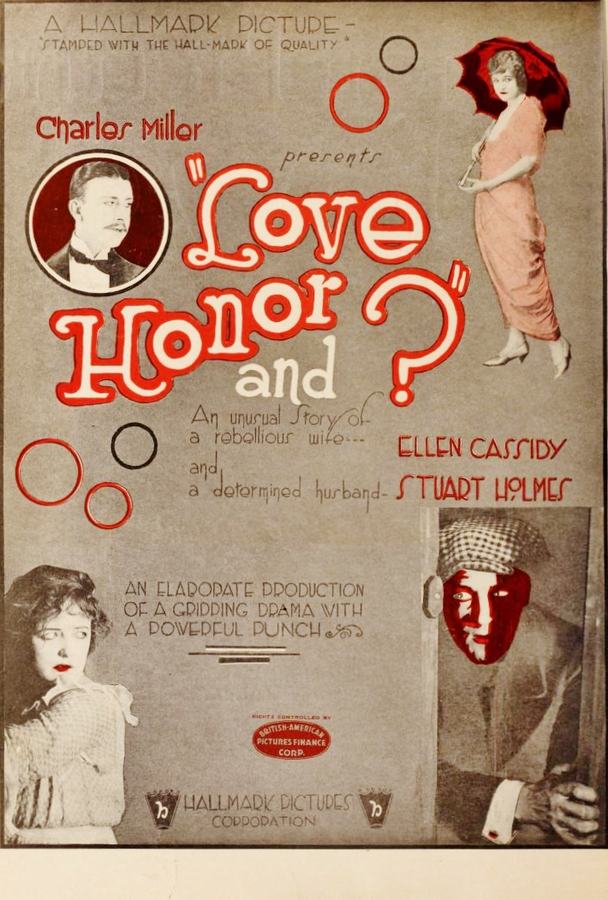
The moment Keith Elliot steps onto his Long Island estate, the audience is thrust into a tableau that feels less like a homecoming and more like a battlefield of etiquette. The director, whose name has been lost to the annals of early cinema, paints the mansion with a chiaroscuro that mirrors the internal war raging between the protagonists. The lavish interiors, rendered in stark black‑and‑white, become a stage for a social drama that is as much about the lingering trauma of World War I as it is about marital discord.
Edouard Durand, embodying Keith, delivers a performance that oscillates between rigid militarism and vulnerable yearning. His eyes, often narrowed in a stare that recalls a trench watch, betray a man still haunted by artillery fire. Ellen Burford’s Constance, on the other hand, is a study in paradox: she is both the intoxicating hostess and the tormented soul yearning for autonomy. Burford’s subtle gestures—a flick of a cigarette ash, a hesitant smile—convey a complexity that would make modern audiences gasp.
Stuart Holmes as Butler Hayes provides a foil that is simultaneously charming and predatory. His presence is a reminder that the post‑war era was not merely a time of reconstruction but also of opportunistic social climbing. The chemistry between Durand and Holmes is electric, each scene crackling with an undercurrent of threat.
At its core, "Love, Honor and —?" interrogates the notion of obedience within marriage, a theme that resonates with contemporary debates about gender roles. The film’s title itself, punctuated by a dash, suggests an ellipsis—a question left unanswered, inviting viewers to fill the void with their own interpretations.
The narrative’s pivot to the isolated island is reminiscent of the exile motif found in Out of the Shadow, where characters flee civilization only to confront their inner demons. Here, the island functions as both sanctuary and prison, a liminal space where Keith attempts to impose military discipline on domestic life.
The cinematographer employs low‑key lighting to accentuate the moral ambiguity of each character. Shadows cling to the corners of the grand ballroom where gambling tables glitter like distant mines, while shafts of light pierce the hunting lodge’s windows, illuminating the starkness of Keith’s regime. The use of intertitles is sparing yet potent; each word feels carved from the same stone that once bore battlefield orders.
The recurring motif of the airplane—first as a symbol of Keith’s military prowess, later as a vessel of reconciliation—mirrors the transformative power of technology in the post‑war period. The final aerial shot, with the plane cutting a silhouette against a bruised sky, evokes the same sense of liberation found in The Great Gamble’s climactic chase.
The screenplay, crafted by Julia Burnham and Tom Cushing, adheres to a three‑act structure that feels both classical and daring. Act One establishes the domestic turbulence; Act Two transports the conflict to the island, where the power dynamics invert; Act Three resolves with a tentative truce that leaves the audience yearning for resolution. The pacing never lags; each scene propels the narrative forward, whether it be a lavish party scene that feels like a fever dream or a brutal confrontation that echoes the visceral realism of Fighting for Love.
The film’s mise en scène is rife with symbols that enrich the story’s subtext. Cigarette smoke, curling lazily above Constance’s head, becomes a visual metaphor for the lingering ash of war—beautiful yet destructive. Dice scattered across a mahogany table hint at the gamble each character makes with fate, reminiscent of the high‑stakes atmosphere in Saints and Sinners. The sword that Keith hangs on the wall, polished to a mirror sheen, reflects both his past glory and his present inability to relinquish control.
When juxtaposed with Wanted: A Home, which explores post‑war displacement through a domestic lens, "Love, Honor and —?" delves deeper into the psychological aftermath of conflict. Both films employ the domestic sphere as a battlefield, yet the former leans toward melancholy, while the latter embraces a more aggressive, almost militaristic tone.
The film also shares thematic DNA with Me and Captain Kidd, particularly in its portrayal of a male protagonist attempting to impose order on a chaotic world. However, where "Me and Captain Kidd" resolves with comedic levity, "Love, Honor and —?" opts for a sober, ambiguous closure that lingers long after the final frame.
Despite being nearly a century old, the film’s exploration of power dynamics within marriage feels remarkably prescient. Modern viewers can draw parallels to ongoing conversations about consent, autonomy, and the lingering shadows of trauma. The film’s ambiguous ending—Keith and Constance flying away together, yet uncertain of their future—mirrors the fragile hope that defines many post‑conflict societies.
The preservation status of "Love, Honor and —?" remains precarious; only a few reels survive in private collections. Film archivists argue that its restoration would provide invaluable insight into early 20th‑century gender politics and cinematic storytelling. As such, the film stands as a crucial artifact for scholars of silent cinema and cultural historians alike.
In sum, "Love, Honor and —?" is a masterclass in silent-era narrative economy, delivering a potent blend of visual symbolism, robust performances, and thematic depth. Its stark black‑and‑white palette, punctuated by the occasional burst of color in the intertitles, underscores the moral chiaroscuro that defines each character’s journey. The film invites repeated viewings, each time revealing new layers of meaning hidden beneath the surface of its elegantly choreographed scenes.
For cinephiles seeking a work that bridges the gap between historical drama and psychological thriller, this film offers a rare, unfiltered glimpse into the complexities of love, honor, and the unasked questions that linger in the aftermath of war.
IMDb 5.3
1928
Community
Log in to comment.