DbcultAccessing Vault...
6.1/10
Senior Film Conservator
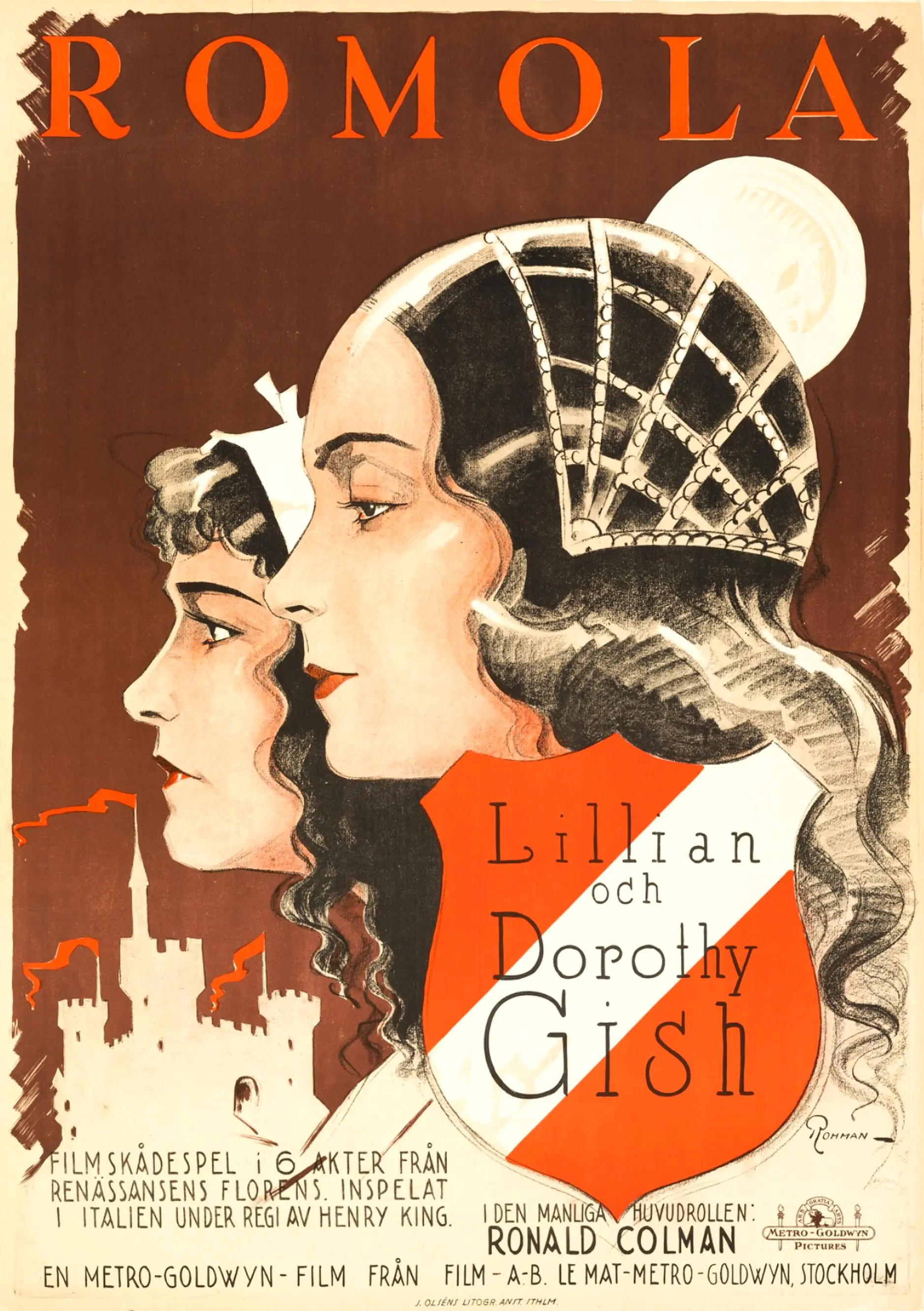
A definitive 6.1/10 rating for a film that redefined the boundaries of cult cinema. Romola remains a cornerstone of transgressive art.
Cinema in the mid-1920s was undergoing a radical architectural shift, moving away from the claustrophobic staginess of early shorts toward a grandiosity that sought to rival the great masters of the Renaissance. In Romola (1924), director Henry King does not merely simulate 15th-century Florence; he resurrects it with a tactile, almost suffocating authenticity. Filmed on location in Italy, the production eschews the flimsy lath-and-plaster aesthetics found in contemporary works like The Mother Heart, opting instead for a monumentalism that grounds George Eliot's complex prose in a physical reality. The sunlight of Tuscany filters through the frame, illuminating the intricate lace of Lillian Gish’s costumes and the cold, unyielding stone of the Palazzo Vecchio.
This film represents a high-water mark for the silent epic, a period where the medium had mastered the art of visual storytelling before the sonic intrusion of the talkies. Unlike the more localized drama of The Wallop, Romola demands a panoramic engagement from its audience. The camera lingers on the bustling marketplaces and the somber, candlelit interiors of Bardo’s library, creating a sense of place that is as much a character as the protagonists themselves. The lexical diversity of the visual language here—the way shadows crawl across Tito’s face as his lies multiply—is nothing short of symphonic.
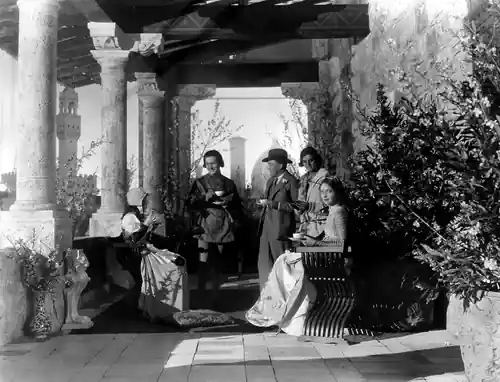
Before he became the quintessential sophisticated detective of the 1930s, William Powell possessed a subterranean capacity for playing the intellectual predator. His portrayal of Tito Melema is a masterclass in the slow-drip reveal of villainy. Tito is not a mustache-twirling antagonist but a man of fluid morality, a sociopath of the highest order who believes his own fabrications. When he encounters the blind Bardo, played with a brittle dignity by Bonaventura Ibáñez, Powell’s Tito radiates a warmth that is entirely performative. It is a performance that stands in stark contrast to the rugged, often one-dimensional heroics seen in The Ranger of Pikes Peak.
"The tragedy of Tito is not that he is inherently evil, but that he is fundamentally hollow—a vessel that takes the shape of whatever power structure he inhabits."
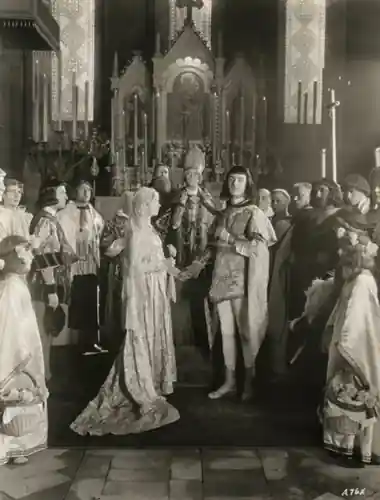
His interactions with the peasant girl Tessa, played with a heartbreaking, wide-eyed innocence by Dorothy Gish, provide the film’s most jarring emotional pivots. The mock marriage sequence is staged with a festive levity that makes the subsequent betrayal feel all the more acidic. While films like Paddy O'Hara might play such romantic entanglements for sentiment, Romola treats them as a grim ledger of moral debt. Tito’s eventual rise to the position of chief magistrate is a chillingly relevant allegory for the way charisma often serves as a cloak for administrative cruelty.
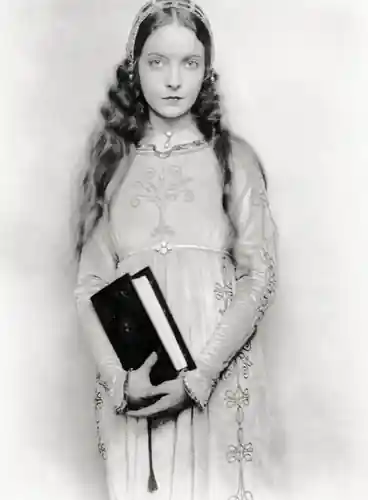
Lillian Gish, the undisputed 'First Lady of the Silent Screen,' brings a translucent intensity to the title role. Romola is a character defined by her intellectual isolation and her burgeoning sense of duty. Gish’s performance is a study in restraint; she conveys the weight of her father’s expectations and the slow realization of her husband’s rot through micro-expressions that bypass the need for intertitles. In many ways, her journey mirrors the sophisticated social critique found in Caste, though transposed onto a much more volatile political landscape.
The chemistry between Gish and Ronald Colman, who plays the sculptor Carlo, is a slow-burn revelation. Colman, with his brooding presence, represents the antithesis of Tito’s mercurial charm. He is the artist who sees the truth in stone, while Tito is the politician who sees the utility in lies. Their relationship provides the film's emotional anchor, a necessary reprieve from the escalating chaos of the Florentine streets. Gish’s ability to remain the center of gravity in such a massive production is a testament to her unique star power—she is never swallowed by the sets, no matter how cavernous.
One cannot discuss Romola without addressing its engagement with history. The film captures the terrifying transition from the hedonistic Medici era to the fanatical puritanism of Girolamo Savonarola. This isn't just window dressing; it is the engine of the plot. The bonfire of the vanities is depicted with a visceral intensity that suggests the fragility of culture when faced with religious zealotry. This thematic depth elevates the film far beyond the typical melodrama of the era, such as Peanuts and Politics, which handles governance with a much lighter touch.

The screenplay, a collaborative effort involving the legendary Jules Furthman, manages to condense George Eliot’s dense, philosophical novel into a series of potent visual metaphors. The struggle between the humanist ideals of the Renaissance and the reactionary forces of the church provides a backdrop that makes Tito’s personal betrayals feel like a microcosm of the city’s larger collapse. It is a film about the death of an old world and the painful, bloody birth of the new.
Henry King’s direction is characterized by a remarkable fluidity. He utilizes deep focus and complex blocking to ensure that the frame is always alive. In the scenes where the populace turns against Tito, the choreography of the mob is handled with a precision that rivals the best work of Eisenstein, yet it retains a uniquely American narrative clarity. The editing rhythm is sophisticated, knowing exactly when to linger on a quiet moment of scholarly reflection and when to accelerate into the kinetic violence of the film’s climax.
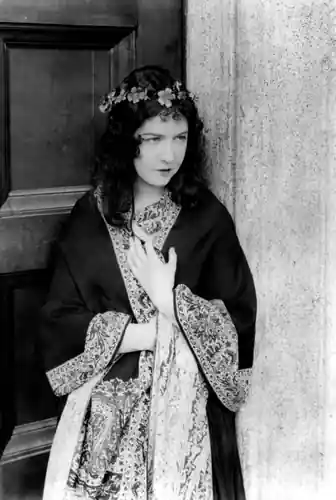
Compared to the rustic simplicity of Markens grøde, Romola is an exercise in opulence. However, this opulence is never gratuitous. Every tapestry, every fresco, and every rusted blade serves the story. The cinematography by Roy Overbaugh is particularly noteworthy for its use of natural light, which gives the Italian locations a sense of timelessness. The film feels less like a 1924 production and more like a window into 1492.
While Romola may not be as frequently cited as Way Down East or The Birth of a Nation, its influence on the historical epic cannot be overstated. It set a standard for location shooting and period accuracy that would inform the genre for decades. It is a film that demands patience, rewarding the viewer with a profound meditation on the nature of integrity and the inevitability of justice. In an age where digital effects often replace genuine craftsmanship, the hand-built world of Romola stands as a defiant monument to the power of the practical.
For those accustomed to the brisk pacing of modern cinema or even the more action-oriented silents like The Man Who Won, Romola might initially seem daunting. Yet, its rewards are manifold. It is a work of high lexical diversity in its visual and thematic construction, a film that understands that the most significant battles are those fought within the human heart. The final image of Romola and Carlo, finally free from the shadow of Tito’s ego, is a poignant reminder that even in the darkest chapters of history, the human spirit—and true art—will find a way to endure.
Ultimately, Romola is a triumph of silent cinema. It captures the essence of George Eliot’s moral universe while utilizing the unique strengths of the film medium to create something entirely new. It is a haunting, beautiful, and deeply intelligent piece of work that deserves to be viewed by anyone who considers themselves a serious student of the moving image. Whether you are drawn to the historical spectacle or the intimate character studies, this film offers a richness that is increasingly rare in any era of filmmaking.
IMDb —
1923
Community
Log in to comment.