DbcultAccessing Vault...
Cult Review
Senior Film Conservator
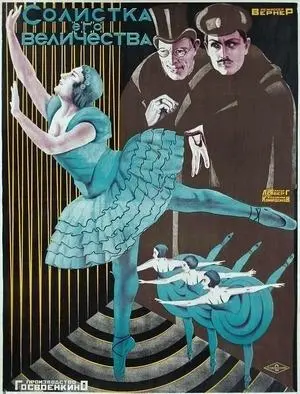
Is Solistka Ego Velichestva worth watching today? Short answer: absolutely, but with a critical eye for its historical context and a patient appreciation for its particular brand of early Soviet melodrama. This film is a compelling, if occasionally uneven, journey into a bygone cinematic era, offering a fascinating window into both early Soviet filmmaking and a dramatic reinterpretation of pre-revolutionary Russia.
It’s a film for those who appreciate sweeping historical dramas, the grandeur of opera, and the nuanced performances characteristic of early 20th-century cinema. However, it is decidedly not for viewers seeking fast-paced action, modern narrative conventions, or a strictly historically accurate portrayal of the Romanov court. Its value lies in its artistic ambition and its lead performance, not its historical fidelity.
Early Soviet cinema often grappled with the tension between artistic expression and ideological imperative. Solistka Ego Velichestva stands as a powerful testament to this struggle, an intriguing blend of grand melodrama and subtle social commentary.
This film works because: It leverages a magnetic central performance by Galina Kravchenko and an intricate, lavish recreation of Imperial Russia to tell a deeply human story of ambition, love, and sacrifice against a backdrop of societal upheaval.
This film fails because: Its narrative sometimes buckles under the weight of its own dramatic aspirations, occasionally sacrificing character depth for broad thematic strokes and succumbing to pacing issues common in films of its era.
You should watch it if: You have an interest in silent/early sound era cinema, appreciate historical dramas with a strong female lead, or want to explore the rich, often politically charged, artistry of Soviet film production.
Solistka Ego Velichestva, whose title translates to 'The Soloist of His Majesty', plunges us into the opulent yet decaying world of the Russian Empire just before its collapse. It's a setting ripe for drama, a stage where the personal and the political are constantly, violently intertwined. The film introduces us to Anna Petrova, a character whose journey from provincial obscurity to the pinnacle of St. Petersburg's Imperial Opera is nothing short of operatic itself.
Her discovery by the seasoned, if somewhat jaded, impresario Sergei Volkov sets in motion a narrative that is less a rags-to-riches tale and more a study in the compromises demanded by power and fame. Anna’s rise is swift, her voice a siren call that captivates the highest echelons of society, including the mysterious Grand Duke Dmitri. This narrative choice immediately positions Anna as a symbolic figure, a representation of raw talent navigating a system built on artifice and inherited privilege.
The film masterfully weaves together threads of artistic ambition, forbidden romance, and revolutionary fervor. Anna's entanglement with the idealistic intellectual Ivan Rostovsky, juxtaposed against her courtly obligations, creates a compelling internal conflict. This isn't just a love triangle; it’s a clash of ideologies, a microcosm of the larger societal struggle brewing outside the gilded opera house walls. The climax, where Anna's performance for the Tsar becomes a flashpoint for a workers' strike and an assassination plot, is a bold, almost audacious, narrative choice that elevates the personal drama to a national allegory.
What truly stands out in this reinterpretation is how the film uses Anna's voice, her very art, as a weapon and a vulnerability. It's not merely a talent; it's a political instrument, a symbol of beauty that can either soothe the powerful or ignite the masses. This thematic depth prevents the plot from descending into mere melodrama, instead grounding it in a palpable sense of historical urgency.
The heart of Solistka Ego Velichestva beats through the extraordinary performance of Galina Kravchenko as Anna Petrova. Kravchenko, a prominent figure in Soviet cinema of the period, delivers a portrayal that transcends the often-stylized acting conventions of the era. Her Anna is not merely a beautiful voice; she is a woman of immense inner strength, her expressive eyes conveying a depth of emotion that resonates even through the film's monochromatic lens.
Consider the scene where Anna first performs for the Grand Duke. Kravchenko's posture, initially hesitant, gradually straightens, her gaze unwavering as she projects a quiet defiance that hints at the revolutionary spirit bubbling beneath the surface of her elegant gowns. It's a subtle but powerful moment that establishes her character's core.
Pavel Pol, as the impresario Sergei Volkov, offers a wonderfully nuanced performance. He avoids the cliché of the purely villainous manipulator, instead crafting a character who is a product of his environment – cynical, yes, but also a connoisseur of art who genuinely recognizes Anna's talent, albeit for his own gain. His weary expressions and calculated gestures are a masterclass in understated acting for the period.
The supporting cast, including Yelena Ilyushchenko as the jealous Countess Yelena and Stepan Kuznetsov as the enigmatic Grand Duke, provide solid, if sometimes less subtle, performances. Ilyushchenko’s Countess is a deliciously over-the-top antagonist, her sneering glances and dramatic gestures embodying the pettiness of the old guard. The true revelation, however, is the presence of Olga Knipper-Chekhova, a theatrical legend and Anton Chekhov's widow, in a supporting role as the wise head of the opera house. Her few scenes are imbued with an incredible gravitas and quiet dignity, a stark contrast to the surrounding melodrama, offering a glimpse into the enduring power of classic Russian stage acting. Her presence alone elevates the film's artistic pedigree.
The directorial triumvirate of Mikhail Verner, Vladimir Karin, and Sergei Yermolinsky demonstrates a clear vision, albeit one occasionally hampered by the technical limitations and narrative conventions of the time. Their direction excels in crafting grand, sweeping sequences, particularly within the opera house and court settings. The staging of the opera performances themselves is impressive, showcasing a keen eye for theatricality and spectacle. However, there are moments where the pacing feels deliberate to a fault, allowing certain scenes to linger longer than necessary, a common characteristic of early sound films still experimenting with the rhythm of dialogue and visual storytelling.
The cinematography in Solistka Ego Velichestva is a strong suit, particularly for a film of its vintage. The black and white palette is utilized with striking effect, creating a rich tapestry of light and shadow that enhances the film's dramatic intensity. The grand ballrooms and opera sets are bathed in an almost ethereal glow, contrasting sharply with the stark, grittier scenes depicting the revolutionary underground or the workers' plight. This visual dichotomy is not just aesthetic; it's a thematic statement, visually reinforcing the film's exploration of class division.
One particularly memorable sequence involves a tracking shot through the bustling backstage area of the opera house, culminating in Anna’s solitary ascent to the stage. This shot, technically ambitious for its time, not only builds tension but also physically illustrates Anna's journey from chaos to spotlight, from anonymity to celebrity. The compositions often lean towards the theatrical, framing characters within elaborate sets, reminiscent of painted backdrops, yet they retain a cinematic dynamism through careful camera placement and movement.
As an early sound film, the sonic landscape of Solistka Ego Velichestva is fascinating. While not a fully developed sound design in the modern sense, the integration of Anna's operatic performances is crucial. The aural quality of her voice, even through early recording technology, is designed to be captivating, lending authenticity to her character's talent. The film largely relies on a dramatic, sweeping score that underscores the emotional beats of the narrative, a common practice of the era that effectively guides the audience's feelings. There are moments of effective silence too, particularly in scenes of intense personal reflection or political tension, allowing the visual drama to speak for itself. This thoughtful use of sound, both musical and diegetic, demonstrates a burgeoning understanding of its power in filmmaking.
The screenplay, credited to Mikhail Verner, Vladimir Karin, and Sergei Yermolinsky, is undeniably ambitious. It attempts to weave together a personal journey of artistic integrity with a grand historical sweep, touching upon themes of class struggle, political awakening, and the corrosive nature of power. The choice to set the story on the eve of revolution is not merely a backdrop; it’s an active participant in the narrative, shaping the characters' choices and ultimately dictating their fates.
However, this ambition is also where the film occasionally falters. The sheer scope of the narrative means that some characters, particularly the revolutionary Ivan Rostovsky, feel somewhat underdeveloped, serving more as symbolic foils than fully fleshed-out individuals. His idealism, while crucial to Anna's moral dilemma, sometimes lacks the gritty realism that would have made his character truly resonate.
My unconventional observation is that the film, despite its Soviet origins, inadvertently paints a surprisingly sympathetic, almost melancholic, picture of the Imperial court's twilight. While the aristocracy is depicted as decadent and self-serving, there's a certain tragic beauty in their final, desperate attempts to cling to a vanishing world. This nuance, perhaps unintended, adds an interesting layer of complexity to what could have been a purely black-and-white ideological narrative.
A strong, debatable opinion I hold is that the film prioritizes its grand, allegorical statements over intimate character moments, especially in its later acts. While this delivers powerful thematic punches, it sometimes leaves the audience longing for deeper exploration of Anna's internal turmoil beyond her immediate choices. The emotional impact, while present, feels slightly less earned in the rush towards the climactic convergence of plotlines.
Another contentious point is the film's handling of the revolutionary elements. While they provide necessary dramatic tension and thematic weight, they often feel somewhat didactic, presenting a clear-cut dichotomy between the oppressed and the oppressors. This is understandable given the film's production context, but it does mean that the revolutionary characters, apart from Anna's love interest, tend to lack individual agency, serving primarily as a collective force.
Yes, Solistka Ego Velichestva is absolutely worth watching today, especially for cinephiles and historians. It offers a rare glimpse into a specific period of cinematic history, showcasing the technical and artistic ambitions of early Soviet filmmaking. The film's grand scale, combined with Galina Kravchenko's compelling performance, ensures that it remains engaging despite its age. It’s a testament to the power of a strong lead and a dramatic, albeit flawed, narrative.
Solistka Ego Velichestva is a fascinating, if imperfect, cinematic artifact. It works. But it’s flawed. Its ambition to blend grand historical drama with intimate personal struggle largely succeeds, carried aloft by a truly remarkable lead performance from Galina Kravchenko and a visual grandeur that belies its age. While its pacing and some of its more overt thematic declarations might test the patience of modern audiences, its historical and artistic value is undeniable.
This isn't just a film; it's a window into a pivotal moment in both Russian history and film evolution. For those willing to engage with its unique rhythms and appreciate its considerable strengths, particularly its star's luminous presence, Solistka Ego Velichestva offers a rich and rewarding experience. It deserves rediscovery and a place in the conversation about influential early Soviet cinema, standing proudly alongside other historical dramas like Mania. Die Geschichte einer Zigarettenarbeiterin in its portrayal of female struggle against societal odds.
IMDb 5.4
1932
Community
Log in to comment.