DbcultAccessing Vault...
Cult Review
Senior Film Conservator
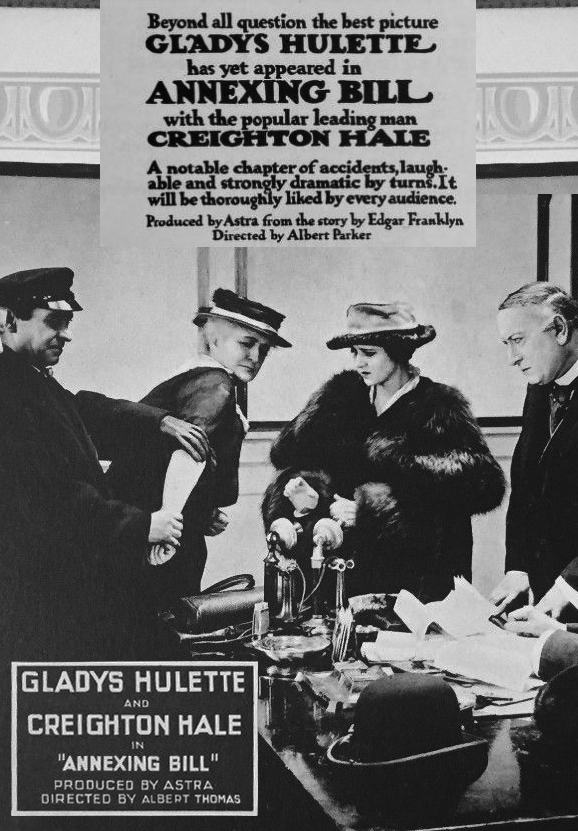
In the annals of silent cinema, where grand gestures and melodramatic declarations often held sway, there occasionally emerged a picture that, while embracing the era's stylistic conventions, managed to weave a narrative of surprising wit and thematic depth. Annexing Bill, a delightful confection from a bygone era, stands as a testament to this, offering audiences a comedic exploration of love, pride, and the peculiar dictates of personal principle. At its heart lies a premise so charmingly absurd, yet so deeply human, that it continues to resonate, albeit with a knowing smile, even today. It’s a film that asks us to consider the true cost of conviction when pitted against the undeniable pull of affection, all wrapped in a package of lighthearted farce.
The narrative’s foundation is laid upon the unshakeable, almost stubborn, resolve of young Billy Dow, portrayed with a commendable blend of earnestness and subtle comic timing by Creighton Hale. Billy is a lawyer, a man of logic and order, but also one bound by an idiosyncratic, self-imposed decree: he will not, under any circumstances, marry a woman who possesses more wealth than he does. This isn't born of avarice or a desire for financial control; rather, it appears to stem from a deeply ingrained sense of masculine pride, a belief in self-sufficiency, and perhaps, a fear of being perceived as anything less than the primary provider. This particular brand of antiquated chivalry, though perhaps baffling to contemporary sensibilities, was a recognizable, if exaggerated, trope of the period, allowing the audience to empathize with his plight even as they anticipated its inevitable comedic unraveling. Hale brings a certain wide-eyed sincerity to Billy, making his obstinacy feel less like malice and more like a deeply held, if misguided, conviction.
Enter his beloved, a character whose name remains somewhat secondary to her predicament, but whose spirit, brought vibrantly to life by the effervescent Gladys Hulette, drives the emotional core of the story. Their romance is seemingly blissful, unburdened by the usual cinematic obstacles, until fate, in its most ironic guise, intervenes. A distant, previously unknown aunt passes away, bequeathing a staggering million dollars to Hulette’s character. This sudden windfall, typically a cause for celebration, becomes an insurmountable barrier between the lovers, a cruel twist of destiny engineered by the very principles Billy holds dear. The dramatic irony is palpable: what should be a blessing transforms into a curse, a golden handcuff preventing their union. Hulette masterfully conveys the initial shock, then the crushing disappointment, and finally, the fierce determination that ignites her subsequent, audacious plan.
Billy, true to his word, and perhaps to the silent film tradition of steadfast, if often foolish, adherence to a vow, breaks off their engagement. It’s a moment designed to elicit both sympathy for his principles and exasperation at his rigidity. The dramatic weight of this decision, however, quickly gives way to the film’s true comedic genius: the girlfriend’s desperate, yet ingenious, scheme to reverse her fortunes, quite literally. If money is the problem, then the solution, she reasons, is to simply get rid of it. But how does one intentionally lose a million dollars without appearing reckless or foolish? The answer comes in the form of George Frayne, an 'investor' whose reputation precedes him, not for his financial acumen, but for his uncanny ability to consistently, and spectacularly, squander the assets entrusted to him. Mark Smith, in what must have been a deliciously understated performance, embodies Frayne as a character of almost legendary incompetence, a financial black hole whose very touch guarantees fiscal ruin. The brilliance of this plot device lies in its subversion of capitalist logic; instead of seeking to grow wealth, the goal is its methodical, complete annihilation, a task Frayne seems uniquely qualified to undertake.
The subsequent complications are, as the plot synopsis tantalizingly suggests, plentiful and uproarious. The film then becomes a delightful game of cat and mouse, not between lovers, but between the girlfriend’s fervent desire for financial ruin and Frayne’s surprisingly complex, almost accidental, inability to achieve it with the necessary speed or finality. The humor often derives from the characters’ earnestness in pursuing their absurd objectives. Hulette’s character must feign trust and indifference to her rapidly diminishing (or not diminishing fast enough) fortune, while Frayne, perhaps for the first time in his career, finds himself under pressure to actually *lose* money effectively, a perverse challenge to his established track record. The irony is layered: her desperate attempts to shed wealth are met with the comedic resistance of circumstances, and sometimes, Frayne's own accidental successes, which only prolong her agony and delay her reunion with Billy.
The screenwriting team of Tom Cushing and Edgar Franklin deserves considerable credit for crafting a narrative that, while simple in its premise, unfolds with an engaging rhythm and a keen understanding of comedic pacing. Silent films, often reliant on visual gags and physical comedy, also frequently excelled at character-driven humor, and Annexing Bill is a prime example. The writers deftly navigate the emotional stakes while maintaining a lighthearted tone, ensuring that the audience remains invested in the characters' plights even as they laugh at their predicaments. The dialogue, conveyed through intertitles, is sharp and economical, propelling the story forward without unnecessary exposition, a hallmark of effective silent film storytelling. They understood that the humor wasn't just in the slapstick, but in the absurdity of human nature and the rigid social conventions of the time.
Beyond the compelling lead performances, the supporting cast provides a solid foundation for the comedic edifice. Margaret Greene and Kate Lester, though perhaps in less prominent roles, contribute significantly to the film’s overall texture. Greene might play a confidante, a skeptical observer, or another obstacle in the girlfriend’s path, adding layers to the social interactions. Lester, often a formidable presence in early cinema, could embody a stern matron, a society figure, or even the unwitting catalyst for some of the plot’s more convoluted turns. Their presence helps ground the more farcical elements in a believable social milieu, providing reactions and counterpoints that amplify the comedic impact of the central dilemma. The chemistry among the actors, a crucial element in silent comedies, appears to be well-orchestrated, allowing for seamless transitions between moments of romantic longing and outright hilarity.
Thematically, Annexing Bill touches upon universal ideas that transcend its silent film origins. It’s a story about pride versus love, about the arbitrary nature of wealth, and about the sometimes-absurd lengths people will go to for the sake of affection. Billy's vow, while specific to his character, can be seen as a metaphor for any rigid principle that stands in the way of genuine happiness. The film playfully challenges the notion that financial status should dictate romantic compatibility, a theme explored in various forms across cinematic history, from the social climbing comedies of the early 20th century to modern romantic dramas. One might draw parallels to films like Ruggles of Red Gap, another silent classic that humorously dissects American social hierarchies and the impact of wealth on personal identity, albeit from a different angle of an English butler in the Wild West. Both films, in their own ways, comment on the often-ludicrous conventions surrounding money and status.
The film’s portrayal of the girlfriend’s agency is particularly noteworthy for its era. Instead of passively accepting her fate or simply pleading with Billy, she takes decisive, albeit unconventional, action. This active role, her resourcefulness in devising such an elaborate scheme, speaks to a burgeoning sense of female independence, even if her ultimate goal is to win back a man bound by a rather traditional ideal. This contrasts with more passive female leads found in some melodramas of the time, aligning more with the spirited heroines seen in films like Young Romance, where the protagonists actively navigate social and romantic obstacles. While the film is lighthearted, it subtly highlights the pressures and expectations placed upon individuals, particularly women, in navigating societal norms around marriage and money.
The direction, likely emphasizing clear visual storytelling and expressive acting, would have been key to the film's success. Silent films demanded performances that could convey complex emotions and plot points without dialogue, relying heavily on facial expressions, body language, and carefully choreographed sequences. The comedic elements would have been amplified through precise timing, exaggerated reactions, and perhaps even some inventive special effects for the era, particularly during the scenes involving Frayne’s financial misadventures. The visual gags inherent in the girlfriend's attempts to offload her fortune, or Frayne’s bumbling 'investments,' would have been central to the audience's enjoyment. It's a charming example of how early cinema leveraged its unique strengths to tell engaging stories.
Considering its place within the broader landscape of early 20th-century cinema, Annexing Bill stands as a fine example of a well-executed romantic comedy, a genre that was rapidly evolving during the silent era. It avoids the overt sentimentality of some contemporary dramas like Merely Mary Ann or the grand adventures of The Adventures of Kathlyn, opting instead for a more intimate, character-driven comedic experience. It’s a film that, despite its age, feels remarkably fresh in its core conceit, demonstrating that human foibles and the complexities of love are truly timeless subjects for cinematic exploration. The ingenuity of its plot, the compelling performances, and its enduring humor make it a noteworthy entry in the silent film canon, reminding us that sometimes, the most elaborate plans are hatched in the name of the simplest desires.
This particular gem from the silent era offers more than just a fleeting chuckle; it provides a window into the social mores and comedic sensibilities of its time. The film’s lasting appeal lies not just in its clever plot, but in its gentle critique of superficial values and its celebration of genuine connection. It’s a testament to the power of a well-crafted story, brought to life by talented performers who understood the unique demands of silent acting. For anyone seeking a dose of classic romantic comedy with a unique twist, Annexing Bill remains a delightful discovery, a film that proves that true love, much like a stubborn million-dollar inheritance, often finds the most unexpected ways to complicate, and ultimately enrich, our lives. Its charm is undeniable, its message enduring, and its place in the history of cinematic comedy well-earned. It certainly stands apart from more dramatic offerings like An Alpine Tragedy or the historical scope of The Black Crook, proving the versatility of the medium even in its nascent years.
IMDb —
1926
Community
Log in to comment.