DbcultAccessing Vault...
Cult Review
Senior Film Conservator
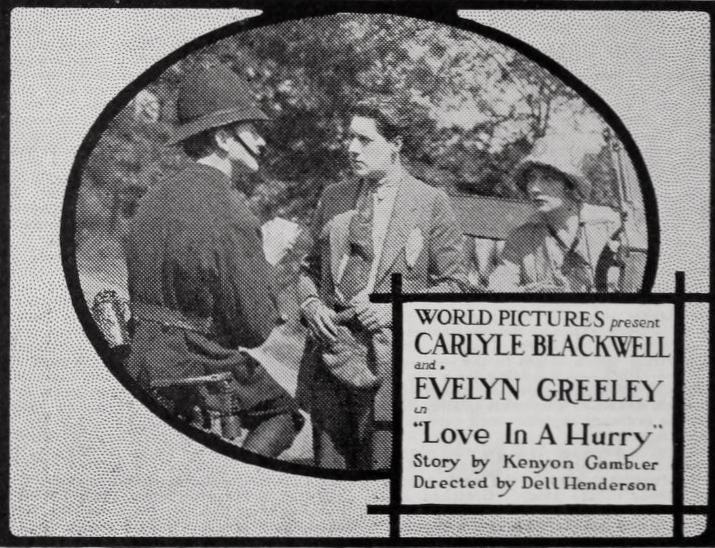
The flickering shadows and earnest gazes of silent cinema often hold a particular charm, drawing us back to an era where storytelling relied purely on visual artistry and the power of human expression. Love in a Hurry, a 1916 production, emerges from this bygone age as a fascinating artifact, a cinematic tapestry woven with threads of wartime intrigue, mistaken identity, and an undeniable romantic pulse. It’s a film that, upon closer inspection, reveals layers of historical context and narrative ambition, even if its execution occasionally betrays the nascent stage of the medium. The narrative propels us into the heart of World War I, a period ripe for tales of espionage and patriotic duty, setting its stage not on the bloody battlefields, but in the more subtle, psychological arenas of clandestine operations and diplomatic maneuvering. The stakes are palpable, yet conveyed through the understated dramatics characteristic of the era, relying heavily on the audience's willingness to engage with the unspoken language of the screen. This particular offering, starring the luminous Evelyn Greeley, attempts to blend the high-octane thrills of a spy thriller with the tender sensibilities of a blossoming romance, a juxtaposition that, when successful, elevates it beyond a mere historical curiosity into a compelling piece of early filmmaking.
At its core, Love in a Hurry introduces us to Charles Conant, portrayed with a blend of youthful impetuousness and quiet determination. Conant is no ordinary traveler; he is the scion of an American mining magnate, thrust into the complex world of international espionage. His initial attempt to enter England in 1916, under a carefully constructed muleteer disguise, immediately establishes the film’s tone of high-stakes deception. This isn't just a simple journey; it's a mission fraught with peril, a desperate gambit to prevent vital resources from falling into enemy hands. The tension mounts almost immediately as the ship’s captain, an astute observer, spots Conant's tell-tale use of a spyglass—a tool ill-suited for a common laborer—and his suspicions are ignited. The captain's decision to return him to the United States sets off the film's initial dramatic spark, forcing Charles into a desperate escape. This early sequence, though likely lacking the kinetic energy of modern thrillers, would have relied on rapid scene cuts and heightened musical accompaniment to convey the urgency of Charles's predicament. It’s a classic setup for the hero on the run, a trope that even in 1916, resonated deeply with audiences eager for escapism and adventure.
Upon his successful, if clandestine, arrival on British soil, Charles seeks out his relative, Lady Dartridge, a sanctuary that inadvertently leads him into a new kind of entanglement: romance. It is here that he encounters Lady Joan Templar, a character brought to life by Evelyn Greeley, whose captivating presence was a hallmark of her silent film career. The blossoming affection between Charles and Joan forms the emotional core of the narrative, providing a counterpoint to the underlying espionage plot. However, this burgeoning love story is complicated by George Templar, Joan’s cousin and a chief constable, who harbors his own affections for Lady Joan. George becomes the embodiment of the external threat, albeit one driven by personal jealousy as much as professional duty. His suspicion of Charles, fueled by Charles's secretive meetings and unexplained activities, casts a long shadow over the nascent romance. This dynamic creates a compelling love triangle, where the hero must not only evade enemy agents but also convince the local authorities—and his rival—of his true intentions. It echoes the romantic complications seen in films like The Coquette, where social standing and personal loyalties often clash with burgeoning affections.
The performances, particularly from Evelyn Greeley, are key to understanding the film's appeal. In an era before synchronized sound, actors communicated through exaggerated gestures, facial expressions, and the subtle nuances of body language. Greeley's portrayal of Lady Joan would have conveyed innocence, charm, and perhaps a burgeoning independence, qualities that made her a popular leading lady. Her chemistry with Carlyle Blackwell, who likely took on the role of Charles Conant (though the provided cast list is extensive and doesn't explicitly link actors to roles, Blackwell was a prominent leading man of the era), would have been crucial for the romantic arc to land effectively. The antagonist, Chief Constable George Templar, would have required an actor capable of conveying both authority and simmering jealousy, creating a believable foil for our hero. The acting in silent films, often maligned for its perceived over-the-top nature, was in fact a highly refined art form, demanding immense skill in conveying complex emotions without dialogue. It's a testament to the talent of these early performers that they could hold an audience's attention and elicit genuine emotional responses through purely visual means.
The film’s central mystery, Charles’s true identity and purpose, serves as its primary engine. The audience is kept in suspense, much like George Templar, until the climactic revelation. The tension builds through Charles's unexplainable meetings and his seemingly suspicious conduct. This narrative device, where the hero's true allegiance is withheld until a crucial moment, is a classic espionage trope, designed to keep viewers on the edge of their seats. The payoff comes when Charles, in a moment of decisive action, handcuffs two German agents, dramatically unveiling his true colors as a secret-service operative. This twist recontextualizes all his prior actions, transforming him from a suspected enemy into a dedicated patriot. The mission itself is revealed to be a desperate attempt to recover titanium, a strategic material mistakenly sold from his father's mine to German agents. This industrial espionage angle adds a layer of realism and urgency, grounding the fantastical elements of the spy plot in tangible wartime concerns. The recovery of the titanium before its transport aboard a U-boat becomes the ultimate goal, a race against time that would have been depicted with intertitles conveying urgency and quick cuts to heighten the drama.
The historical backdrop of 1916 is not merely decorative; it is integral to the film’s narrative and its initial reception. World War I was raging, and public sentiment was highly attuned to themes of patriotism, espionage, and the fight against perceived enemies. Films like Love in a Hurry tapped into these anxieties and desires, offering audiences a thrilling, if idealized, portrayal of wartime heroism. America's eventual entry into the war would only amplify the resonance of such narratives, transforming them from mere entertainment into reflections of national identity and purpose. The depiction of German agents, though likely simplistic by today's standards, would have served to galvanize public opinion and reinforce prevailing stereotypes of the enemy. This propaganda element, subtle or overt, was a common feature of wartime cinema, and Love in a Hurry undoubtedly played its part in shaping popular perceptions of the conflict and its clandestine battles. It’s a stark contrast to the more nuanced, character-driven narratives that would emerge in later decades, but for its time, it was powerful and effective.
The film’s resolution ties together the romantic and espionage threads with satisfying closure. Charles, having successfully completed his perilous mission and secured the vital titanium, is free to express his true feelings for Lady Joan. His promise to wed her provides the romantic dénouement, a classic happy ending that audiences craved. However, the story doesn't end with domestic bliss; Charles, ever the patriot, departs to join the Lafayette Squadron in France. This final act underscores his commitment to the war effort, elevating his character from a mere spy to a genuine war hero. It adds a bittersweet note to the romantic resolution, implying that duty still calls even after personal triumph. This blend of personal happiness with broader patriotic sacrifice was a common motif in wartime narratives, designed to inspire and uplift. It’s a conclusion that resonates with the spirit of the age, reflecting the pervasive sense of duty that defined the generation. The film's ending, therefore, is not just a personal victory, but a symbolic contribution to the larger conflict, echoing the sentiment of national unity prevalent during the war.
Comparing Love in a Hurry to other silent films of its era provides valuable context. While it may not possess the epic scope of something like Cleopatra (1917) or the social commentary of Where Are My Children? (1916), it shares a kinship with other adventure and mystery serials. Its episodic nature, with Charles's various escapes and revelations, aligns it with the thrilling serials popular at the time, such as Lucille Love: The Girl of Mystery, which kept audiences returning week after week. The suspenseful elements and the constant threat of discovery are hallmarks of these early action-packed narratives. Similarly, the theme of a protagonist navigating a complex, dangerous world for a greater cause can be seen in films like The Cub, though the contexts differ. The early cinematic landscape was a fertile ground for experimentation, and Love in a Hurry stands as a testament to the industry's burgeoning ability to craft intricate, engaging plots. It showcases the versatility of silent film to tackle diverse genres, from lighthearted comedies like Upstairs and Down to more serious dramas, proving that the medium was capable of far more than just novelty. The ingenuity in conveying complex narratives without dialogue is truly commendable, pushing the boundaries of visual storytelling.
The film's technical aspects, though challenging to fully assess without access to a pristine print, would have been representative of its time. Cinematography would have focused on clear composition and expressive close-ups to convey emotion. Editing would have been functional, designed to advance the plot efficiently, perhaps employing cross-cutting during moments of tension. The use of intertitles, far from being a mere placeholder for dialogue, was an art form in itself, often containing poetic language or dramatic declarations that added to the film’s narrative texture. These text cards were crucial for exposition, dialogue, and conveying character thoughts, effectively guiding the audience through the story. The score, though improvised by live musicians in most screenings, played an indispensable role in setting the mood, amplifying suspense, and underscoring emotional beats. Imagine the dramatic swells accompanying Charles's escapes or the tender melodies during his romantic encounters with Lady Joan. The overall direction, likely focused on clear blocking and strong visual storytelling, would have aimed to maximize the impact of each scene, ensuring that the audience grasped the intricacies of the plot despite the lack of spoken word. The challenges of silent filmmaking demanded a unique blend of creativity and technical skill, pushing directors and cinematographers to innovate constantly.
From a modern perspective, Love in a Hurry offers more than just historical intrigue; it provides a window into the narrative conventions and cultural preoccupations of its era. It’s a reminder that even in its nascent stages, cinema was grappling with complex themes of identity, loyalty, and the pervasive impact of global conflict. The film's ability to weave together a spy thriller with a compelling romance speaks to the timeless appeal of these narrative archetypes. While the pacing might feel deliberate to contemporary viewers accustomed to rapid-fire editing and CGI spectacles, there's an undeniable charm in its earnestness and reliance on pure performance. It invites us to appreciate the foundational elements of cinematic storytelling, to understand how early filmmakers laid the groundwork for the sophisticated narratives we consume today. The film, like many from its period, exists as a testament to the pioneering spirit of early cinema, a brave exploration of what the moving image could achieve. It reminds us that even with limited technology, the power of a good story and compelling characters can transcend time and technological advancements, captivating audiences across generations. The sheer ambition of crafting such a multifaceted plot in an era without sound is truly remarkable.
The portrayal of Charles Conant as a man of dual identities—initially a muleteer, then a suspected spy, and finally a secret service agent—is central to the film's thematic exploration of appearance versus reality. His journey is one of shedding disguises, both literal and metaphorical, to reveal his true patriotic intent. This theme of hidden identities and secret missions is a powerful one, resonating with anxieties about trust and deception during wartime. Lady Joan's eventual understanding and acceptance of Charles's true nature underscore the triumph of love and faith over suspicion. The character arc of Chief Constable George Templar is also noteworthy; his initial antagonism, born from both professional duty and personal jealousy, eventually gives way to an understanding of Charles's heroism, though his personal loss of Joan remains. This nuanced character development, even within the confines of silent film, adds depth to the narrative, preventing it from becoming a simplistic good-versus-evil melodrama. The film effectively uses these character dynamics to enhance its suspense and emotional resonance, demonstrating a sophistication in storytelling often overlooked in early cinema. The subtle shifts in their relationships are conveyed through powerful visual cues, making the emotional journey just as compelling as the espionage plot.
In conclusion, Love in a Hurry, while a product of its time, offers a captivating glimpse into early espionage cinema and the enduring appeal of romantic drama. It is a film that, despite its age and the limitations of its medium, manages to convey a sense of urgency, danger, and heartfelt emotion. Its historical significance lies not only in its portrayal of wartime anxieties but also in its contribution to the evolving language of film. For enthusiasts of silent cinema and students of film history, it serves as a valuable example of how complex narratives were constructed and communicated without the benefit of spoken dialogue. It underscores the ingenuity of pioneers like Wallace Clifton and Lorin Andrews Lathrop, who crafted stories that resonated with audiences then and continue to intrigue those who seek to understand the origins of cinematic storytelling today. The film stands as a testament to the power of visual narrative, proving that a compelling story, well-told, can transcend the technological constraints of its era and leave a lasting impression. It's a reminder of the foundational artistry that shaped the medium, a silent echo of a bustling, innovative period in film history. The careful balance between thrilling adventure and tender romance makes it a truly unique piece, worthy of re-evaluation and appreciation in the modern context, highlighting the enduring themes that continue to captivate audiences across generations.
IMDb —
1924
Community
Log in to comment.