DbcultAccessing Vault...
Cult Review
Senior Film Conservator
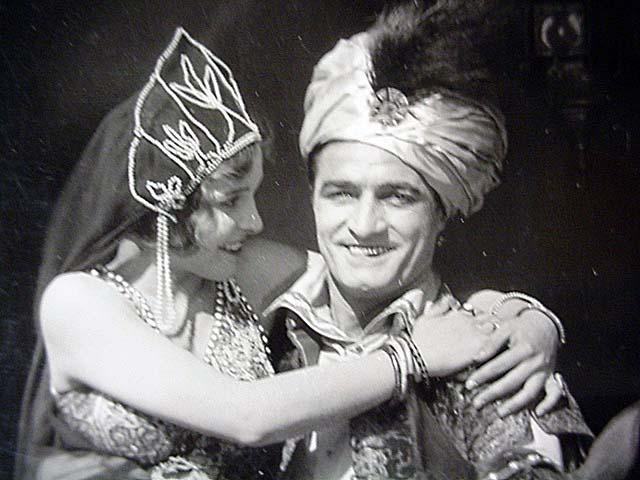
I. A canvas soaked in gasoline and saffron
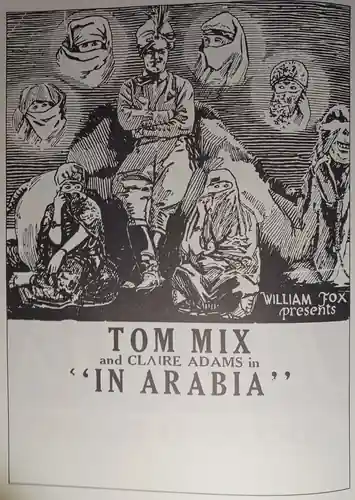
The first thing you notice is the color that isn’t there. In 1922 Technicolor is still a toddler, so Lynn Reynolds paints with contrast—inky shadows, sodium flares, a cowboy’s ivory Stetson slammed against obsidian sky. Tom Mix in Arabia arrives like a nickelodeon fever dream: California scrub mistaken for the Rubʿ al-Khali, a hero who vaults from redwood to dune without ever losing the jingle of his spurs. It’s pulp Orientalism before The Scarlet Shadow gave us chiaroscuro sheiks, less self-aware than Resurrezione and twice as giddy.
II. Plot as bucking bronco
Reynolds and story-doctor Hettie Grey Baker refuse the three-act corset. Instead they splice cliffhanger serial DNA into feature flesh: every ten minutes a leopard snarl, a sword flourish, a Ford roadster catapulting surf-ward. The narrative logic? Centrifugal. Billy Evans—played by Mix with that irrepressible grin half-way between boy-band charmer and circus roustabout—believes gravity is negotiable. He swings across canyons on what looks like laundry line; later, he’s clanging palace manacles like castanets. The abduction-to-Arabia MacGuffin is so abrupt you can feel the splice marks hiss: one title card reads “Shanghaied by Desire,” and suddenly our cowboy is neck-deep in sherbet-colored caftans.
Janice Terhune (Barbara Bedford) is no wilted hothouse orchid. She deciphers cuneiform while Billy’s still figuring out which end of the scimitar is business. Their chemistry is less swoon, more cocked eyebrow: she rescues him as often as vice versa, a push-pull that prefigures the flippant derring-do of Officer 666 but with sand instead of sidewalk.
III. Stunt choreography: when the body is the special effect
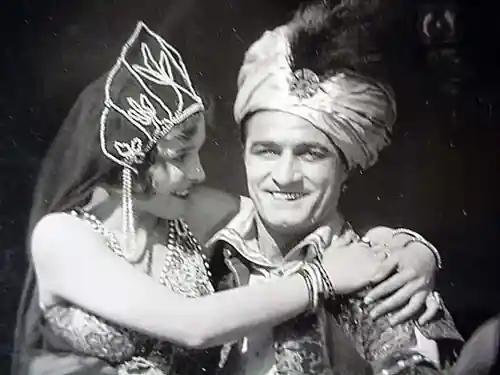
Forget rear projection—Mix’s body is the matte shot. Watch the sequence where he mounts a stallion at full gallop by planting one boot on the saddle horn and pirouetting aboard. The camera doesn’t cheat; the risk is the spectacle. Reynolds intercuts that with a POV of the pursuing wildcat, its eyes double-exposed hellfire. Compared to the pastoral melancholy of The Long Lane’s Turning, this is cinema as rodeo concussion, a reminder that in 1922 death sells tickets if the star can outrun it.
IV. Empire, tourism, and the cardboard minaret
Yes, the Arabian kingdom is a back-lot mirage—papier-mâché minarets, extras in blackface, a harem that looks suspiciously like the same ranch house with lace curtains. Yet the film’s cluelessness is almost avant-garde. It treats culture like swap-meet treasure: here a scimitar, there a Charleston danced on Persian tile. Academic scolds will harrumph; archivists will note that the prop master recycled the same bazaar set for Damaged Goods. Still, the mash-up yields accidental poetry: a cowboy salaaming under a cardboard crescent moon, the West literally wearing the East’s shoes two sizes too small.
V. Gender ventriloquism and the swapped turban
Prince–as-cowboy, cowboy-as-prince: the switcheroo is played for laughs, yet it lets Mix lampoon the hyper-masculine persona that made him famous. In silks and kohl he minces only a beat, then head-butts a guard with the crown. That liminal moment—when garb and gender wink at each other—echoes the subversive drag energy of The Imp, though here it’s wrapped in foxtrot timing and aimed squarely at the popcorn aisle.
VI. Score of silence, heartbeat of hooves
Most surviving prints are mute; modern festivals commission scores ranging from oud-and-tabla minimalism to synth-chorus kitsch. I caught a 2019 Bologna restoration with a trio hammering out galloping surf-rock riffs. The anachronism shouldn’t work, yet every whip-pan across the desert lands like a Tarantino needle-drop. Silence, however, reveals the film’s true instrument: the metronomic clop of hoofbeats, the crack of whip, the faint pant of Mix’s breath as he clings to a parapet—Foley born live on set, a century before Dolby.
VII. Shadows of contemporaries, echoes forward
Compared to the Slavic fatalism of Jánosík or the opium haze of Dope, Tom Mix in Arabia is cotton-candy. Yet its DNA recombines in everything from Indiana Jones’ cliffside circus to the gender masquerades of 1990s rom-coms. Even the roadster-plunge gag resurfaces—refurbished with CGI—in 2022 blockbusters. Influence, like Billy’s lasso, keeps looping back.
VIII. The verdict: intoxicating hokum
Is it art? Is it artifact? It’s both, and neither—a flamboyant fossil that reminds us movies once cartwheeled without seatbelts. The racial caricatures grate; the stunts still quicken pulses. For every cringe-inducing intertitle (“The Sultan’s scented tyranny!”) there’s a visual haiku: Janice’s silhouette against a lattice, moonlight fracturing into rhomboids on her cheek. Watch it with a crowd and you’ll hear gasp-laugh-groan in a single breath; watch it alone and you’ll feel the hammock sway between outrage and enchantment.
IX. Where to witness the mirage
Stream a 2K scan on SilentSands (subscription) or rent the 2017 tints via ReelAraby. Physical media hounds should snag the Milestone Blu enriched with a 40-page booklet dissecting Mix’s trick-rig patents. Avoid the 85-minute “extended” cut—it splices newsreel sand dunes that scream filler.
Tom Mix in Arabia is a cracked kaleidoscope: turn it and you see Manifest Destiny wearing lamp-black mascara, a cowboy’s grin eclipsing centuries of history. Hold it to the light and the shards rearrange—suddenly the fantasy is yours, the viewer, to interrogate or simply ride bareback into cinematic oblivion. Ninety-odd years on, the rope still sings through the air; the question is whether you’ll catch it or duck.
IMDb —
1932
Community
Log in to comment.