DbcultAccessing Vault...
6.2/10
Senior Film Conservator
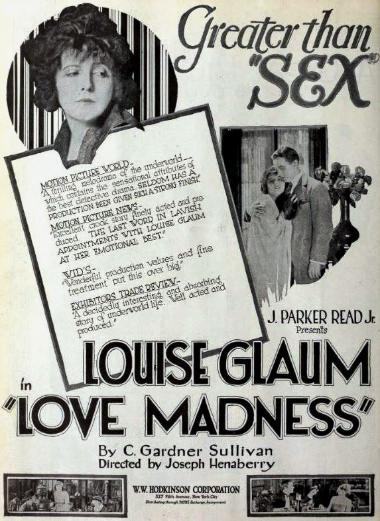
A definitive 6.2/10 rating for a film that redefined the boundaries of cult cinema. Love Madness remains a cornerstone of transgressive art.
Imagine a film that arrives not on the screen but under your sternum, a hand-cranked fever of celluloid whose very grain seems to sweat bootleg whiskey. Love Madness is that rare narcotic: a morality play which refuses to moralise, a crime tale that treats sin as ballroom décor—gorgeous, glinting, treacherously temporary.
Director Frank Lloyd, armed with C. Gardner Sullivan’s scalpel-sharp scenario, eschews the pastoral sentiment then clogging American theatres; instead he mints a lurid urban fable, pre-dating the gangster bloom of Walsh or Wellstone by half a decade. The result feels like stumbling upon a jazz 78 recorded inside a police siren: raw, syncopated, impossible to tune out.
What synopsis cannot convey is the film’s kinesthetic pulse. Lloyd Norwood’s descent is charted not through title-card homilies but via objects: the silk snap-brim crushed in a fist, the engraved watch pawned for a single night of roulette, the wedding ring rolling across parquet like a coin spun by fate. Each prop becomes a stanza in a visual poem of forfeiture.
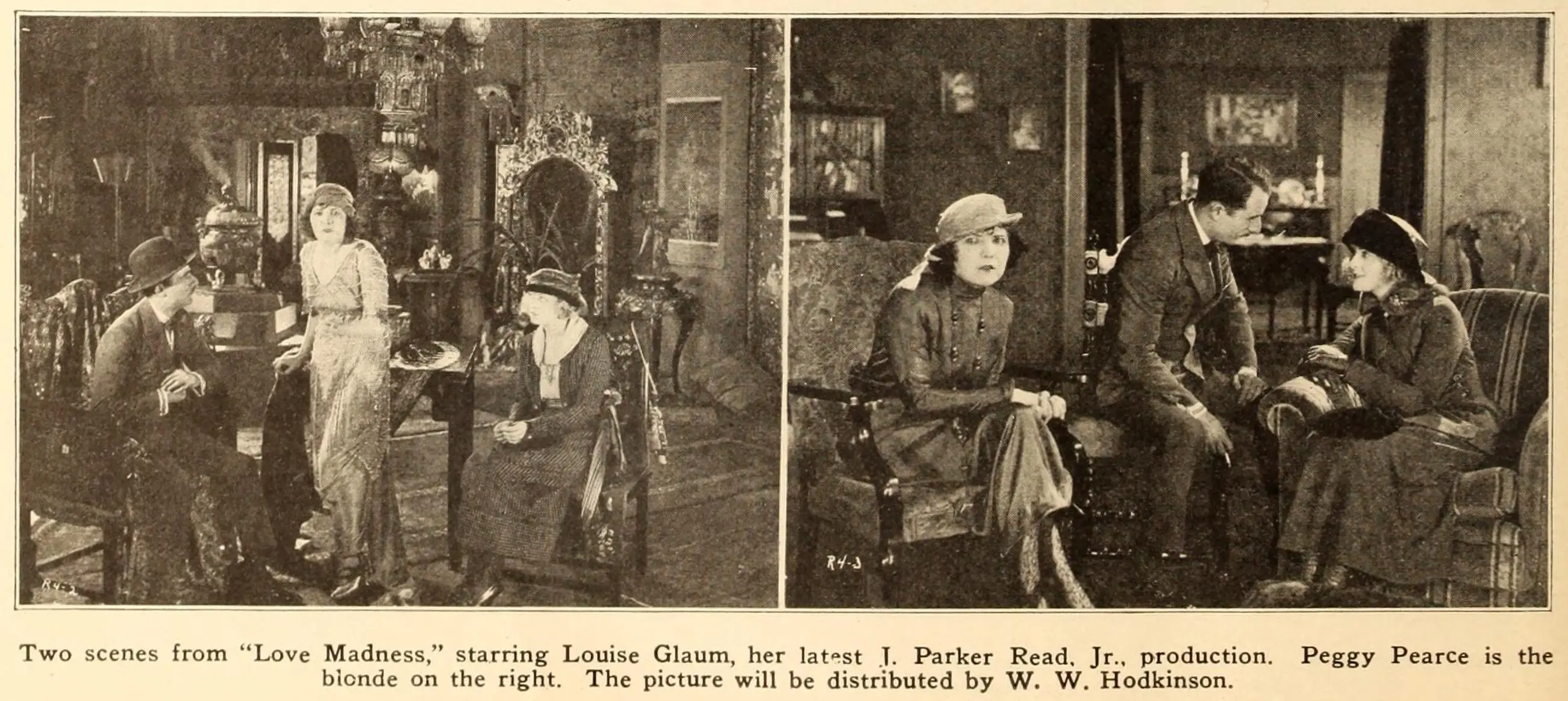
Mary’s counter-myth is even starker. Her transformation into vamp occurs in a single match-cut: from starched hospital corridor she steps—cut—onto rain-glossed asphalt, eyes now lacquered with kohl. The audience must infer the months of resolve compressed into that splice. It is cinematic shorthand at its most Brechtian, demanding we collaborate in the illusion.
Matt Moore’s Norwood exudes the porcelain fragility of old money; when his pupils dilate in Goldie’s presence you witness class itself fracturing. Opposite him, Peggy Pearce’s Goldie slinks with feral elegance—part python, part broken metronome—never tipping into vamp caricature. She laughs as though each chuckle costs blood.
Yet the film belongs to Louise Glaum’s Mary, a performance of surgical stillness. Glaum weaponises the economy of gesture: a gloved finger tapping once on a mahogany bar signals checkmate; a slow inhalation of cigarette smoke becomes a requiem for her rival. When she finally sheds disguise, tears do not fall—they hover, suspended like mercury, refusing the comfort of release.
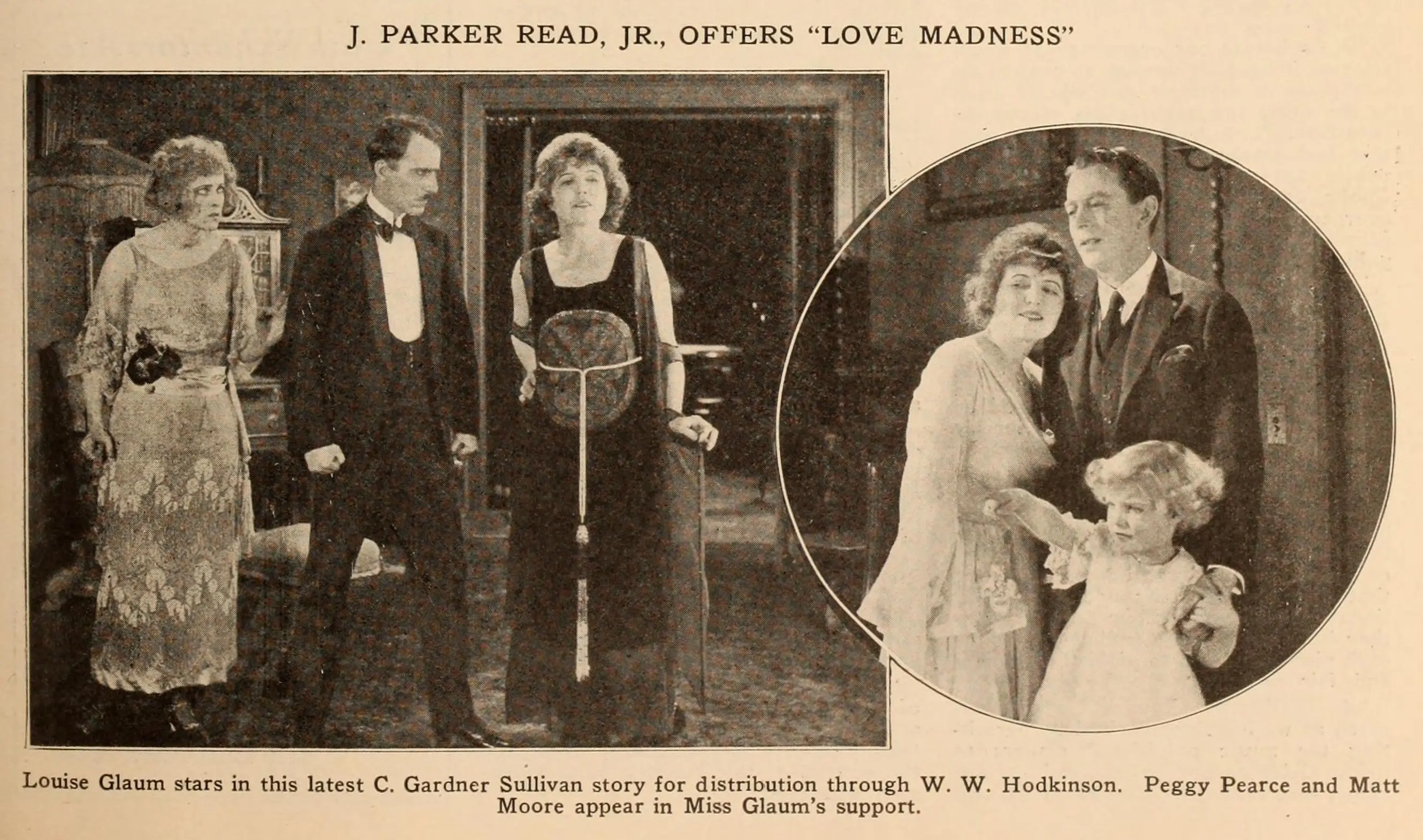
Cinematographer Fred Jackman treats shadows as living architecture. Note the sequence where Connor confesses: three sources of light—an oil-lamp, a swinging ceiling bulb, a mirrored reflection—layer triple ghost-images onto his face, implying a soul diffused across moral planes. The camera itself seems to inhale guilt, exhaling it as chiaroscuro.
Compare this to the subdued chiaroscuro of Passers By, where morality is politely grey, or the lantern-streaked docks of The Ghosts of Yesterday. Love Madness opts for a more sulphurous palette, a fever dream staged in brimstone yellows and bruise purples.
Though dialogue is confined to intertitles, Sullivan’s text crackles with pulp poetry. My favourite card appears after Norwood’s first tryst: “He had traded eternity for a handful of heartbeats.” The sentence lingers over a freeze-frame of Goldie’s cigarette ember—an epitaph written in ash.
Modern audiences conditioned for orchestral wallpaper may scoff at the organ-only accompaniment common in 1919, but I urge you to supply your own score: Coltrane’s Alabama for the confession scene, something by PJ Harvey when Mary stalks the alleyways. The images absorb music like dry soil gulps rain.
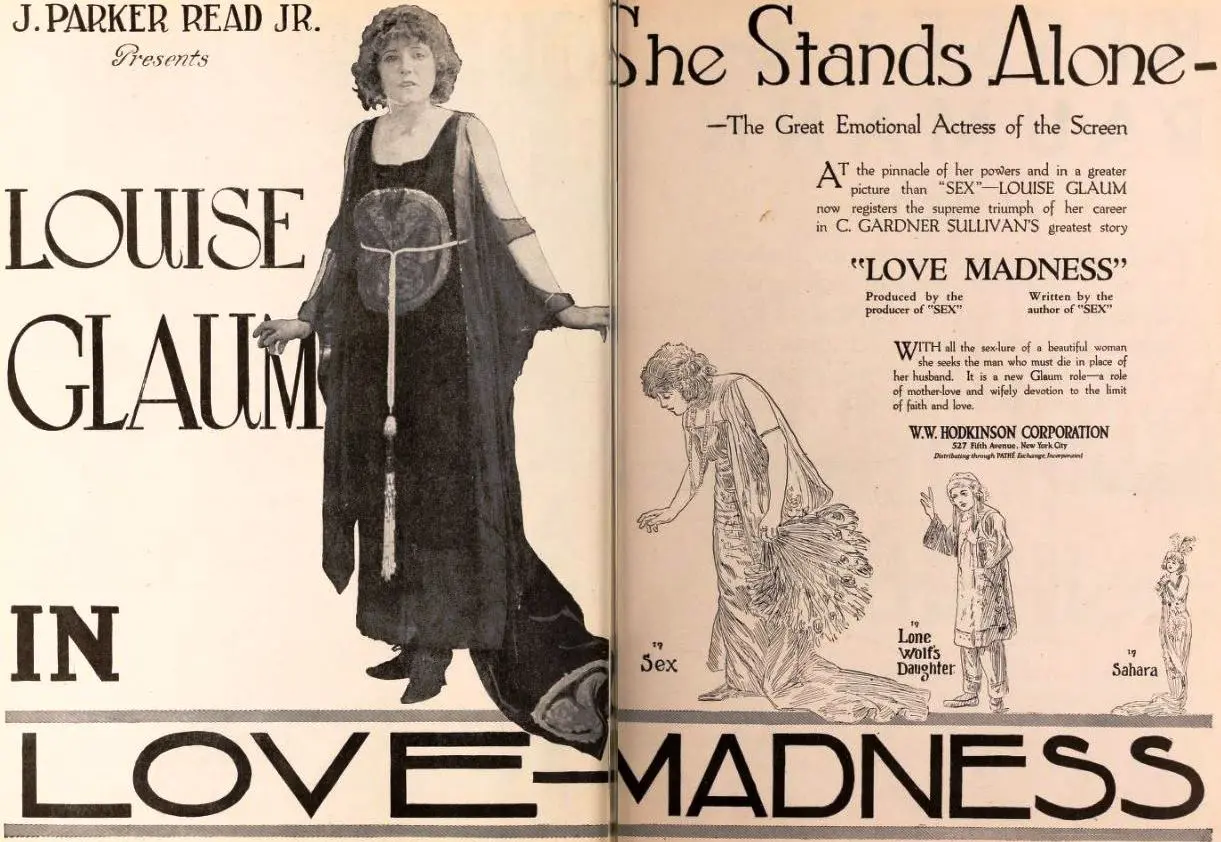
While contemporaries like The Mysterious Lady peddle exoticised seductresses, Love Madness grants its heroine moral authorship. Mary engineers every pivot: the masquerade, the ghost-ploy, the dinner ambush. The male gangsters become marionettes twitching to her choreography, a subversion that feels startlingly proto-feminist.
Yet the film refuses tidy triumph. When Lloyd is freed, Mary’s smile is wan, almost guilty—she has tasted the same dark draught of duplicity that damned her husband. Equality here is not salvation but mutual contamination.
Cinephiles will detect pre-echoes of Sternberg’s Underworld (1927) in the nightclub geometry, and of Von Sternberg’s later Devil Is a Woman in the self-immolating passions. The ghost gambit even prefigures the guilt-induced hallucinations in The Mystery of the Yellow Room, though Sullivan’s script is leaner, meaner.
Stack it against the frothy matrimonial farce Love and Lather and you appreciate how decisively Love Madness hacks through romantic pieties. It shares more DNA with Riddle Gawne, both being parables of identity forged in crucibles of crime.
Tragically, no complete print survives; nitrate decomposition claimed reels three and five. What circulates today is a 57-minute assemblage from four international archives, bridged by stills and translated intertitles. Purists howl, yet absence can be aesthetic: the lacunae force viewers to participate, to imagine the vanished seductions and brutality, thereby becoming co-authors.
Imagine a future AI-assisted restoration that reconstructs missing frames using motion-vector inference—would the result still be Love Madness, or merely its forensic ghost? The debate itself is testament to the film’s lingering spell.
I have screened this tattered print in a candle-lit loft, accompanied by a single violin. When Mary’s false ghost appears, a collective gasp lifted the room like an updraft. That collective inhale—proof that cinema’s oldest narcotic still works, provided the veins are open.
So seek Love Madness not as museum artefact but as living ember. Let its sulphur settle in your lungs; you may cough, you may reel, but you will remember what it felt like when shadows still had fangs.
IMDb 6
1925
Community
Log in to comment.