DbcultAccessing Vault...
Cult Review
Senior Film Conservator
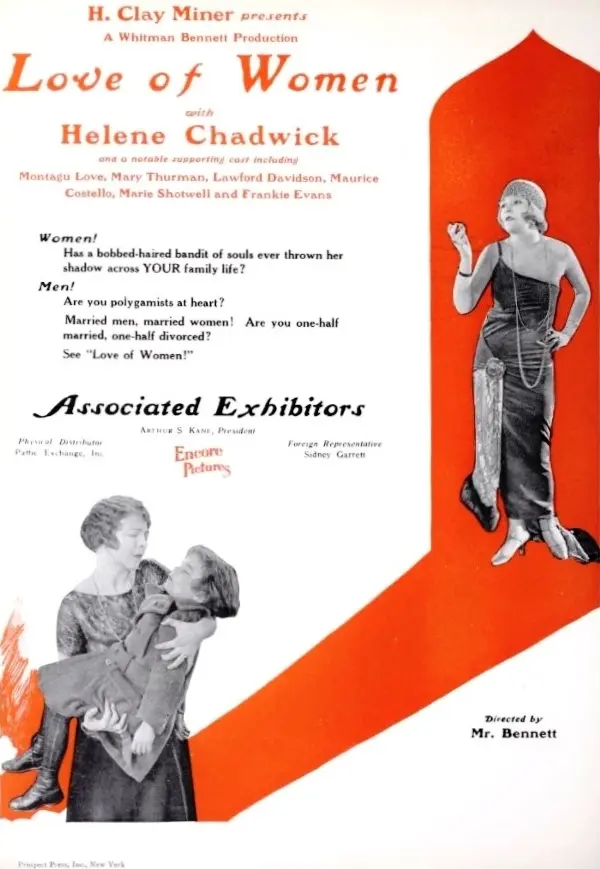
Stepping back into the nascent years of cinema, one occasionally unearths a gem that, despite the passage of a century, retains an astonishing capacity to resonate. Such is the case with 'Love of Women', a 1920 silent drama penned by E.C. Holland, a film that, even without the benefit of spoken dialogue, articulates the timeless complexities of human desire, ambition, and the enduring power of familial bonds. It’s a narrative tapestry woven with threads of defiance, betrayal, and, ultimately, a fragile hope for reconciliation, all played out against the backdrop of an era grappling with evolving social mores.
At its core, 'Love of Women' is a searing indictment of societal expectation versus individual passion. We are introduced to Cynthia Redfield, portrayed with a delicate yet resolute spirit by Frankie Evans. Cynthia finds herself at a crossroads, pressured by her socially ambitious mother to accept the suit of Bronson Gibbs, a formidable millionaire whose allure lies solely in his immense wealth and influence. Montagu Love imbues Gibbs with a chilling blend of charm and ruthlessness, making him a truly formidable antagonist, a man accustomed to getting what he desires, no matter the cost. His very presence on screen radiates a predatory confidence that foreshadows the turmoil to come. Yet, Cynthia, with a spirit that refuses to be bought, chooses a different path, eloping with Ernest Herrick. Frank Evans, in the role of Ernest, brings a youthful earnestness to the character, embodying the romantic ideal that Cynthia yearns for, a stark contrast to Gibbs's pragmatic allure. This initial act of rebellion sets the stage for a drama that is both intensely personal and broadly reflective of the era's social tensions, reminiscent of the societal pressures explored in films like His House in Order.
The narrative then leaps forward four years, a period during which Cynthia and Ernest have presumably forged a life together, albeit one perhaps shadowed by the initial disapproval of Cynthia’s mother, played by the formidable Marie Shotwell. This temporal jump allows the film to bypass the initial struggles of their unconventional union, instead plunging us directly into the consequences of past choices and the lingering resentment of a spurned suitor. Bronson Gibbs, a man whose ego clearly knows no bounds, has not forgotten Cynthia's rejection. His desire for revenge, cold and calculating, manifests in a truly insidious plot. He enlists Veerah Vale, a 'Greenwich Village vamp' brought to life by Mary Thurman, to seduce Ernest. Thurman’s portrayal of Veerah is crucial; she embodies a seductive danger, a modern woman whose allure is both captivating and destructive. Her character is a fascinating counterpoint to Cynthia’s more traditional romantic ideal, representing perhaps the burgeoning anxieties and fascinations with the 'new woman' of the Jazz Age. Ernest, perhaps complacent in his marriage or simply vulnerable to temptation, falls into Veerah's trap, initiating a downward spiral that leads inevitably to divorce proceedings.
The depiction of Ernest's entanglement and the subsequent marital breakdown, culminating in an interlocutory decree, is handled with a stark realism that belies the film's silent nature. The power of visual storytelling, reliant on exaggerated gestures, facial expressions, and evocative intertitles, truly shines here. We witness the emotional devastation wrought by infidelity and the shattering of trust, themes that, while commonplace in today's cinema, held a particular weight in the early 20th century. The film doesn't shy away from the pain, allowing the audience to feel the heartbreak alongside Cynthia, whose initial defiance now seems to have led her to an even more profound sorrow. The supporting cast members, including Lawford Davidson, Helene Chadwick, and Maurice Costello, contribute to the intricate web of relationships, each playing their part in the unfolding drama, adding layers of social fabric to the central conflict.
It is in the film's climactic turn that its true emotional depth is revealed. The catalyst for a potential reunion between Cynthia and Ernest is not a grand romantic gesture, nor a sudden realization of undying love, but a shared tragedy: a serious injury to their child. This plot device is incredibly potent, stripping away the layers of resentment, anger, and ego that have accumulated between the estranged couple. The child, innocent and vulnerable, becomes the ultimate bridge, a symbol of their shared past and a beacon for a possible future. This is where 'Love of Women' transcends mere melodrama and touches upon something profoundly human. The shared anguish, the primal instinct to protect their offspring, forces Cynthia and Ernest to look beyond their personal grievances and reconnect on a fundamental level. It’s a powerful exploration of how adversity can sometimes forge a stronger bond than prosperity, a narrative arc that can be seen in other emotionally charged dramas like The Door Between, where external pressures often redefine internal relationships.
E.C. Holland’s writing, even a century removed, demonstrates a keen understanding of human psychology. The plot, while dramatic, feels earned. The characters, despite the inherent limitations of silent film acting, are well-defined and their motivations, however flawed, are clear. Frankie Evans, as Cynthia, conveys a remarkable range of emotions without a single spoken word: her initial joy, her defiant love, her subsequent heartbreak, and finally, her renewed maternal strength. Frank Evans’s Ernest, too, navigates a complex journey from infatuation to regret, ultimately finding redemption in shared responsibility. Montagu Love’s Bronson Gibbs remains a compelling villain throughout, his machinations driving much of the conflict, yet the film never fully demonizes him to the point of caricature. He remains a believable representation of unchecked ambition and wounded pride, a character who, despite his villainy, is rooted in recognizable human flaws.
Beyond its compelling narrative, 'Love of Women' serves as a fascinating artifact of silent cinema's artistry. The visual storytelling, relying heavily on mise-en-scène, cinematography, and the expressive physicality of its actors, is captivating. Directors of this era had to be masters of visual metaphor and emotional conveyance through gesture and composition. The use of close-ups to emphasize emotional states, the careful blocking of actors to denote power dynamics, and the often dramatic lighting choices all contribute to a rich cinematic language that, while different from sound film, is no less sophisticated. The film's aesthetic also provides a window into the fashion and societal norms of the early 1920s, from the opulent settings favored by Gibbs to the bohemian atmosphere suggested by Veerah Vale's 'Greenwich Village' association.
The dynamic between the 'vamp' character, Veerah Vale, and Cynthia Redfield is particularly noteworthy. While not as overtly provocative as some later cinematic vamps, Mary Thurman's portrayal hints at the burgeoning societal shifts that challenged traditional female roles. Veerah is a woman who uses her allure as a tool, a stark contrast to Cynthia's more conventional virtues. This dichotomy adds a layer of social commentary to the film, exploring the different avenues available (or perceived to be available) to women in the post-Victorian era. It’s a subtle yet effective way the film touches upon the complexities of 'love of women' not just as a romantic ideal, but as a force shaped by societal expectations and individual agency.
In an age saturated with digital effects and complex soundscapes, there is a profound beauty in revisiting films like 'Love of Women'. They remind us that the fundamental elements of compelling storytelling – character, conflict, and resolution – remain constant, regardless of technological advancements. The film’s ability to evoke strong emotions and tell a coherent, engaging story without a single spoken word is a testament to the skill of its creators and the inherent power of the cinematic medium itself. It stands as a powerful example of how silent films, far from being primitive, were sophisticated artistic endeavors that mastered a unique form of visual communication.
For enthusiasts of early cinema, 'Love of Women' offers a rich viewing experience. It’s a melodrama, yes, but one executed with sincerity and a keen eye for human drama. The performances, particularly from Frankie Evans and Montagu Love, are compelling, drawing the audience into their intertwined destinies. The film serves as a valuable historical document, reflecting the social anxieties and romantic ideals of its time, while simultaneously delivering a narrative that feels surprisingly timeless in its exploration of love, betrayal, and the complex path to forgiveness. It’s a profound reminder that the human heart, with all its triumphs and frailties, has always been cinema’s most captivating subject. Its enduring appeal lies not just in its historical significance but in its universal themes, making it a film that truly deserves to be rediscovered and appreciated by new generations of cinephiles. It might not be as widely known as some of its contemporaries, but its narrative depth and emotional impact place it firmly among the more compelling dramas of the silent era. The journey of Cynthia and Ernest, from defiant elopement to the brink of utter devastation and back to a tentative reunion, is a testament to the resilient, often unpredictable, nature of human affection and the powerful bonds that tie us together, even when we try to pull apart.
IMDb 5.9
1931
Community
Log in to comment.