DbcultAccessing Vault...
Cult Review
Senior Film Conservator
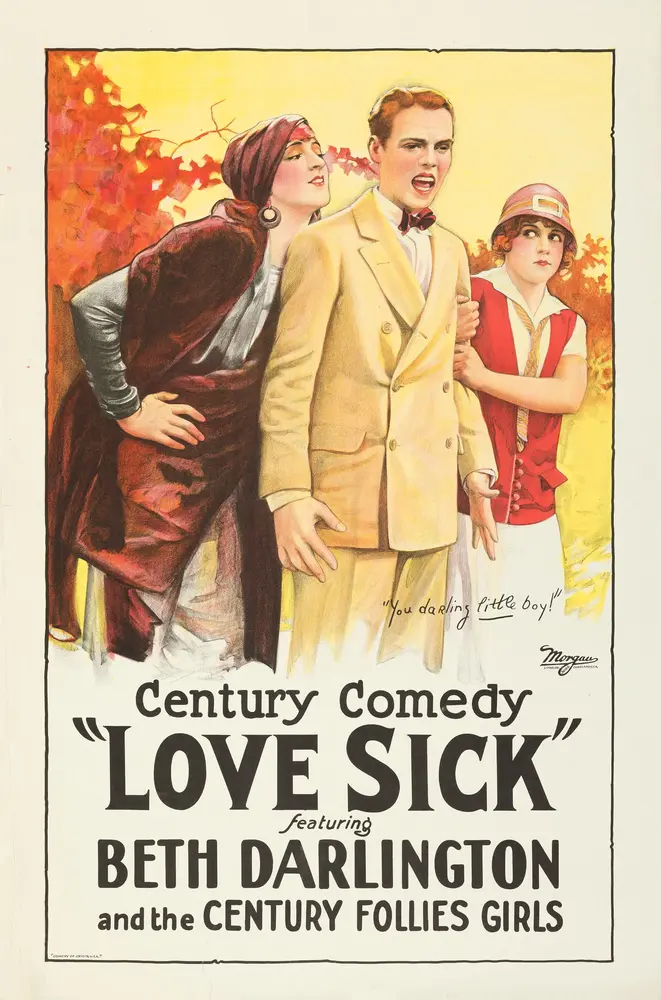
Is the 1922 silent short Love Sick a forgotten gem worth unearthing from the annals of early cinema? Short answer: yes, but with significant caveats that demand a particular appreciation for its era and inherent limitations.
This film is a curious artifact best suited for dedicated cinephiles, historians of slapstick, and those with a high tolerance for dated comedic tropes; it is emphatically not for viewers seeking modern pacing, sophisticated humor, or a truly compelling narrative.
From the outset, it’s clear Love Sick isn't aiming for profound storytelling. Instead, it’s a rapid-fire succession of gags designed to elicit quick laughs, a hallmark of many shorts from this period. Its historical context alone lends it a certain undeniable charm, even when its humor falls flat by contemporary standards.
This film works because of its unbridled commitment to physical comedy, the surprisingly innovative use of its canine co-star, and its inherent value as a vibrant, if crude, snapshot of early silent-era comedic sensibilities. It’s a raw, energetic piece that captures the spirit of a time when cinema was still finding its voice, relying heavily on visual gags and exaggerated performances.
This film fails because of its thinly veiled misogyny, often repetitive gags that quickly lose their punch, a profound lack of character depth, and a resolution that feels less romantic and more manipulative. The central premise, though comedic, often verges on uncomfortable, casting its protagonist in a rather unsympathetic light.
You should watch it if you genuinely appreciate the unpolished, frantic energy of 1920s silent comedies, are interested in the evolution of comedic storytelling, or simply want to witness a truly bizarre and often problematic portrayal of courtship. It serves as an excellent case study for discussions on how humor and romantic ideals have shifted over a century.
The narrative of Love Sick is less a story and more a series of escalating comedic set pieces, all centered around Harold’s desperate attempts to win the affections of Sal. The initial catalyst, a clever stray dog presenting Harold with dropped flowers, is perhaps the film’s most charming and original conceit. This dog, for all its brevity on screen, becomes the most compelling character, an unwitting accomplice to Harold’s increasingly dubious schemes.
Harold’s methods for dispatching rivals are strikingly blunt. The scene where he unleashes his dog on three young sheiks, resulting in their clothes being torn to shreds, sets a chaotic tone. It’s a clear indication that subtlety is not in Harold’s romantic toolkit. He prefers direct, physical removal of obstacles, a primitive form of problem-solving that defines his character throughout.
Later, the introduction of a “gentle, delicate-souled lad” as another suitor prompts Harold to engage in further trickery. The yarn-winding incident, where Harold deliberately unravels Sal’s stocking, is a moment of pure, low-stakes mischief that highlights his immaturity. It’s a gag that works on a basic level, demonstrating a certain ingenuity, however childish.
The garage trap, where Harold lures his rival, kicks him in, and locks the door, is where the humor begins to darken. While played for laughs, it borders on genuine malice. The dog’s subsequent chewing of the trapped lad’s clothes only amplifies the sense of farcical cruelty. Sal’s reproof of Harold in this moment is one of the few instances where the film acknowledges the problematic nature of his actions, albeit briefly.
The final act, involving a seductive vamp and Harold’s feigned suicide attempt, is perhaps the most bizarre. His note to Sal, declaring life not worth living, feels less like tragic romance and more like an emotional blackmail. His subsequent attempts to be hit by cars, only to be ‘bumped’ when he spots Sal, culminates in a hospital visit where he whispers his ailment is merely ‘heart’ trouble. This elaborate ruse, designed solely to garner Sal’s nursing and affection, is a surprisingly cynical conclusion to what began as a simple slapstick comedy. It's a testament to the era's skewed romantic ideals, where manipulation could be framed as devotion.
The performances in Love Sick are undeniably products of their time, characterized by broad gestures and exaggerated facial expressions designed to convey emotion without dialogue. Eddie Clayton, as Harold, embodies the frantic, often clumsy protagonist with an almost relentless energy. His performance is a masterclass in silent-era physical comedy, relying on pratfalls, quick movements, and wide-eyed reactions.
Clayton’s Harold is less a character to root for and more a force of nature, a whirlwind of ill-conceived plans and desperate attempts. His expressions, particularly during the feigned illness, are comically over-the-top, clearly signaling his deception to the audience, if not entirely to Sal. One might argue that his portrayal of a manipulative suitor is less a flaw in acting and more a reflection of the script's intent.
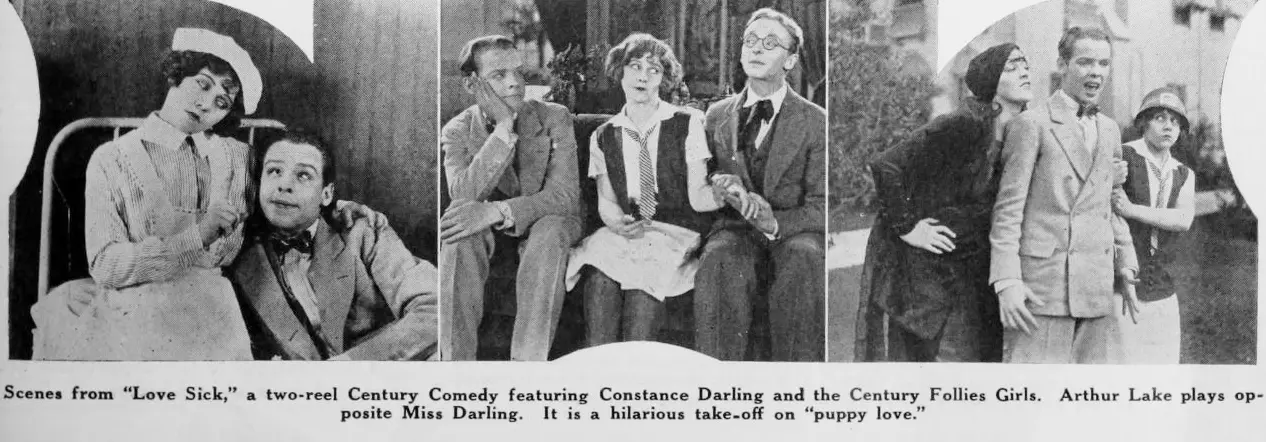
Beth Darlington, as Frivolous Sal, is largely a reactive character, serving as the object of Harold’s affections and the recipient of his antics. Her performance is less about initiating action and more about responding to the chaos around her. She conveys confusion, flirtation, and mild annoyance effectively, though her character is never given the depth to truly stand on her own. She is, regrettably, a prize to be won, rather than a fully fleshed-out individual. This is a common pitfall of many silent comedies, where female characters often existed primarily as motivators for male leads.
Arthur Lake, in his brief but memorable turn as the ‘gentle, delicate-souled lad,’ offers a stark contrast to Clayton’s boisterous Harold. His more reserved demeanor makes him an easy target for Harold’s aggression, serving the plot's need for a clear rival. While his screen time is limited, Lake effectively embodies the innocent victim, making his subsequent mistreatment by Harold and the dog all the more comically cruel. His wide-eyed confusion as he’s kicked into the garage is a standout moment of silent pathos.
Charles Lamont’s direction of Love Sick is, above all, functional. He understands the mechanics of slapstick and positions his camera to capture the gags clearly. There’s little in the way of groundbreaking cinematography or innovative camera work; the focus is squarely on the action within the frame. This approach ensures that the physical comedy, the cornerstone of the film, is always front and center, allowing the audience to fully appreciate the exaggerated movements and reactions.
The cinematography itself is straightforward, utilizing mostly static shots and standard framing. The lighting is simple, designed to illuminate the actors and their surroundings rather than to create mood or atmosphere. There are no dramatic close-ups or sweeping tracking shots to speak of, which is typical for a short comedy of this era. For instance, the scene where Harold unravels Sal’s stocking is captured in a medium shot, allowing both actors’ reactions and the unraveling yarn to be visible, prioritizing clarity over artistic flourish.
Lamont’s strength lies in his ability to maintain a brisk pace and string together disparate gags into a cohesive, if frenetic, whole. He allows the actors, particularly Clayton, the space to perform their physical comedy without overly intrusive direction. The film feels like a stage play captured on celluloid, where the performances and the immediate comedic situation take precedence over cinematic technique. It’s a directorial style that serves the material effectively, even if it doesn't push any boundaries.
The pacing of Love Sick is nothing short of relentless. Like many silent shorts, it moves at a breakneck speed, hopping from one comedic situation to the next with little time for reflection or character development. This rapid-fire approach ensures that the audience is constantly engaged, even if the individual gags don't always land perfectly. The film understands its short runtime and maximizes every moment with action.
The tone is overwhelmingly farcical and lighthearted, despite the increasingly questionable ethics of Harold’s actions. The film never truly asks the audience to take Harold’s plight seriously, instead encouraging laughter at his ridiculous schemes and the misfortunes of his rivals. Even the dramatic feigned suicide attempt is played for laughs, highlighting the film's commitment to pure, unadulterated comedy.
There’s a certain chaotic charm to this jittery romp. The sudden shifts in Harold’s strategy, from employing his dog to outright physical assault, then to emotional manipulation, contribute to a sense of unpredictable absurdity. This keeps the audience on their toes, never quite knowing what ridiculous stunt Harold will pull next. It’s a film that demands you turn off your critical brain and simply enjoy the spectacle of early slapstick, however dated some of its sensibilities may be.
Yes, Love Sick is worth watching today, but primarily for its historical significance and as a case study in early silent comedy. It offers a fascinating glimpse into the comedic styles and social norms of the 1920s. It’s a short, brisk watch that provides valuable context for the evolution of film humor.
It's a film for those who appreciate the raw, physical energy of the silent era and can look past its problematic romantic tropes. Don't expect a profound narrative or deeply empathetic characters; this is pure, unadulterated slapstick.
Love Sick (1922) follows Harold, a determined but manipulative suitor, as he uses a clever dog and various farcical schemes to eliminate rivals and win the affections of Frivolous Sal, culminating in a dramatic, feigned illness.
Love Sick stars Eddie Clayton as Harold, Beth Darlington as Frivolous Sal, and Arthur Lake as the gentle lad rival.
Historically significant as a prime example of early silent comedy shorts.
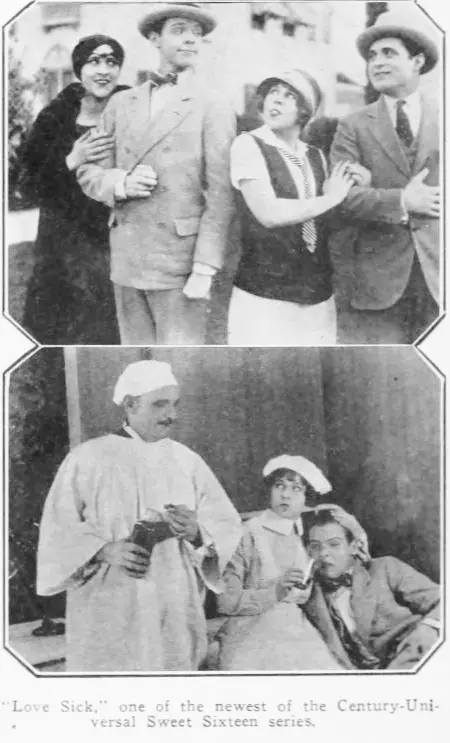
Relies heavily on physical comedy, which, despite its age, can still elicit genuine laughs.
The dog character is genuinely clever and provides some of the film's most memorable moments.
Its short runtime makes it an easy, low-commitment watch for curious viewers.
Offers a fascinating, if sometimes unsettling, glimpse into the social mores and humor of the 1920s.
The central romance is deeply problematic, built on deception and manipulation rather than genuine affection.
Many gags can feel repetitive and predictable, diminishing their comedic impact over time.
Character development is virtually non-existent, leaving the audience with little emotional investment.
The pacing, while fast, can feel jarringly abrupt, with scene transitions often feeling unpolished.
The 'hero's' actions frequently verge on harassment, making it challenging to root for his ultimate success.
As a piece of cinematic history, Love Sick holds undeniable value. It’s a robust example of the kind of rapid-fire, physical comedy that defined the silent era, offering a window into a bygone form of entertainment. Eddie Clayton’s boundless energy is infectious, and the dog is, without question, a scene-stealer.
However, as a standalone piece of entertainment for a modern audience, it’s a more challenging proposition. The humor, while occasionally effective, is often dated, and the underlying romantic narrative is deeply uncomfortable. Harold’s relentless pursuit of Sal, culminating in a manipulative illness, feels less like charming courtship and more like an early form of gaslighting. It’s a stark reminder of how much societal attitudes towards romance have (thankfully) evolved.
Ultimately, Love Sick is a film to be appreciated for its historical context rather than its timeless appeal. It’s a worthwhile watch for those with an academic interest in silent cinema or a deep appreciation for rudimentary slapstick. For casual viewers, it might prove to be more of a curiosity than a genuinely enjoyable experience. It works. But it’s flawed. Consider revisiting other silent classics like My Hero! or Day Dreams for a broader perspective on the era's comedic range.
“Love Sick is a fascinating, if problematic, relic of early cinema. Its historical significance outweighs its often dated and uncomfortable comedic sensibilities.”
IMDb 6.7
1917
Community
Log in to comment.